
The Jammu and Kashmir government owes its people an explanation: what happened to the promise of 200 units of free electricity?
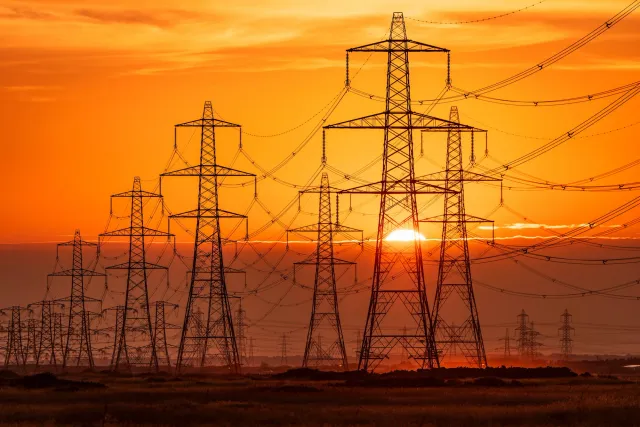
Nearly two years after the 2024 Assembly elections, the National Conference’s promise remains unfulfilled, while consumers are being asked to pay more. From September 1, JERC has approved an average 6.83 percent increase in electricity tariffs for 2026-27.
For a government that promised relief, this is a politically uncomfortable reversal. The people were promised free power. They are getting higher bills.
Under the new tariff, ordinary metered households will pay Rs 2.45 per unit for consumption up to 200 units, against Rs 2.30 earlier. The fixed charge rises from Rs 8 to Rs 10 per kW per month. A household consuming 200 units will see its energy charge rise from Rs 460 to Rs 490. At 300 units, the charge rises from Rs 860 to Rs 910, while 400 units will cost Rs 1330 instead of Rs 1260.
For families already struggling with rising prices, every additional rupee matters.
The government may point out that the tariff was fixed by an independent regulator. But that cannot become a political shield. JERC’s order exposes the deeper crisis in J&K’s power sector. The combined revenue requirement of JPDCL and KPDCL is about Rs 10,276 crore, against estimated revenue of Rs 7353 crore under existing tariffs.
The resulting gap is around Rs 2923 crore.
The government has committed Rs 2421 crore in subsidy, while JERC says recovering the entire deficit from consumers could have required a tariff increase of around 40 percent.
That explains the 6.83 percent increase. It does not explain why consumers should continue carrying the burden of a system plagued by financial and distribution inefficiencies.
JERC has retained distribution-loss targets of 15 percent for Jammu Power Distribution Corporation Ltd and 19 percent for Kashmir Power Distribution Corporation Ltd, cautioning that inefficiencies should not simply be passed on to consumers.
That warning should be taken seriously.
The government must explain what concrete measures are being taken to reduce losses, improve collection efficiency, prevent power theft and make the utilities financially sustainable. Consumers cannot be treated as the easiest solution whenever the books do not balance.
The problem is even more serious for industry. Industrial energy charges are expected to rise by around 10 percent, adding to the burden of manufacturers already facing high freight costs, expensive raw materials and limited markets. If J&K genuinely wants investment and employment, making electricity costlier cannot be the only answer to its power-sector problems.
But the most politically damaging aspect remains the 200-unit promise.
If the government has concluded that providing 200 free units to every household is financially impossible, it should have the courage to say so. If the promise remains on the table, it must provide a timeline and explain how it will be funded.
Silence is not an economic policy.
An election promise cannot be treated as binding before polling day and optional after the government takes office. Voters are entitled to ask whether the promise was properly costed. If it was, why has it not been implemented? If it was not, who was responsible for making a promise without establishing how it would be financed?
The government cannot plead financial constraints when asked about free electricity and accept higher tariffs when the regulator approves them without offering a convincing explanation.
This is not merely another political exchange between parties. It is fundamentally about the credibility of government.
The people of J&K deserve an honest balance sheet – not slogans, excuses or political blame games.
The government must explain the cost of the 200-unit promise, its implementation plan, the use of the Rs 2421 crore subsidy, and measures to reduce distribution losses.
If 200 units of free electricity were affordable enough to promise before the election, why are higher electricity bills affordable enough to impose after it?
That is the real power question facing the government.
Until it answers it, the 6.83 percent hike will look less like an unavoidable tariff correction and more like a broken promise arriving on the electricity bill.