
Srinagar’s fall from fourth place to 26th in the Centre’s latest clean-air survey is striking. But the number needs to be read carefully. It is not, as the ranking might suggest, a simple league table of the country’s cleanest air.
The fifth edition of the Swachh Vayu Sarvekshan, conducted under the National Clean Air Programme, evaluates the measures cities undertake to combat pollution – including road-dust control, solid-waste management, vehicular emissions, industrial pollution and construction and demolition waste. The Union government says the 2026 exercise covered 130 NCAP cities and that 108 recorded improvements in PM10 levels during 2025-26.
That distinction matters enormously for Srinagar.
Three years ago, the city ranked fourth in its population category. In the latest assessment, it has fallen to 26th, with 162.6 points, behind Delhi, which scored 172. Lucknow led the category with 198 points.
The temptation is to read this as a dramatic deterioration in Srinagar’s air. But that would be too simple.
As Vasu Yadav, chairman of the Jammu and Kashmir Pollution Control Committee, has pointed out, the survey is not a direct measurement of how clean or polluted Srinagar’s air is. It assesses the implementation of pollution-control measures and city action plans.
That does not make the ranking irrelevant. Quite the opposite.
If anything, it makes the result a useful test of something broader: whether Srinagar is building the systems required to prevent air pollution from becoming a chronic urban problem.
And here, the city has plenty to examine.
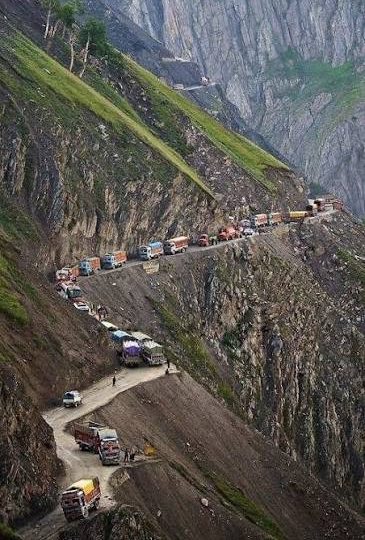
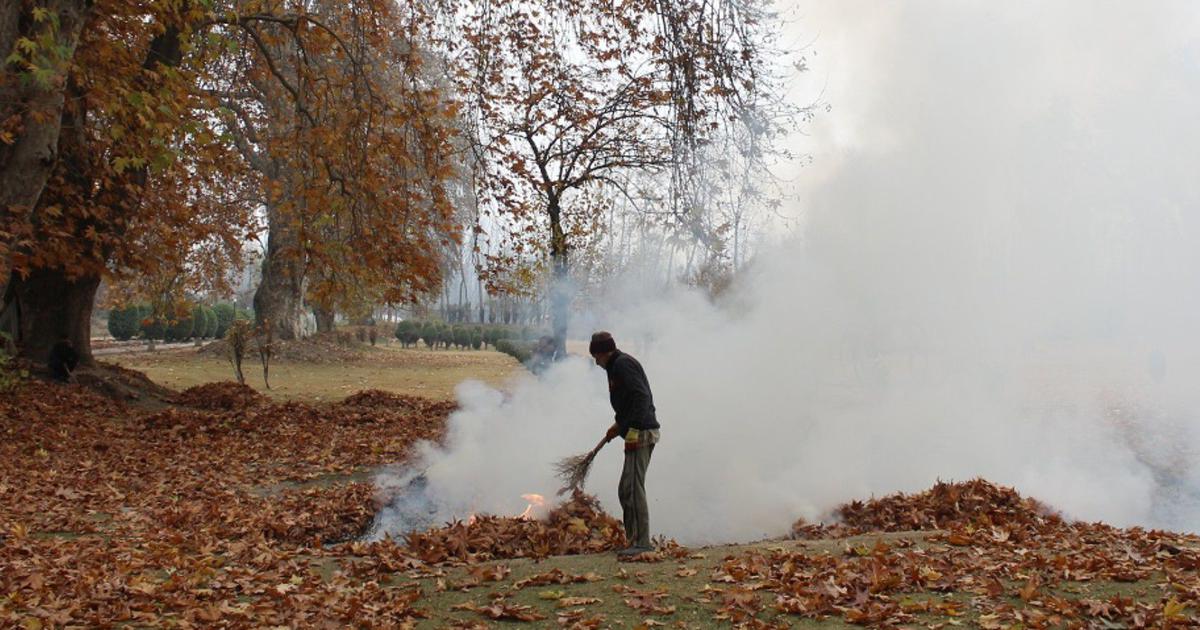
Srinagar’s growth has brought more vehicles, denser traffic, expanding construction and increasing pressure on its roads and waste-management systems. Road dust is visible almost everywhere. Construction debris can remain along roadsides. Waste burning, particularly during autumn, adds another source of emissions. Congestion turns thousands of vehicles into a daily source of pollution.
None of these problems can be solved by measuring particulate matter alone.
Clean air is, in large part, an administrative achievement.
A city cannot control what it cannot manage. Roads must be swept and maintained. Construction sites must contain dust. Waste must be segregated, collected and processed rather than burned. Traffic systems must reduce unnecessary idling. Industrial emissions must be monitored. Construction and demolition debris must have a proper disposal chain.
The Centre’s framework explicitly recognises these connections. Its assessment considers road dust, solid waste, vehicular emissions, industrial pollution, construction and demolition waste and other emission sources.
This is where Srinagar’s 26th position should prompt something more useful than embarrassment.
It should prompt an audit.
The city should publish, in accessible form, the measures it claimed under each component of the survey, the evidence supporting those claims and the areas where it lost points. If the assessment relies substantially on municipal reporting and subsequent scrutiny, citizens deserve to know what was reported, what was verified and what remains unfinished.
That transparency would also prevent a misleading comparison with Delhi.
Delhi’s poor air quality is well documented, and its presence above Srinagar in this particular ranking can appear startling. But the survey is not declaring Delhi’s air cleaner than Srinagar’s. It is measuring performance against a particular set of clean-air interventions.
The distinction is not semantic. It is the difference between measuring an outcome and measuring the machinery intended to produce that outcome.
Both matter.
A city can have relatively favourable natural conditions and still fail to build effective pollution-control systems. Conversely, a city with severe pollution can undertake substantial corrective measures without immediately becoming clean.
Srinagar cannot afford to hide behind either interpretation.
Its Himalayan setting is not a pollution-control policy. The surrounding mountains, lakes and forests may shape the city’s environment, but they cannot compensate indefinitely for unmanaged waste, dusty roads, unchecked emissions or poorly regulated construction.
Nor should the city become obsessed with its position on an annual table.
The real question is simpler: Is Srinagar’s air getting safer, and are its institutions getting better at keeping it that way?
That requires reliable monitoring of PM2.5 and PM10, stronger enforcement, scientific waste management, cleaner transport, dust suppression and credible controls on construction emissions. It also requires citizens to see clean air not as an occasional campaign but as an everyday public service.
The latest ranking is therefore neither a verdict on Srinagar’s air nor a reason for complacency.
It is a warning about the work behind the number.
And if the city once stood fourth because it was doing more, the appropriate response to falling to 26th is not to defend the ranking. It is to find out what changed — and fix what can be fixed.