
For much of modern addiction treatment, the most consequential moment can arrive when the patient walks out of the treatment centre.
The medicines have been prescribed. Counselling has taken place. The family has been brought into the conversation. The patient is ready to return home.
And then institutional handholding can begin to disappear.
Jammu and Kashmir is attempting to change that sequence.
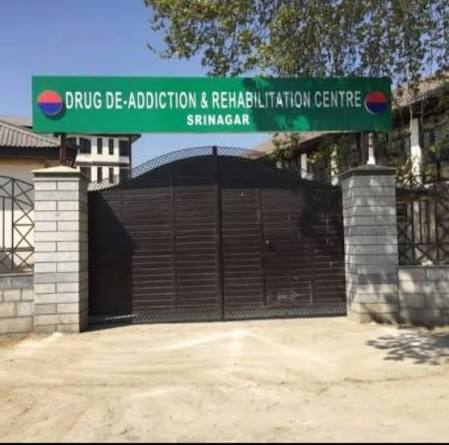
The Union Territory has launched a three-year Rehabilitation and Socio-Economic Reintegration Scheme for Drug Abuse Victims, 2026, built around a simple premise: treatment should not end when institutional care ends. The programme links medical treatment to family and community reintegration, education, skills, employment and long-term monitoring. Its Phase-I pilot has begun at the Institute of Mental Health and Neurosciences (IMHANS), Srinagar.
The idea is less about creating another rehabilitation centre than extending the centre’s reach into the patient’s life.
That may prove to be the most important part of the experiment.
Addiction does not follow the administrative calendar of hospital discharge.
A person can complete detoxification and still face the pressures that contributed to drug use: unemployment, disrupted education, fractured family relationships, social isolation or easy access to substances.
J&K’s framework is designed around those realities.
The three-year cycle broadly covers treatment and stabilisation, reintegration and livelihood activation, followed by sustained monitoring and social inclusion. Individual Rehabilitation Plans are intended to connect medical care with practical interventions beyond the clinic. A digital mechanism is also being developed for case management and monitoring, with confidentiality safeguards.
The government has created a Task Force on rehabilitation, bringing together departments outside the traditional hospital chain of care. An order issued in January added the Health and Medical Education Department and the Rural Development and Panchayati Raj Department to the task force.
That architecture matters because recovery rarely fits neatly inside one department.
A psychiatrist can treat withdrawal. A counsellor can work on behaviour and coping. But neither can, by themselves, re-enrol a young person in school, arrange vocational training or find a livelihood.
The new scheme attempts to make those pieces part of one case.
A key feature is the role assigned to Social Welfare officials. Instead of making the hospital the permanent centre of rehabilitation, the model envisages case management continuing after discharge, with officials coordinating education, skills, employment, family engagement and follow-up care.
Scheduled follow-ups are provided at three, six, 12 and 24 months after discharge, with District Task Forces overseeing progress and continuation of support.
Discharge, therefore, becomes a transition point rather than a full stop.
But that also creates a demanding obligation: somebody must remain responsible for the person.
Perhaps the most humane feature of the framework is its proposed treatment of relapse.
A return to substance use is treated as a health condition requiring reassessment and additional support rather than automatically as a violation ending a beneficiary’s participation.
The framework also envisages identifying warning signs such as missed counselling, disengagement from education or employment, behavioural changes and family distress.
That matters because relapse can be part of addiction recovery.
A system that treats relapse as failure may push a person away precisely when renewed intervention is most needed. Treating it as a signal for reassessment creates an opportunity to intervene before a setback becomes a collapse.
But that difference will ultimately depend on implementation.
The government has begun operationalising Phase I at IMHANS Srinagar. On September 9, Chief Secretary Atal Dulloo dedicated a Socio-Economic Rehabilitation Centre there, intended to connect institutional treatment with community-level support involving ASHA workers, self-help groups and other frontline workers.
Training is consequently as important as infrastructure.
Officials have said that more than 300 frontline workers, including ASHA workers, self-help-group representatives and teachers, have been trained under the programme’s “Circle of Care” module, with a larger training programme planned across J&K.
The government is also developing a digital monitoring system for end-to-end case management. The proposed system would assign beneficiaries a unique digital identity and allow authorised officials to track rehabilitation plans while restricting access to sensitive information.
The ambition is clear.
But the architecture of a programme is not the same thing as its success.
J&K already has a substantial addiction-treatment network. In a written reply to Parliament in April 2026, the Union government said the UT had 21 Addiction Treatment Facilities and six District De-Addiction Centres, besides other rehabilitation and outreach facilities supported under central schemes. The Health Ministry also operates a Drug Treatment Clinic at IMHANS.
The new model therefore does not begin in an institutional vacuum.
Its challenge is coordination.
Can a Social Welfare official remain engaged with a beneficiary for three years? Can schools absorb those returning to education? Can skills programmes translate into actual employment? Can families become supportive without becoming punitive? Can confidential health information move between departments without compromising privacy?
And perhaps most importantly: will the government measure what happens after the initial intervention has ended?
The answer cannot simply be the number of patients treated.
It must include retention in the programme, return to education or work, family reintegration, relapse and re-entry into treatment, and longer-term wellbeing.
The language surrounding addiction has often placed responsibility on the individual: the patient must recover, the family must support, the person must comply.
J&K’s new model attempts to place more responsibility on the system.
That is an ambitious shift.
A patient returning home should not also be returning to a space between departments. A hospital may begin recovery, but a family, community, school, employer and the state may determine whether that recovery endures.
The government has called the framework holistic and outcome-oriented.
The more meaningful measure will be whether that ambition survives contact with ordinary life.
The real innovation, if it emerges, will not be the new centre at IMHANS.
It will be what happens after the patient leaves it.
About the Author
Bilquees Punjabi holds a Master’s in Computer Applications and explores the evolving relationship between technology, digital media, audiences, and journalism.