
Kashmir Impulse Desk
Oslo, Oct 09
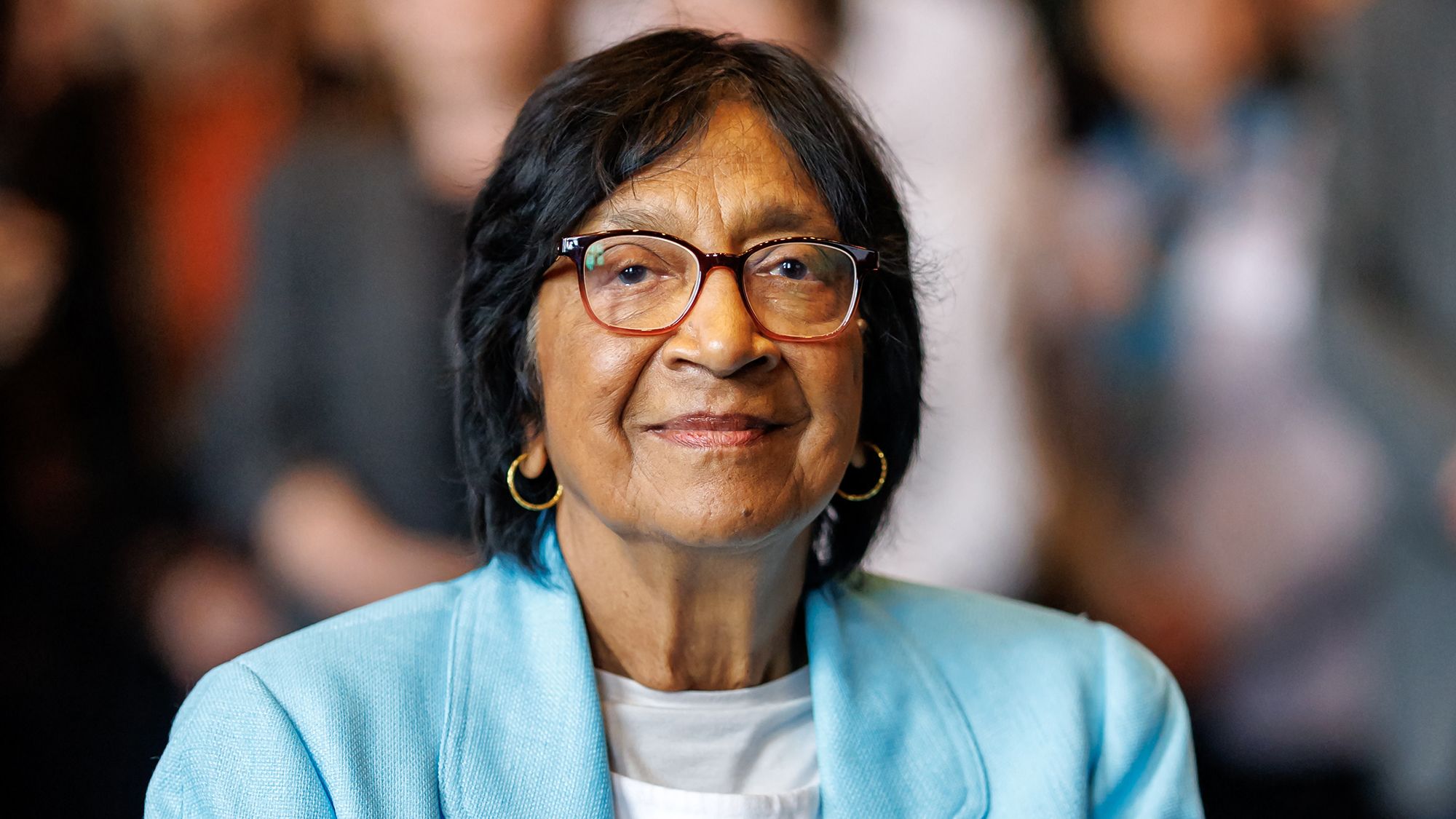
South African jurist Navanethem “Navi” Pillay, a former United Nations human rights chief of Indian origin, won the 2026 Nobel Peace Prize on Friday for her work promoting peace, international law and accountability for serious crimes.
The 85-year-old, who grew up under apartheid and later held senior judicial and international positions, dedicated the award to survivors of international crimes and those defending justice.
“Their compassion and courage continue to ensure that impunity will not be allowed to reign,” Pillay said.
She warned that international law and human rights were facing significant political pressure, including attacks on the International Criminal Court.
Pillay recently chaired the UN Independent International Commission of Inquiry on the Occupied Palestinian Territory. In September 2025, the commission concluded that Israeli authorities and security forces had committed and were continuing to commit genocide against Palestinians in Gaza. It also said Israeli President Isaac Herzog, Prime Minister Benjamin Netanyahu and then Defence Minister Yoav Gallant had incited genocide.
Israel rejected the findings. The commission’s conclusions were those of an investigative body and not a final ruling by an international court.
Pillay referred to the Gaza report after the Nobel announcement, describing it as her most recent work.
She is also serving as a judge in proceedings at the International Court of Justice in which The Gambia has accused Myanmar of violating the Genocide Convention. The Gambia selected her to sit in the case.
Pillay learnt of the award while attending a forum in Nuremberg, Germany, where Nazi leaders were tried after World War Two. She said the announcement was particularly fitting because she was in Courtroom 600, where the trials took place.
She warned that attempts to weaken international criminal justice risked reversing progress made since the Nuremberg trials.
“They risk returning us to a world in which power rather than law determines whose suffering matters,” she said.
Pillay urged political leaders to uphold human rights, refrain from war and fulfil their obligations under international law and the UN Charter.
Born in Durban on September 23, 1941, to parents of Tamil Indian descent, Pillay grew up in a poor family under apartheid. Her father worked as a bus driver and took on multiple jobs to support the family, while her mother raised their eight children.
She studied at the University of Natal, earning a Bachelor of Arts degree in 1963 and a law degree in 1965. She later obtained postgraduate law degrees from Harvard University, including a doctorate in juridical science in 1988.
In 1967, she became the first woman of colour to establish a law practice in South Africa’s Natal Province. She spent decades defending anti-apartheid activists and political detainees, including Nelson Mandela, and highlighting torture and solitary confinement.
In 1973, she helped secure political prisoners’ right to legal counsel.
Pillay also contributed to efforts to establish constitutional protections against discrimination in post-apartheid South Africa. In 1995, a year after the country’s first democratic elections, she became the first woman of colour to serve as an acting judge on its High Court.
That year, she joined the International Criminal Tribunal for Rwanda, which prosecuted those responsible for genocide and other serious crimes committed in 1994. She served as a judge until 2003 and was the tribunal’s president from 1999 to 2003.
She was among the judges in the landmark case against former Rwandan mayor Jean-Paul Akayesu, who was convicted of genocide, crimes against humanity and direct and public incitement to commit genocide.
The tribunal’s 1998 judgment recognised that rape and sexual violence could constitute acts of genocide when committed with the specific intent required under the Genocide Convention. It also recognised rape as a crime against humanity in the circumstances established in the case.
The Norwegian Nobel Committee credited Pillay with contributing significantly to the development of international law on sexual violence.
She later served as a judge at the International Criminal Court from 2003 to 2008 and as UN high commissioner for human rights from 2008 to 2014. She also co-founded the women’s rights organisation Equality Now in 1992.
The Nobel Committee said her work had helped advance the prosecution of war crimes, crimes against humanity and genocide, while promoting accountability for states and national leaders.
“Peace requires justice,” the committee said, describing accountability for war crimes and abuses as essential to a peaceful world.
South African President Cyril Ramaphosa congratulated Pillay, saying the award recognised her lifelong commitment to justice and human dignity.
European Commission President Ursula von der Leyen also praised her work, citing her efforts to confront injustice from apartheid-era South Africa to the Rwandan genocide.
The 2026 award marks the 125th anniversary of the Nobel Peace Prize, first presented in 1901.