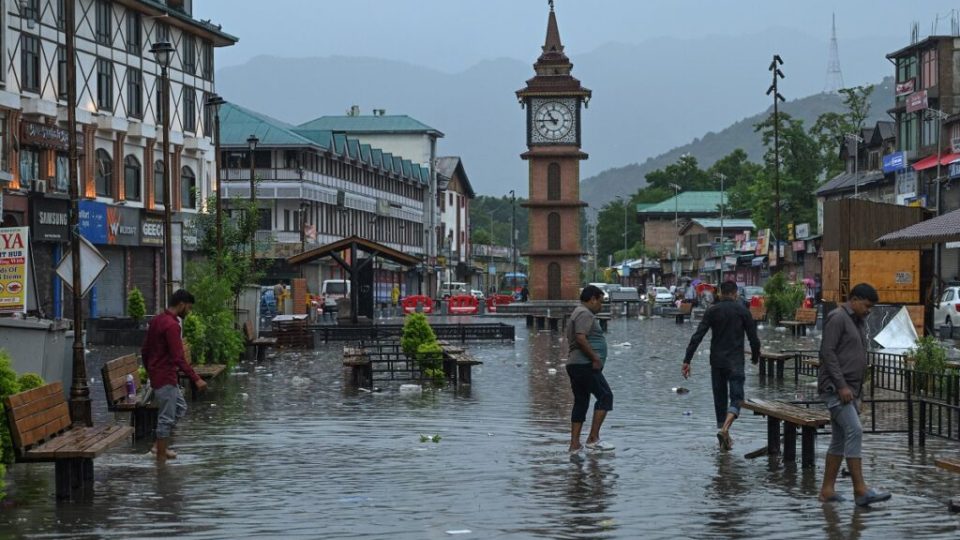

At a vegetable market in Srinagar, inflation does not arrive as a percentage.
It arrives as a smaller bag of vegetables.
It appears in the price of peas, in a higher poultry bill, in the pulses that cost more than they did a few months ago. It shows up when a family reaches the end of the month and discovers that the same income has covered fewer of the things it normally buys.
For households across Jammu and Kashmir, that pressure is becoming harder to ignore.
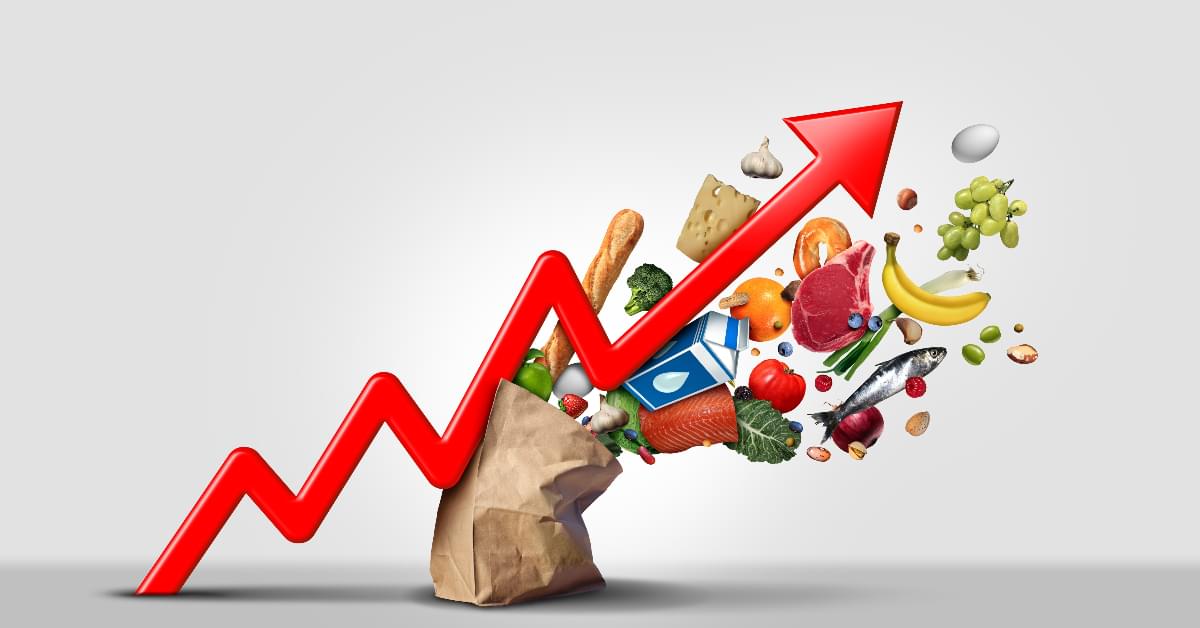
The Union Territory’s inflation rate climbed to 4.09 percent in August, according to figures released by the Union Ministry of Statistics and Programme Implementation. It was the fifth consecutive monthly increase, rising steadily from 2.67 percent in April to 2.84 percent in May, 3.52 percent in June and 3.87 percent in July.
Between April and August, inflation increased by 1.42 percentage points. The August rate was another 0.22 percentage points higher than the previous month.
The numbers describe a trend.
The markets describe its consequences.
“Prices of vegetables have gone up. Poultry rates are also up, and almost all rates have increased,” said Ejaz Ahmed, a resident of Soura.
“Peas are being sold at Rs 120 per kg. The rates of pulses have also gone up. It has become very difficult.”
For Javid Ahmad, a Srinagar resident, the problem is less about one particular commodity than the accumulation of many small increases.
“The prices of essential commodities have gone up. Whether it is vegetables, pulses or other things that we use every day, everything is becoming expensive,” he said. “It is becoming difficult to manage the monthly budget.”
That is the quieter side of inflation.
There is no single dramatic bill that announces it. Instead, the pressure accumulates over weeks and months, forcing households to make adjustments that can be almost invisible from outside.
Inflation has a simple meaning: when prices rise, the same amount of money buys fewer goods.
For a household, that can translate into a series of decisions. Buy less. Buy cheaper. Postpone something. Cut an expense elsewhere. Or simply accept that the monthly budget will no longer stretch as far as it once did.
“When prices keep increasing, but income remains the same, the household has to compromise somewhere,” Javid said. “People have to reduce their purchases or postpone other expenses.”
The distinction between prices and incomes is important.
A rise in prices does not affect every household in the same way. Someone with a substantial increase in income may absorb higher food costs relatively easily. A family whose income has remained unchanged has less room to adjust.
For lower-income households, food already occupies a large share of monthly expenditure. An increase in everyday food prices can therefore leave less money available for transport, education, healthcare, clothing, rent or other needs.
The inflation figure is an average measure. Household experience is not.
What one family considers manageable may force another to change its diet or defer an essential expense.
The recent movement in J&K’s inflation rate is notable because it has been persistent.
In April, the rate was 2.67 percent. A month later, it had risen modestly to 2.84 percent. By June, it had crossed 3 percent, reaching 3.52 percent. July brought another increase, to 3.87 percent. Then came August: 4.09 percent.
The sequence is more revealing than any individual number.
There was no sudden one-month jump. Instead, inflation moved higher month after month.
For economists and policymakers, such a pattern raises questions about what is driving the increase, whether food prices are responsible for a significant part of it and how long the pressures may last.
For consumers, those questions are often secondary.
They want to know why their grocery bill has changed.
Jammu and Kashmir’s geography adds another complication.
A significant share of the goods consumed in the Union Territory, particularly in Kashmir, comes from outside the region. Estimates cited in discussions on the local supply chain put the dependence at around 60 percent.
That dependence makes the price of a commodity partly a question of distance.
Goods entering Kashmir must travel long distances before reaching local wholesalers and retailers. Transportation, fuel, loading, unloading, storage and other logistical costs can all become part of the final retail price.
When freight costs rise, supply routes are disrupted or prices increase in the regions from which commodities are sourced, some of that pressure can eventually reach consumers in the Valley.
This does not mean transportation explains every increase.
Food prices are influenced by a range of factors, including production, seasonal availability, weather, demand, supply conditions and wholesale and retail margins.
But a region that relies substantially on supplies from outside remains exposed to events occurring beyond its own markets.
For consumers, that can make price stability more difficult.
Consider a vegetable entering Kashmir from outside.
Its final price is not simply the price paid to the farmer.
There is transportation to account for. There may be storage and handling. There are wholesale transactions before the product reaches the retailer. Fuel costs affect the movement of goods. Seasonal shortages can increase competition for available supplies.
By the time the vegetable reaches a consumer, the original cost is only one part of the calculation.
The same is true of pulses and other commodities.
This is why local inflation cannot always be understood by looking only at what happens inside a Srinagar marketplace. The market is connected to a much larger network of production and distribution.
For Kashmir, that network stretches beyond the mountains.
The most visible effect of inflation is often felt in food because food is difficult to avoid.
A family can delay purchasing an appliance. It can postpone buying clothes. It can reduce leisure spending. But meals have to be prepared every day. That makes food prices particularly consequential for household budgets.
Vegetables are a recurring purchase. Pulses are a staple. Poultry and other protein sources form part of many families’ diets.
When the price of several categories rises at the same time, households have fewer opportunities to compensate by switching between products.
Some may reduce quantities. Others may choose less expensive varieties. Some may reduce purchases of items they consider less essential. And for families already managing rent, school fees, transport costs and medical expenses, the adjustments can become more difficult.
Inflation therefore has a cumulative character.
A single price increase may be absorbed. Several increases, repeated over several months, can change the entire household budget.
Government inflation data can sometimes appear disconnected from everyday life because it is expressed as a percentage.
But the consumer encounters inflation differently.
The shopper notices when a vegetable that was routinely purchased becomes a luxury. The parent notices when the weekly grocery bill rises. The household notices when the monthly salary disappears sooner than expected.
The 4.09 percent figure does not mean that every commodity in J&K became 4.09 percent more expensive in August.
Inflation is a broader measure of the change in prices across a basket of goods and services.
Individual commodities can rise much faster, remain stable or even become cheaper.
That distinction is important when interpreting what consumers are experiencing.
The complaints from Srinagar residents are therefore not a precise measurement of inflation on their own. They are a description of how broader price pressures are being experienced at the household level.
J&K’s dependence on outside supplies also raises a larger policy question.
How resilient is the region’s food and commodity supply chain?
Local production cannot replace every item that enters the Union Territory, nor would that necessarily be practical. But stronger local supply chains for selected agricultural products could potentially reduce exposure to some transportation and supply disruptions.
Better storage infrastructure could also matter, particularly for perishable commodities.
So could more efficient wholesale and distribution systems.
The point is not that local production automatically means lower prices. Markets are more complicated than that.
But the greater the number of links between producer and consumer, the greater the potential for costs and disruptions to travel through the chain.
Inflation also changes how families think about the future.
When people expect everyday expenses to keep rising, they may become more cautious about spending.
A household that was once able to save a portion of its income may find that more of it is being absorbed by necessities.
A family may postpone a purchase, reduce discretionary spending or rely more heavily on existing savings.
For people living close to the margin, there may be little room for such choices.
This is why inflation is ultimately about purchasing power. The question is not simply whether prices are rising. It is whether incomes are keeping pace.
If they are not, the practical effect is a gradual reduction in what households can afford.
The August figure provides one snapshot in a longer story.
J&K’s inflation has risen every month since April, crossing from 2.67 percent to 4.09 percent.
Whether that trend continues will depend on what happens to food prices, supply conditions, transportation costs and other components of household expenditure in the months ahead.
For policymakers, the task is to understand where the pressure is coming from rather than treating the headline number as the whole story. For consumers, the concern is more immediate.
They are already making the calculations.
How much can be spent on vegetables? Can poultry remain on the menu? How much can be allocated to pulses and other staples? What can be postponed until next month? And what cannot?
The inflation rate may be printed in a government statistical release, but its consequences are worked out in kitchens, markets and household notebooks.
In J&K, the arithmetic has changed steadily since April.
The same rupee is now being asked to do more.
And for many families, there is simply less left over when the shopping is done.
About the Author
Amir Yaseen is a Srinagar-based journalist interested in Kashmir, policy, progress, and the human stories shaping everyday life.