
In the official numbers, Jammu and Kashmir’s liquor trade has not grown.
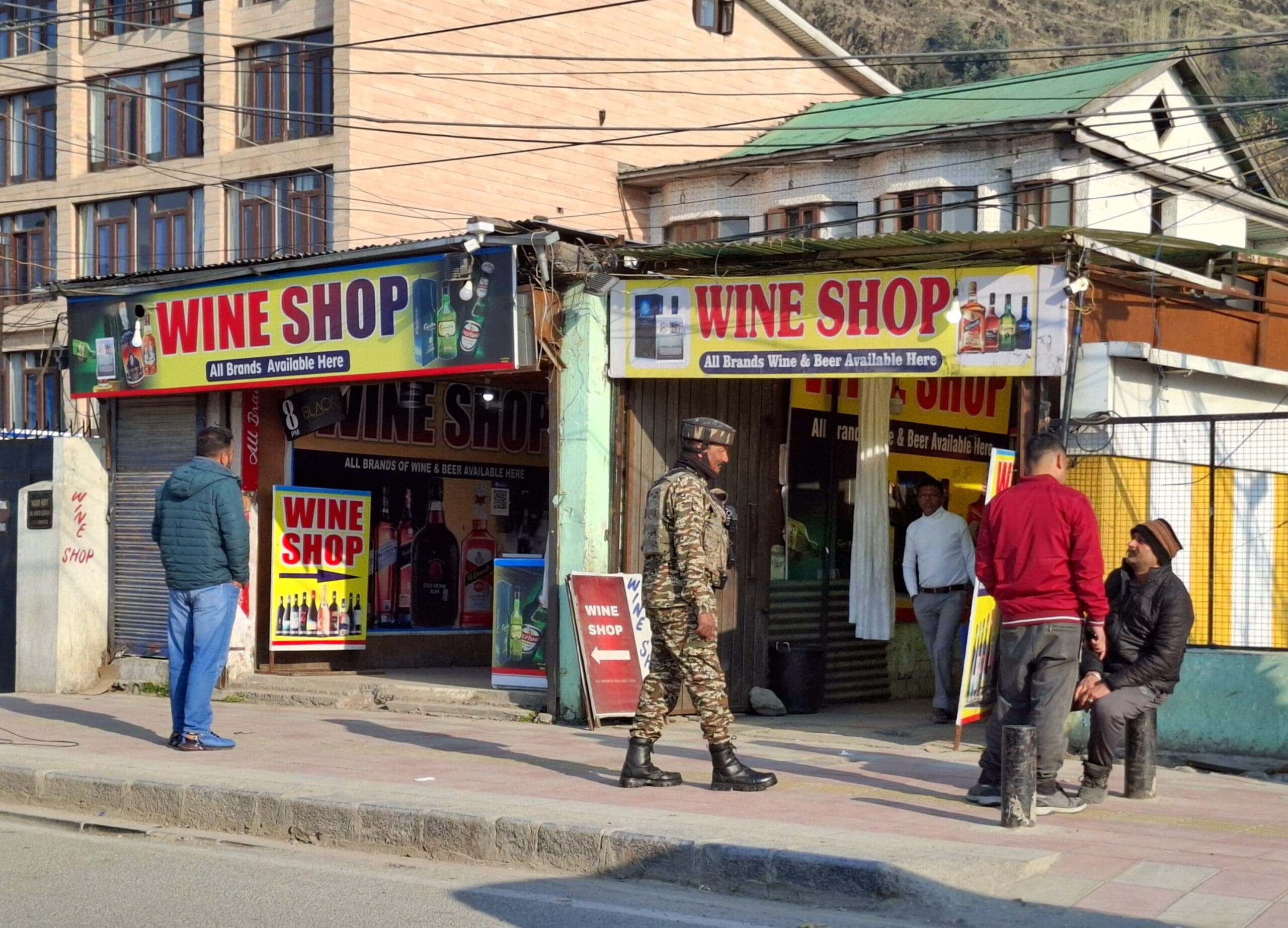
The government has repeatedly said that the total number of JKEL-2 retail liquor vends has remained at 305 since 2023-24 – 291 in Jammu and 14 in Kashmir. For the 2025-26 excise year, the department again put 305 vends up for e-auction.
But look closer, at the level of individual excise ranges, and a different picture begins to emerge.
Information obtained from the Excise Department under the Right to Information Act shows that the number of liquor shops reported across seven excise ranges rose from 118 in 2021-22 to 180 in 2025-26 – an increase of nearly 53 per cent. By August 2026, the figure had reached 183 in the same jurisdictions.
The numbers do not, by themselves, establish that J&K has added 65 new retail vends. The department’s statewide figure says it has not.
Instead, the RTI disclosures offer a more granular picture of how the liquor trade is distributed, licensed and recorded within individual administrative jurisdictions – and how dramatically the footprint has changed in some of them.
The sharpest increases have come in parts of Jammu and the Chenab region, while Kashmir has also seen modest but notable changes in ranges that previously reported few or no shops.
The City Excise Range, North Jammu, had 68 liquor shops in 2021-22. Four years later, the number stood at 84.
Kathua’s figure more than doubled, from 15 to 31.
In Rajouri-Poonch, it rose from 13 to 26. The Doda-Kishtwar-Ramban range went from 12 to 23.
Together, these figures show where much of the change recorded in the RTI data has occurred: across districts where expanding urban centres, highways, tourism and commercial activity intersect with a regulated liquor market.
The Kashmir figures are smaller but tell their own story.
The Srinagar-Budgam-Ganderbal range reported 10 shops in 2021, rising to 16 in 2025 and remaining at 16 in the response covering 2026 up to August 15.
The Baramulla-Kupwara-Bandipora range reported no liquor shop in 2021. By 2023, it had four. That number remained unchanged through 2024, 2025 and the available 2026 figures.
The Anantnag-Pulwama-Shopian-Kulgam range followed a similar pattern. It reported no shops in 2021 but two from 2023 onward.
The changes are modest compared with those in Jammu, but their significance lies partly in the geography. A liquor outlet appearing in a range that previously reported none is different from an existing market becoming larger within a range that already had numerous shops.
And it complicates the way a single statewide figure can describe the liquor economy.
There is another number running parallel to the shop count: revenue.
Across the seven ranges, combined excise revenue was about Rs 381.6 crore in 2021-22. By 2025-26, it had risen to approximately Rs 612 crore, according to figures furnished by the respective Excise and Taxation Officers.
The largest collection came from north Jammu.
Its revenue increased from Rs 173.89 crore in 2021-22 to Rs 237.94 crore in 2025-26.
Kathua rose from Rs 69.02 crore to Rs 100.19 crore. Doda-Kishtwar-Ramban went from Rs 35.43 crore to Rs 60.84 crore, while Rajouri-Poonch recorded Rs 65.90 crore in 2025-26 compared with Rs 43.78 crore four years earlier.
The Kashmir ranges also recorded higher collections.
Srinagar-Budgam-Ganderbal reported Rs 59.51 crore in 2021 and Rs 81.68 crore in 2025. Baramulla-Kupwara-Bandipora recorded Rs 5.64 crore in 2025, while the Anantnag range reported Rs 9.03 crore.
The 2026 figures require caution. They cover only part of the year – up to August 15 or August 31, depending on the range – and cannot be directly compared with full-year collections.
Still, the longer trend is clear: the liquor trade has become more financially significant within the jurisdictions covered by the RTI responses.
That trend is consistent with the department’s broader revenue position. Its official revenue portal lists excise receipts of Rs 2269.93 crore for 2024-25, with a budget figure of Rs 2280.85 crore for 2025-26.
The liquor economy, in other words, occupies an awkward space in government policy: it is an activity the state says it does not seek to promote, but one that contributes substantially to the public exchequer.
The Excise Department’s stated position is that its policy is not to encourage indiscriminate consumption of intoxicants.
Its stated objective is regulation – ensuring that existing consumers obtain liquor through legal and duty-paid channels rather than illicit distillation or unregulated supply.
That distinction is important.
A rise in the number of shops reported in a particular excise range does not necessarily mean that the government is seeking to increase alcohol consumption. It can also reflect changes in licensing arrangements, redistribution of outlets, administrative boundaries or the way retail locations are reported.
The statewide vend count provides the broader regulatory framework.
For 2025-26, the department issued an e-auction notice for 305 JKEL-2 retail vends. The government subsequently reiterated that the number had not increased from the 2023-24 level.
The apparent contradiction between the statewide figure and the range-wise figures is therefore the most important feature of the RTI disclosures.
The data describes two different things.
One is the total sanctioned retail-vend universe. The other is the number of shops reported within specific excise jurisdictions. They should not be treated as interchangeable.
The scale of consumption is visible in another statistic.
Official data reported earlier this year showed that more than 5.63 crore liquor bottles had been sold across civil, CSD and paramilitary outlets in J&K up to January 2026 during the 2025-26 financial year.
That number encompasses different categories of outlets and consumers and cannot be equated with the JKEL-2 retail-vend figure. But it illustrates the scale of the market that the Excise Department is regulating.
The department’s policy challenge is consequently not simply about how many shops exist.
It is also about where they operate, how they are monitored, whether licensed supply displaces illegal supply, and what happens to the social costs associated with alcohol and substance use.
The government has previously pointed to another side of the equation: prohibition, it has said, could affect revenue while potentially creating challenges around smuggling and illegal distillation, as well as sectors such as tourism and hospitality.
The debate therefore sits between competing policy objectives – regulation, revenue, public health and control of illicit trade.
The RTI responses reveal that the department itself faces a less visible constraint: manpower.
Kathua has 23 vacancies against a sanctioned strength of 36. Doda-Kishtwar-Ramban has 14 vacancies against 24 sanctioned posts. Srinagar-Budgam-Ganderbal has eight vacancies against 35 sanctioned posts.
The Baramulla-Kupwara-Bandipora response also records vacancies in its divisional establishment. North Jammu’s cadre statement shows significant vacancies, particularly among Excise Guards.
For a department whose work extends beyond issuing licences and collecting revenue, those vacancies matter.
The Excise Department says its field responsibilities include raids, inspections and naka checking at vulnerable locations to detect illegal transportation and trafficking of liquor and drugs.
That work requires personnel on roads and at enforcement points, not merely offices processing licences.
A growing or geographically dispersed regulated market, alongside persistent concerns about illicit liquor and trafficking, increases the importance of that enforcement capacity.
The department’s policy documents also acknowledge that liquor revenue has a social dimension.
Under the 2026-27 Excise Policy, the Social Responsibility Corpus Fund is intended to support activities including rehabilitation of families involved in illicit liquor trade, awareness programmes, counselling and drug de-addiction initiatives.
It represents a recognition that the revenue collected from intoxicants cannot be considered in isolation from the social consequences surrounding them.
This is particularly relevant in a region where public debate over liquor sales has periodically extended beyond economics into questions of access, regulation and social impact.
In February, the government told the Legislative Assembly that there was no proposal to open new wine shops in the next financial year.
That statement sits alongside the RTI data showing changes in individual excise ranges and alongside the much larger statewide revenue generated by the sector.
The result is not a simple story of expansion or contraction. It is a story of redistribution, regulation and rising financial returns.
For residents looking at a neighbourhood and asking whether liquor outlets have become more numerous, the statewide figure of 305 may seem disconnected from what they see locally.
For the government, however, the 305 figure remains the central measure of the sanctioned retail-vend framework.
Both can be true at the same time if the range-wise figures represent changes in the distribution or reporting of outlets rather than the creation of an equivalent number of additional statewide licences.
That distinction deserves greater public explanation because the difference between an increase in total vends and a change in their geographic distribution is substantial.
The RTI material does not establish that 65 additional liquor licences were created between 2021-22 and 2025-26. It establishes that the number of shops reported in the seven specified excise ranges increased from 118 to 180.
The distinction is more than bureaucratic. It determines what the numbers actually say about access to alcohol.
For years, the liquor debate in J&K has tended to revolve around a familiar question: how many outlets are there?
The RTI disclosures suggest that another question may be equally important: where are they, how are they distributed, and what is the state doing around them?
A statewide number can remain unchanged while the experience of a particular district changes considerably.
A range can record a doubling of shops without the UT adding an equivalent number of new retail vendors.
Revenue can rise even when the official statewide shop count does not.
And enforcement can remain stretched even as the value of the regulated market grows.
Those distinctions make the latest data less a verdict on liquor policy than a map of its moving parts.
J&K’s Excise Department is simultaneously regulating an existing market, protecting a significant revenue stream, trying to prevent illicit trade and funding programmes intended to address some of the social harms associated with intoxicants.
The RTI figures place those competing responsibilities in sharper view.
The most striking number may be the 53 percent rise across the seven ranges.
But the more consequential figure is the one that appears unchanged: 305.
Between those two numbers lies the real story – not necessarily of more liquor shops in J&K, but of a liquor market whose geography, revenues and administrative demands have changed substantially while the official statewide retail-vend ceiling has remained the same.
About the Author
Moien Darial writes with the precision of an analyst and sensitivity of a storyteller, exploring global economic shifts and emerging technologies.