
Kashmir’s handicrafts have never suffered from a shortage of beauty. Their real challenge has often been something more fundamental: convincing a buyer that what they are purchasing is genuinely Kashmiri, handmade, and worthy of its price.
The Department of Handicrafts and Handloom, Kashmir’s launch of the GI QR Code Management System at its Quality Control Division in Srinagar therefore deserves to be viewed as more than a laboratory upgrade. It could become an important commercial tool for artisans, craftsmen, traders and small businesses struggling to compete in increasingly crowded domestic and international markets.
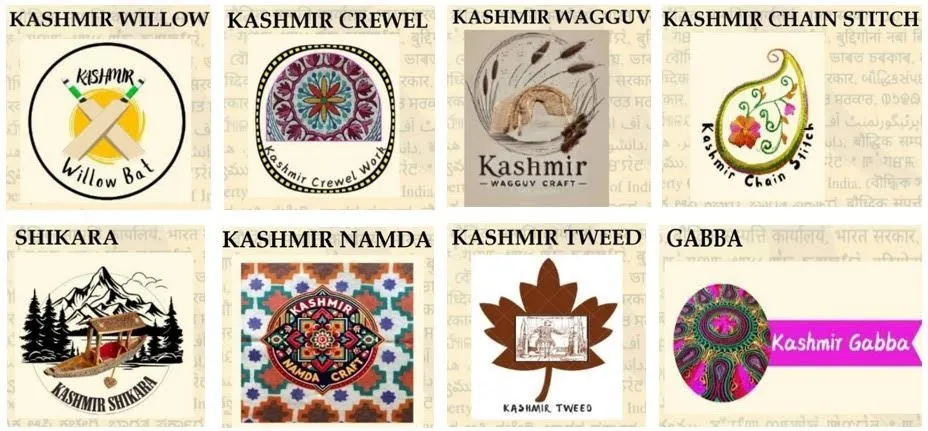
With the Quality Control Division becoming the third GI laboratory in Jammu and Kashmir, a wider range of Kashmiri crafts can now enter the formal GI certification ecosystem. The laboratory will test and label products including Wagguv, Gabba, felted Namdah, Walnut Wood Carving, Chain Stitch, Khatamband and Crewel. The significance is particularly great for crafts that have remained outside the spotlight enjoyed by Pashmina, carpets, Kani and Sozni.
For a buyer, a GI QR label can provide something that traditional craftsmanship alone cannot always guarantee in a modern marketplace: traceable authenticity.
That matters enormously for Kashmir.
The crafts economy increasingly operates beyond the physical marketplace. A customer in Delhi, Mumbai, Dubai, London or New York may encounter a Kashmiri product through an online platform, social media page, exhibition or a retailer. Such a customer may not know the difference between a genuinely handmade Kashmiri product and a machine-made imitation. A credible GI label, backed by testing and certification, can bridge that trust deficit.
For the artisan, this trust can translate into value.
The greatest beneficiaries could be the crafts that occupy the affordable and middle segments of the market. Not every customer can buy an expensive Pashmina shawl or a high-value carpet. There is, however, a huge potential market for products such as Namdah, Gabba, Wagguv, walnut wood articles and other handmade goods. GI certification can help these products acquire an identity that allows them to compete on quality and provenance rather than simply on price.
This is particularly important for languishing crafts.
A traditional craft survives only when it provides a livelihood. Cultural appreciation alone cannot keep an artisan at the loom, workshop, or workbench if the finished product cannot generate a sustainable income. By strengthening the commercial identity of fading crafts, GI certification can make preservation economically meaningful.
The QR component adds another layer to this process. In an age when consumers increasingly seek information about what they buy, a scannable label can potentially connect the product with its authenticity, origin and certified identity. That creates an opportunity for Kashmir’s craft sector to move from anonymous handmade goods to identifiable, differentiated products.
For businessmen dealing in Kashmiri crafts, the system could also become a valuable selling proposition. Retailers and exporters can use certified authenticity to build consumer confidence and strengthen the reputation of their merchandise. Better packaging, which the Department is already promoting alongside capacity building, can further transform the presentation of Kashmir’s middle-segment crafts.
But certification should not become an end in itself.
Its real success will be measured by whether the artisan receives a greater share of the value created by the Kashmiri brand. The Department’s decision to make GI labelling available at nominal user charges is therefore significant. The system must remain accessible to small artisans, cooperatives, producer groups and micro-businesses rather than becoming something used primarily by larger commercial players.
The next step should be aggressive awareness and market promotion. Artisans need to know which products qualify, how certification works, and where to obtain it. Buyers, retailers and exporters must also be educated to recognise and demand the GI mark. Digital marketplaces and tourism outlets could become important channels for promoting certified Kashmiri crafts.
Kashmir has spent generations creating a craft vocabulary that the world recognises. The task now is to protect that vocabulary from imitation while ensuring that the people who continue to create it are able to earn from it.
The GI QR initiative provides an important piece of that puzzle. If certification, packaging, market access, e-commerce, design development and artisan support move together, a small QR label could have consequences far larger than its size.
For Kashmir’s craftsmen, authenticity should not merely be a certificate. It should become a source of livelihood, competitiveness and renewed pride.
About the Author
Bisma Rafiq is interested in human resources and its role in improving journalism and media organisations. She is also a passionate storyteller.