
As Kashmir’s once-predictable seasons give way to cloudbursts, hailstorms and flash floods, the Valley confronts a climate crisis that is reshaping its landscape, livelihoods and the everyday lives of its people. Wajahat Iqbal Kashtwari writes.
There was a time when Kashmir’s weather followed an unwritten calendar.
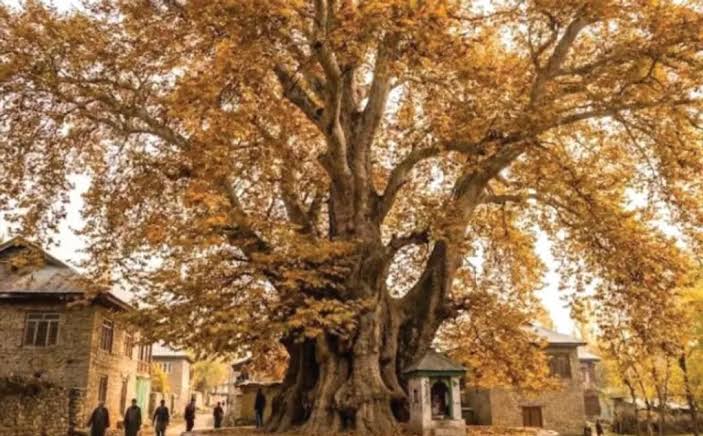
Spring arrived with almond blossoms and gentle showers. Summer unfolded beneath clear blue skies interrupted by occasional evening rain. Autumn painted the Valley in amber and crimson before winter settled in with snowfall that communities had learned to anticipate and prepare for.
The rhythm was so familiar that people rarely questioned it. Farmers sowed paddy by instinct, shepherds moved livestock according to the seasons, and orchardists could almost predict the weather by reading the sky over the Pir Panjal.
That rhythm is faltering.
The Valley today is witnessing a climate that appears increasingly unfamiliar even to those who have spent their entire lives beneath its mountains. Sudden cloudbursts, prolonged hailstorms, flash floods, intense thunderstorms and erratic rainfall have become recurring headlines rather than isolated incidents. Weather, once regarded as a dependable companion of life in Kashmir, is becoming unpredictable.
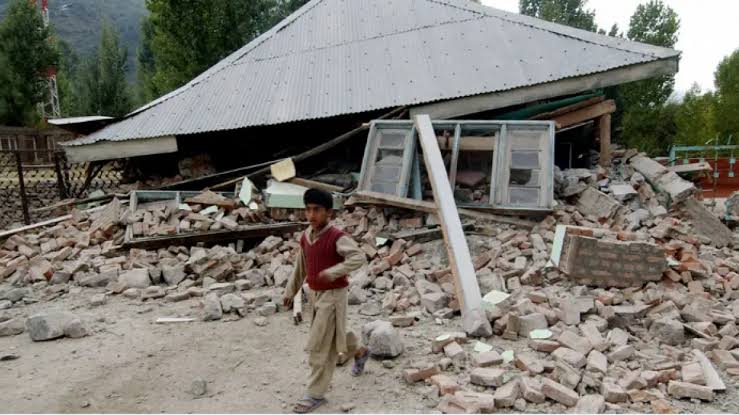
The recent cloudburst in Baramulla’s Kandi area is another reminder that climate change is no longer an abstract environmental debate confined to international conferences or scientific journals. It is arriving in orchards, flowing through villages, washing away roads and unsettling the lives of ordinary people.
Fortunately, no lives were lost in the latest incident.
But the muddy torrents that rushed through agricultural land, the rising waters of Nallah Ningli and the panic among residents reveal an uncomfortable truth. Every such event is becoming a rehearsal for a potentially larger disaster.
The Baramulla cloudburst did not occur in isolation.
Within days, Sirhama in Anantnag witnessed another cloudburst that submerged paddy fields and apple orchards beneath water, mud and silt. Before that came similar incidents in Lolab, Tulail, Shangus and several districts of Jammu, including Reasi, Doda, Kishtwar and Poonch.
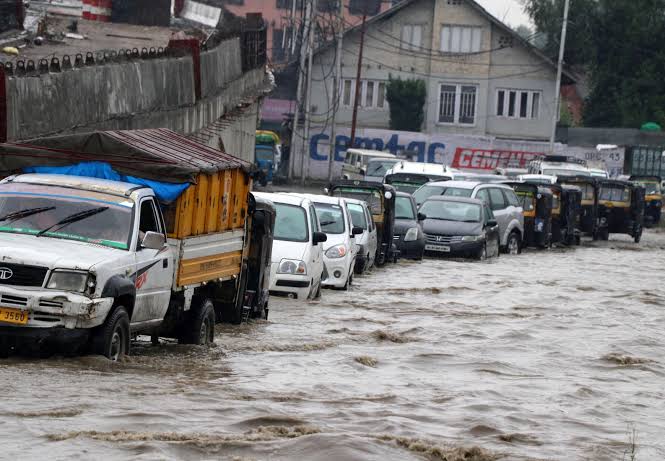
Almost every week now brings reports of another village coping with flash floods, another bridge damaged, another road blocked or another orchard buried beneath debris.
The pattern is unmistakable.
Scientists have been warning about precisely this future for years.
Hydrogeologists explain that warmer air can retain more moisture. Climatologists point to increasingly complex interactions between western disturbances and moisture-bearing winds. Meteorologists observe that rising temperatures intensify rainfall events over mountainous terrain.
The science is compelling.
Yet climate change is no longer understood merely through scientific explanations.
It is increasingly experienced through lived reality.
For a farmer in Baramulla, climate change is not measured in degrees Celsius.
It is measured in a paddy field destroyed overnight.
For an apple grower in Anantnag, it is seen in hail-damaged fruit after months of careful cultivation.
For a family living along a mountain stream, it is the sound of rushing water after midnight and the fear that accompanies every spell of intense rain.
Climate change has transformed weather from a seasonal expectation into a source of anxiety.
The Himalayan region has always been environmentally fragile.
Steep slopes, young mountains, glacial rivers and complex weather systems have made it vulnerable to natural hazards. But human activity has magnified those vulnerabilities.
Forests that once absorbed rainfall have steadily diminished.
Wetlands that acted as natural flood buffers have shrunk. Construction has expanded onto floodplains and unstable slopes. Streams have narrowed under encroachment. Urban centres have replaced permeable soil with concrete that sends rainwater rushing instead of allowing it to seep underground.
Nature is not merely changing. It is responding.
When intense rainfall falls upon degraded landscapes, water has fewer places to go.
It gathers speed. It carries mud, rocks and uprooted trees. It becomes destructive. The consequences are no longer limited to rural areas.
Urban Kashmir experiences waterlogging after brief periods of rain that would once have passed almost unnoticed. Drainage systems struggle to cope. Roads resemble streams. Neighbourhoods flood within hours.
The 2014 floods remain etched into collective memory. At the time, many regarded the disaster as extraordinary. Today, it increasingly appears to have been an early warning. Climate change does not necessarily produce one catastrophic event. More often, it creates repeated smaller disasters that gradually erode resilience. A cloudburst destroys irrigation canals. A hailstorm damages orchards. Heavy rainfall triggers landslides. Roads remain blocked. Schools close. Power supply is disrupted. Families spend savings rebuilding damaged homes. Recovery begins. Then another weather event arrives. The cycle repeats. Its cumulative cost is immense. Agriculture remains one of Kashmir’s greatest casualties.
The Valley’s economy continues to depend heavily on horticulture, paddy cultivation and vegetable farming. These activities rely upon relatively stable weather patterns.
Nature’s calendar, however, appears increasingly confused. Rain arrives when sunshine is needed. Hail falls during fruit development. Cloudbursts wash away fertile topsoil.
Warmer winters affect snowfall, altering water availability during spring and summer.
Farmers now face uncertainty at nearly every stage of cultivation. Tourism, another pillar of Kashmir’s economy, is equally vulnerable. Trekkers planning mountain expeditions increasingly encounter sudden storms. Road closures disrupt travel. Flash floods threaten popular destinations.
Adventure tourism depends upon predictable weather that climate change is steadily undermining.
Even public infrastructure is under strain. Roads designed for historical rainfall patterns face unprecedented runoff. Bridges confront higher flood discharges.
Drainage systems built decades ago prove inadequate against today’s intense rainfall.
Disaster management agencies respond more frequently than ever before, yet preparedness alone cannot solve a problem whose causes extend far beyond emergency response.
Adaptation must become central to planning. Roads require improved drainage.
Construction regulations must respect ecological realities. Wetlands deserve restoration rather than encroachment.
Afforestation must move beyond symbolic plantation drives towards meaningful ecosystem recovery.
Early warning systems need further strengthening, especially in vulnerable mountain communities where cloudbursts develop rapidly.
Equally important is public awareness.
Communities must understand changing weather risks, evacuation procedures and the importance of respecting natural drainage channels.
Climate resilience cannot be built by governments alone.
It requires participation from citizens, planners, scientists and policymakers alike.
There is another dimension to climate change that receives less attention. It is psychological. People increasingly watch dark clouds with apprehension rather than anticipation.
Rain, once associated with beauty, now raises fears of flooding. Thunderstorms interrupt sleep. Parents worry when children travel through mountain roads during unstable weather. An entire relationship between people and nature is quietly changing.
This may be climate change’s most profound consequence. It alters not only landscapes but emotions.
Kashmir has long been celebrated for its extraordinary natural beauty. Poets wrote about its seasons. Travellers admired its lakes and mountains. Artists found inspiration in its changing colours. Yet beauty alone cannot shield a landscape from environmental neglect or global warming. The Valley now stands at an important crossroads.
One path continues treating extreme weather as isolated incidents requiring temporary relief.
The other recognises that these events are connected symptoms of a larger climatic transformation demanding long-term adaptation, stronger environmental governance and more thoughtful development.
The choice should not be difficult. Climate change is no longer knocking on Kashmir’s door. It has already entered the house.
The question is whether we continue rearranging the furniture after every storm or begin reinforcing the foundations.
For the people of Kashmir, this is no longer merely an environmental challenge.
It is becoming the defining question of how they will live, farm, travel and build their future in a landscape where the seasons themselves seem to have lost their way.
About the Author
Wajahat Iqbal Kashtwari is a filmmaker and heads a multi-media production company. He navigates diverse formats from visual narratives to digital content. With an interest in environment, ecology, and climate change, Kashtwari follows environmental developments and interprets it in ways that resonate beyond geography.