
From mountain roads to digital employment guarantees, Jammu and Kashmir is reshaping its rural landscape through an ambitious push that seeks to bridge geography, opportunity and governance. Mir Suneem reports.
In the mountains of Jammu and Kashmir, roads are rarely just roads.
They are school buses that can finally reach children who once walked for hours. They are ambulances that replace improvised stretchers. They are trucks carrying apples before they spoil, milk before it sours, and vegetables before markets close. They are promises that a village perched on a distant hillside belongs not only to the landscape but also to the economy.
For much of the year, however, geography remains an uncompromising force. Snow buries mountain passes. Landslides swallow freshly cut roads. Rivers swollen by glacial melt isolate settlements that lie only a few kilometres from the nearest town but remain separated by hours of difficult travel. In many villages, distance is not measured in kilometres but in time, weather and uncertainty.
It is against this backdrop that Jammu and Kashmir’s latest push for rural connectivity assumes significance.
Within the span of two days this week, the Union Territory witnessed two announcements that, while distinct in their immediate objectives, are closely linked in their broader ambition. Chief Minister Omar Abdullah reviewed the progress of the Pradhan Mantri Gram Sadak Yojana (PMGSY), directing officials to accelerate the completion of rural roads and bridges across the region. A day later, the administration notified an entirely new rural employment framework – Viksit Bharat – Guarantee for Rozgar and Ajeevika Mission (Gramin), or VB-G RAM-G – which will replace the Mahatma Gandhi National Rural Employment Guarantee Act (MGNREGA) from July 1.
One programme is about roads.
The other is about work.
Together, they reveal a larger philosophy of development – one that views infrastructure and livelihoods not as separate policies but as interconnected foundations of rural transformation.
Few places in India illustrate the relationship between geography and development as dramatically as Jammu and Kashmir.
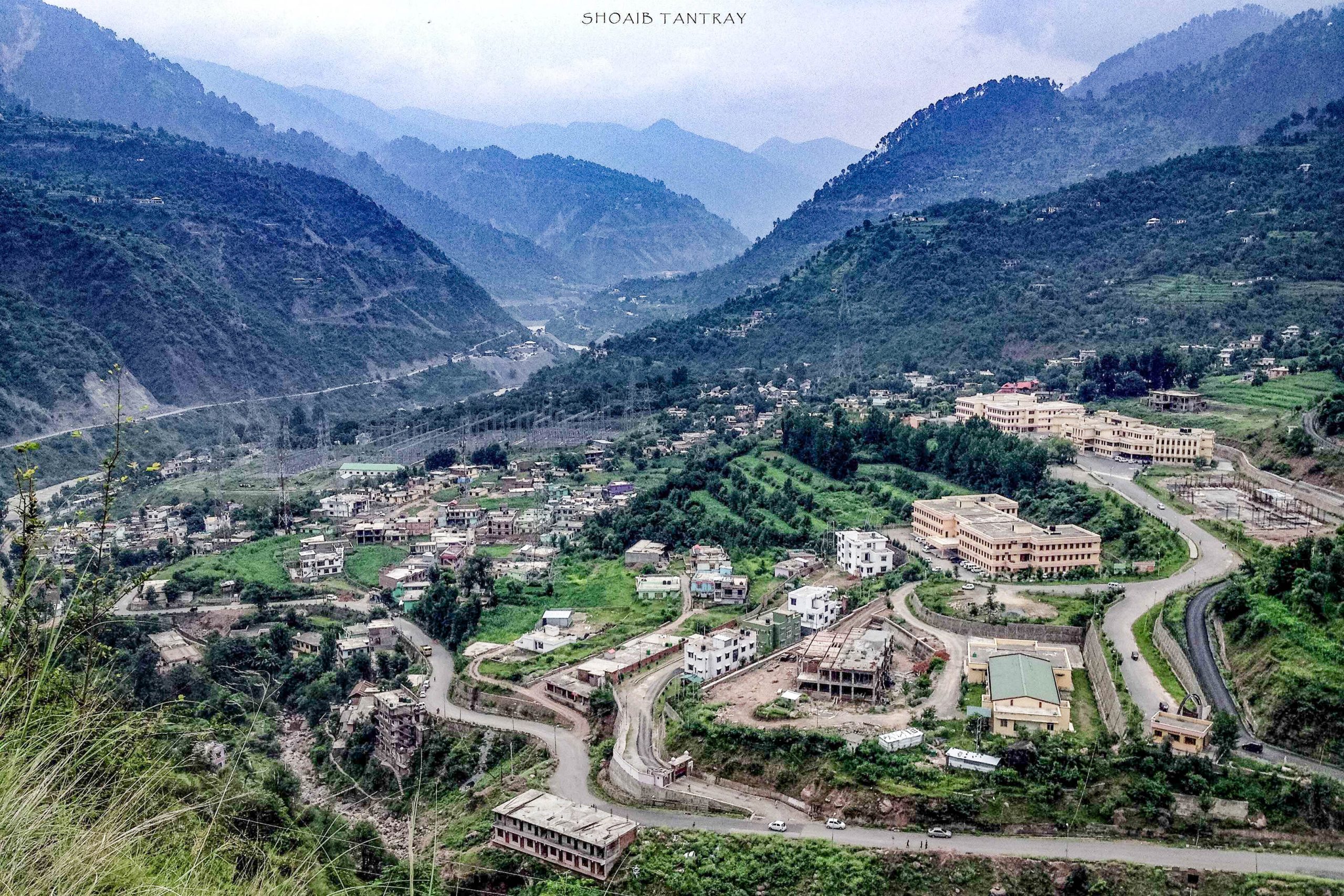
J&K stretches from the fertile plains of Jammu to the alpine meadows of Kashmir and the rugged mountains of Chenab Valley, Pir Panjal and the far-flung frontier districts. Hundreds of villages remain tucked into valleys where the terrain itself determines access to healthcare, education, markets and government services.
For decades, remoteness shaped daily life.
A woman in labour often had to be carried to the nearest roadhead.
Farmers accepted lower prices because transportation costs consumed potential profits.
Students frequently abandoned higher education because colleges lay too far away.
Government schemes, however well designed, struggled to reach communities where physical access itself remained uncertain.
Infrastructure planners have long argued that roads create opportunities far beyond mobility.
A paved road encourages banks to establish branches. Transporters begin regular services. Private investment follows. Teachers and doctors become more willing to accept postings in previously isolated areas. Tourism expands. Agricultural produce reaches larger markets. Property values rise. Small businesses emerge.
Development often arrives quietly, following the first vehicle that can travel throughout the year.
Launched by the Government of India in 2000, the Pradhan Mantri Gram Sadak Yojana sought to address one of rural India’s most persistent inequalities—the absence of reliable all-weather roads connecting eligible unconnected habitations.
In much of the country, implementation primarily involved engineering.
In Jammu and Kashmir, it required negotiating geography itself.
Every project demanded environmental clearances, geological assessments and extensive coordination among departments responsible for forests, mining, public works and local administration. Construction seasons remained short because heavy snowfall rendered work impossible for several months each year.
Building roads across mountains is fundamentally different from building them across plains.
A kilometre completed in a valley may require days.
The same kilometre carved into a mountain slope can require months.
Engineers contend not only with steep gradients but with unstable soil, avalanche-prone areas, fragile ecosystems and rivers capable of altering their course after unusually heavy rainfall.
The costs of delay therefore extend beyond financial calculations.
Every unfinished bridge leaves villages dependent on temporary crossings.
Every incomplete road postpones access to essential services.
Every administrative bottleneck prolongs isolation.
It was these concerns that dominated Chief Minister Omar Abdullah’s review meeting this week.
Chairing senior officials from the Public Works, Forest and Mining departments, alongside Deputy Chief Minister Surinder Choudhary, Abdullah examined progress under various phases of PMGSY and reviewed plans for completing pending roads and bridges.
Officials briefed him on ongoing construction, newly sanctioned projects and preparations under PMGSY-IV, the latest phase of the programme. The Chief Minister instructed departments to remove obstacles delaying implementation, particularly those arising from statutory clearances and inter-departmental coordination, while insisting that construction quality should never be compromised in the pursuit of faster execution.
The emphasis was unmistakable.
Connectivity remains central to rural development.
Particular attention was directed towards remote and border villages where transportation continues to be disrupted by difficult terrain and severe weather. These settlements often experience long periods of isolation during winter, affecting everything from healthcare delivery to educational continuity.
Roads, Abdullah observed, have a transformative role in improving access to markets, schools, hospitals and government services.
The statement reflected a widely accepted development principle: infrastructure does not merely connect places; it connects possibilities.
The benefits of rural roads rarely become visible immediately.
The first months after completion may simply bring easier travel.
The deeper transformation unfolds gradually.
Farmers begin cultivating crops that were previously too expensive to transport. Women gain easier access to maternal healthcare. Young entrepreneurs establish shops and service centres. Public transport operators introduce new routes. School attendance improves because children no longer spend hours walking difficult mountain paths.
Researchers studying rural infrastructure have repeatedly observed that roads influence social indicators as much as economic ones.
They reduce isolation. They improve emergency response. They encourage institutional presence. They reshape migration patterns.
In border districts, they also strengthen administrative reach and improve the movement of essential supplies during emergencies.
Yet roads alone cannot generate prosperity.
They require complementary investments in employment, agriculture, digital connectivity and local enterprise.
It is perhaps for this reason that the administration’s announcement of a new employment programme arrived almost immediately after the review of PMGSY.
Rather than treating employment and infrastructure as separate policy domains, the government appears intent on integrating them into a broader rural development strategy.
Beginning July 1, Jammu and Kashmir will transition from MGNREGA to the newly notified Viksit Bharat-Guarantee for Rozgar and Ajeevika Mission (Gramin), known as VB-G RAM-G.
The programme retains the central principle of guaranteed rural employment while significantly expanding its scope.
Eligible households willing to undertake unskilled manual work will now receive a guarantee of up to 125 days of wage employment annually, compared to 100 days under the previous framework.
Employment must be provided within fifteen days of demand.
If authorities fail to do so, applicants become entitled to unemployment allowance.
Wages are to be paid weekly or within a fortnight, with compensation for delays.
These provisions preserve the employment guarantee that has long underpinned rural livelihoods while introducing a broader vision focused on durable infrastructure, technology-driven governance and climate resilience.
The programme signals not simply administrative reform but an evolving understanding of how rural employment should contribute to long-term development rather than short-term income support alone.
If the expansion from one hundred to one hundred and twenty-five days of guaranteed employment is the most immediately visible change under the new programme, it is far from the only one.
VB-G RAM-G reflects a broader shift in how governments increasingly view rural employment. Earlier programmes were often judged by the number of workdays generated or wages paid. The new framework attempts to ask a different question: can public employment simultaneously create lasting community assets while strengthening local economies?
The answer lies in the programme’s priorities.
Rather than dispersing projects across a wide range of activities, the scheme concentrates investment in four broad areas—water security, core rural infrastructure, livelihood enhancement, and climate and disaster resilience. It seeks to ensure that every rupee spent on wages also contributes to assets capable of improving rural life long after the worksite has closed.
For a region like Jammu and Kashmir, where climate variability has become increasingly pronounced, that emphasis carries particular significance.
Erratic rainfall, flash floods, prolonged dry spells and changing snowfall patterns have complicated agriculture and strained rural infrastructure. Water conservation structures, flood protection works, irrigation channels and slope stabilisation projects are no longer viewed merely as development initiatives; they have become adaptations to a changing climate.
Employment, in this model, becomes an investment in resilience.
Perhaps the most striking departure from the earlier framework is the programme’s extensive reliance on digital governance.
Attendance at worksites will be authenticated through biometric and facial recognition systems. Project locations will be monitored using GPS and geofencing technologies. Artificial intelligence-based analytics will analyse implementation patterns, while electronic muster rolls and mandatory public disclosure of information seek to strengthen transparency.
Planning itself will become increasingly digital.
Village development plans are to be prepared through Viksit Gram Panchayat Plans supported by Geographic Information Systems (GIS) and PM Gati Shakti mapping tools. The objective is to identify projects more scientifically, minimise duplication among government schemes and improve coordination across departments.
To policymakers, these technologies promise efficiency.
Digital records reduce opportunities for manipulation.
Real-time monitoring allows officials to identify delays before they become chronic.
Mapping tools help ensure that roads, irrigation systems and public assets complement rather than duplicate one another.
Artificial intelligence may eventually identify patterns of expenditure, productivity and project performance that were previously invisible within vast administrative datasets.
For citizens, however, technology will ultimately be judged less by its sophistication than by its reliability.
Biometric attendance systems must function in villages where internet connectivity remains inconsistent.
Digital payments depend upon banking infrastructure reaching remote areas.
Geospatial planning requires accurate local data.
Technology, useful though it may be, cannot substitute for administrative responsiveness.
It can only strengthen it.
Despite the emphasis on digital oversight, one feature of the programme remains reassuringly familiar.
The Gram Panchayat continues to occupy the centre of implementation.
Village institutions will remain responsible for registering households, issuing employment guarantee cards, accepting work applications and executing approved projects.
This continuity reflects an important principle embedded within India’s rural development architecture – that planning should begin at the village rather than the capital.
The notification also strengthens protections for vulnerable groups.
Dedicated Gramin Rozgar Guarantee Cards will be issued to categories including single women, senior citizens, persons with disabilities, members of Particularly Vulnerable Tribal Groups, released bonded labourers and transgender persons. At least one-third of programme beneficiaries must be women, preserving a commitment that has significantly expanded female participation in rural employment over the past two decades.
Another notable provision requires a sixty-day suspension of public works during peak sowing and harvesting seasons.
At first glance, the measure appears counterintuitive.
Why halt employment precisely when demand for income remains high?
The answer reflects the realities of rural economies.
Agriculture and wage employment often compete for the same labour force. By pausing public works during critical agricultural periods, the programme seeks to ensure adequate labour availability for farming while preventing government projects from unintentionally disrupting food production.
It is a reminder that rural policy seldom operates in isolation.
Every intervention influences another.
Development reports often describe roads in kilometres and employment in person-days.
Yet such measurements, while necessary, rarely capture what infrastructure means in everyday life.
A completed road can mean an elderly patient reaching a district hospital before complications become irreversible.
It can mean a young woman continuing college because transport is now available.
It can mean a horticulturist sending cherries to market early enough to command better prices.
Similarly, a guaranteed wage programme is not merely an accounting exercise.
For many rural households, it represents insurance against uncertainty.
It provides income during lean agricultural periods.
It enables families to keep children in school rather than withdrawing them for work.
It creates purchasing power that circulates through village economies.
The value of such programmes therefore lies not simply in employment generated but in stability created.
In Jammu and Kashmir, where geography continues to shape opportunity more dramatically than in many other regions, that stability acquires added importance.
None of this suggests that implementation will be straightforward.
Mountain infrastructure has always confronted formidable obstacles.
Projects delayed by environmental clearances, land acquisition issues, adverse weather or logistical constraints can quickly exceed planned timelines.
Maintaining quality while accelerating construction requires careful supervision.
Similarly, digital governance introduces new expectations.
Officials will require training.
Village institutions must adapt to technological systems.
Citizens unfamiliar with digital processes may need assistance accessing benefits.
Grievance redressal mechanisms, social audits and transparent monitoring—each strengthened under the new framework—will be tested not during announcements but during implementation.
The success of both PMGSY and VB-G RAM-G will therefore depend less on policy design than on administrative execution.
Development has never been achieved by notifications alone.
It advances through consistent implementation, local participation and institutional accountability.
There is a tendency to think of roads as endings.
A road reaches a village. Construction concludes. The project is complete. In reality, roads are beginnings. They begin new patterns of trade. They begin new educational opportunities. They begin new expectations about healthcare, mobility and economic participation. Employment programmes function similarly.
Their purpose is not merely to provide wages today but to expand possibilities tomorrow.
Seen together, the government’s twin initiatives reveal an attempt to reimagine rural development as an integrated ecosystem.
Employment builds assets. Technology improves oversight. Climate resilience protects investments. Village institutions coordinate implementation. Each element supports the others.
Whether this vision succeeds will depend upon the countless decisions made far from government conference rooms – by engineers surveying mountain slopes, Panchayat representatives approving village plans, workers constructing retaining walls, administrators processing wage payments and officials resolving bottlenecks before they become barriers.
Those decisions will determine whether policies announced in Srinagar translate into meaningful change in villages scattered across the Himalayas.
For the people living in those villages, development has never been an abstract concept.
It is the difference between isolation and connection.
Between seasonal migration and local opportunity. Between uncertainty and planning for the future.
In the end, the significance of a mountain road cannot be measured only by the distance it covers.
Its true measure lies in the lives it changes.
And the value of an employment guarantee cannot be counted solely in workdays generated.
It is measured in the confidence it gives a family that tomorrow will be more secure than yesterday.
As Jammu and Kashmir enters a new phase of rural development, those two ideas—connectivity and livelihood – are beginning to converge.
The road, it seems, is no longer simply a way to reach a destination.
It is becoming part of the destination itself.
About the Author
Mir Suneem is a filmmaker and a postgraduate in filmmaking from Jamia Millia Islamia. With a strong grounding in film editing and narrative craft, she is drawn to stories the frame extends beyond the visible into the lived.