
Jammu and Kashmir has been given a rare opening to change the way it produces and consumes electricity. The Centre is putting substantially more money behind renewable energy, rooftop solar is becoming cheaper and more accessible, and the administration has built momentum through schemes such as PM Surya Ghar and PM-KUSUM.
The danger is that J&K treats this opportunity as another subsidy programme rather than the beginning of a new power strategy.
It should do the opposite.
The Centre’s allocation for PM Surya Ghar has risen from Rs 6,250 crore in 2024-25 to Rs 22,000 crore in 2026-27. States are adding their own assistance. Assam provides additional support of up to Rs 45,000, while Delhi has announced a programme combining Central and state support to provide 3-kW rooftop systems to around 2.30 lakh households without upfront installation costs.
J&K should be equally ambitious.
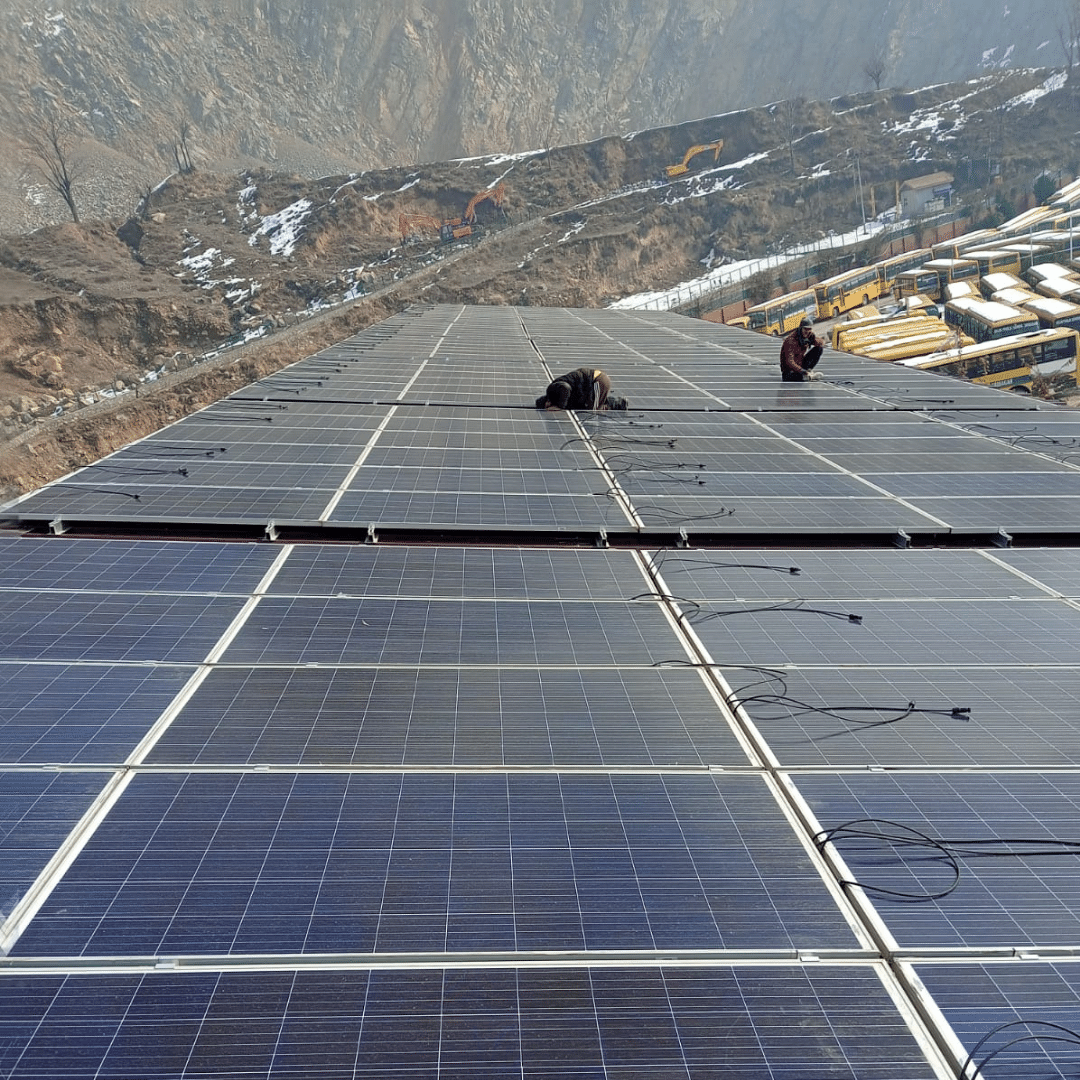
The government has provided additional assistance for residential rooftop solar, funded solarisation of government buildings and pursued PM-KUSUM and other renewable-energy programmes. Chief Secretary Atal Dulloo has repeatedly reviewed implementation, while Chief Minister Omar Abdullah has pushed solarisation as part of the effort to provide households with 200 units of free electricity.
Now the policy needs to move from targets to architecture.
The proposed 200 units of free electricity offer J&K an opportunity to rethink the economics of subsidy. The government can continue purchasing electricity and subsidising consumption year after year. Or it can invest in generating assets that can produce power for decades.
Solar should therefore be treated as capital formation, not simply as welfare expenditure.
That requires money, and J&K’s fiscal constraints are real. But the government should create a dedicated J&K Solar Mission Fund rather than leaving solarisation dependent on annual scheme allocations.
One possible source is already within the power economy. J&K receives water-usage charges from hydroelectric generating companies for the use of its water resources. A substantial portion of those receipts could be ring-fenced for the Solar Mission Fund.
There would be an economic logic to that arrangement: revenue generated from J&K’s rivers would help finance the next generation of energy infrastructure.
The government should also consider responsible long-term borrowing for productive solar assets with operating lives extending over two decades. Concessional financing from multilateral institutions and climate or green-energy windows could supplement public funds.
J&K Bank can play a role by creating a dedicated solar-financing window. Affordable loans, interest support, guarantees, and other risk-sharing mechanisms could make rooftop systems accessible to households and institutions that cannot afford the upfront cost.
In other words, J&K may need to budget, borrow, and leverage if it wants to solarise at the scale the opportunity demands.
But money alone will not build a solar economy.
J&K also needs the people and businesses capable of installing and maintaining it.
A large-scale transition would require a local ecosystem of installers, technicians, equipment suppliers and maintenance providers. Solar vendors should be developed as an emerging MSME sector, with access to credit, skill development, quality certification and working-capital support.
That would turn solarisation into more than an energy programme. It could become a source of local employment and new enterprise.
The government should also ensure that solarisation is not confined to households. Government buildings, schools, hospitals, commercial establishments and industrial units should be systematically assessed for rooftop potential. Every new public building should be designed with solar readiness in mind.
The objective should be a rolling mission, not a collection of disconnected schemes.
Central subsidies should form the foundation. UT assistance should add to them. Water-usage revenues, institutional finance, and affordable bank credit should provide additional capital. Local vendors should form the delivery ecosystem.
The ingredients are already available.
What is missing is the scale of ambition.
J&K was late to fully exploit its hydropower wealth. It should not make the same mistake with solar.
The sun does not send a bill. But capturing its energy requires investment, planning and political commitment.
The Central government has opened the financing window. J&K now needs to step through it.
The real question is not whether J&K can afford to invest in solar.
It is whether it can afford not to.