
There is a reassuring number in Jammu and Kashmir’s latest banking figures: 101 percent.
Banks disbursed Rs 44,228.30 crore to priority sectors in 2025-26, against a target of Rs 43,812.17 crore. But the number becomes less reassuring when the ledger is opened.
IndusInd Bank achieved just 9 percent of its priority-sector target. Federal Bank managed 13 percent. Indian Overseas Bank reached 18 percent, IDBI Bank 26 percent and Punjab and Sind Bank 30 percent. Even SBI achieved only 46 percent.
This is not what a healthy credit system looks like.
Priority-sector lending exists because markets do not always distribute money according to social or economic need. Farmers, small businesses, students, homebuyers and essential infrastructure projects can find it harder to secure financing.
That is why the Reserve Bank of India has designated agriculture, MSMEs, education, housing and social infrastructure for priority lending.
The purpose is not simply to make banks meet a number. It is to make credit reach the people and activities for whom access to finance can change the trajectory of a household, a business or an economy.
J&K’s latest figures suggest that this distinction matters.
Agriculture received 84 percent of its target. Housing managed 53 percent. Education reached only 31 percent. Social infrastructure was the most striking shortfall, with just 5 percent of the targeted lending achieved.
A system can therefore be successful on paper while remaining inadequate in practice.
The Chief Secretary, Atal Dulloo, recognised this contradiction. At a UTBLC meeting, he took “serious note” of the performance of several banks and observed that “the challenge lies more in intent than in capacity.”
That may be the most important line in the entire review.
J&K does not appear to have a shortage of banking capital. Banks disbursed Rs 84,384.12 crore across priority and non-priority sectors during 2025-26, exceeding the overall Annual Credit Plan target of Rs 77,974.29 crore.
The issue, then, is where the money goes.
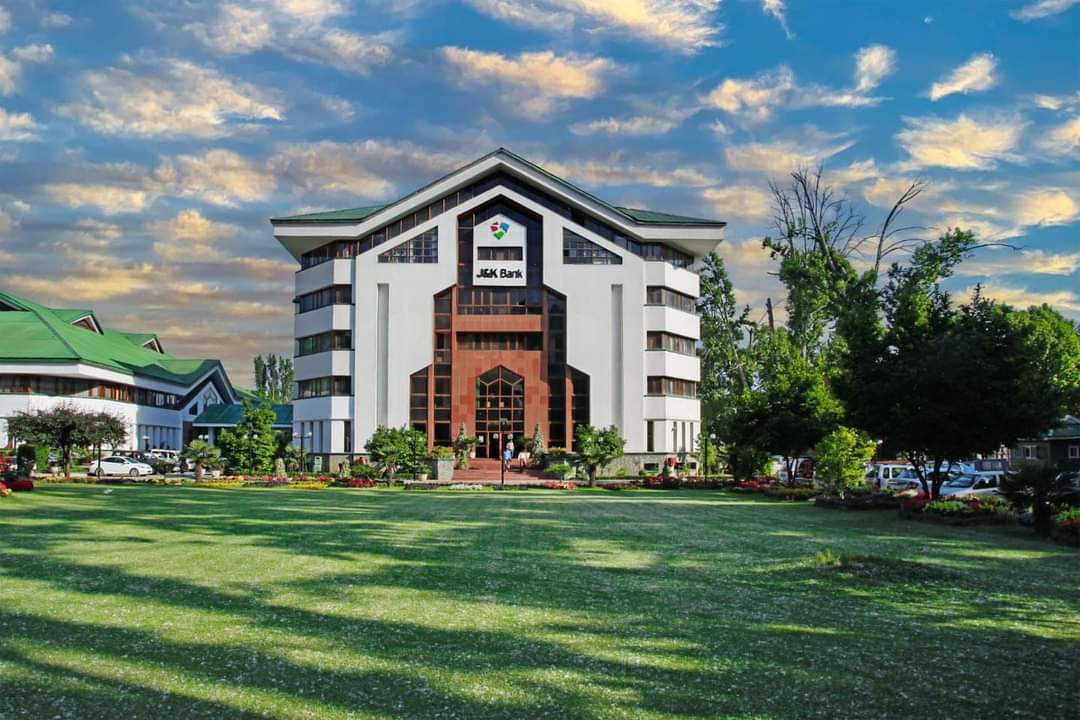
J&K Bank accounted for 63.41 percent of total priority-sector credit despite having 38 percent of the branch network. HDFC Bank accounted for 12 percent of priority-sector lending with only 5 percent of branches.
If a bank has branches in a district, customers and deposits, why should its role in financing that local economy remain limited?
There is a difference between lending money and lending it responsibly. Banks have to assess risk. But risk assessment can become an excuse for avoiding precisely the customers whom priority-sector policy was designed to serve.
The answer should not be reckless lending.
It should be better lending.
That means banks understanding local economies, designing products around actual borrowers and reducing the friction that makes formal credit inaccessible. The Chief Secretary’s call for more competitive products and pricing in education and housing finance points in that direction.
Education is a particularly telling example. A student’s inability to access an affordable loan can determine whether a family can afford professional education and whether talent is converted into economic opportunity.
Housing finance has a similarly broad effect. So does agriculture.
The Chief Secretary called agriculture a “major economic lever” for J&K and urged banks to increase lending to the sector, while appreciating J&K Bank’s performance in agricultural term loans and asking other lenders to emulate it.
Banks should not be judged only by how much credit they disburse in total. They should also be judged by whether they finance the sectors the economy needs to develop.
Commercial banks that miss mandated priority-sector targets must contribute an equivalent amount to designated developmental funds, including NABARD’s Rural Infrastructure Development Fund.
That creates a financial penalty.
But the bigger penalty is economic.
Money that does not reach a farmer may mean a missed investment. Money that does not reach a student may mean an education delayed or abandoned. Money unavailable to a small enterprise can mean a job never created.
The district figures reinforce the unevenness. Udhampur achieved 73 percent of its target, Bandipora 80 percent, Shopian and Reasi 82 percent each, Baramulla 83 percent and Pulwama 84 percent.
At the same time, J&K’s total banking business grew 9.85 percent during the year, with deposits and advances both increasing by nearly 10 percent.
Yet the credit-deposit ratio barely moved – from 61.14 percent in March 2025 to 61.15 percent in March 2026.
The banking system is growing. Money is moving. Credit is expanding.
But growth in the banking system is not automatically the same thing as growth in access to useful credit.
J&K has achieved the easy headline: 101 percent of the priority-sector target.
The harder task is to make that number mean something beyond compliance.
The question is no longer whether J&K’s banks have money.
It is whether they are willing to put it where J&K needs it most.
About the Author
Bilquees Punjabi holds a Master’s in Computer Applications and explores the evolving relationship between technology, digital media, audiences, and journalism.