
For a health insurance scheme built around a simple promise – that illness should not push a family into financial ruin – the most troubling sign may be what is happening before a patient even reaches the operating table.
Across Jammu and Kashmir, private hospitals empanelled under the Ayushman Bharat Pradhan Mantri Jan Arogya Yojana (PM-JAY) SEHAT scheme are facing a mounting payment crisis, with more than Rs 500 crore in claims reportedly awaiting settlement. The figure could not be independently verified from official records, but hospital representatives say payments have been pending for months and, in some cases, for around eight months.
The consequence is increasingly visible in the form of curtailed services.
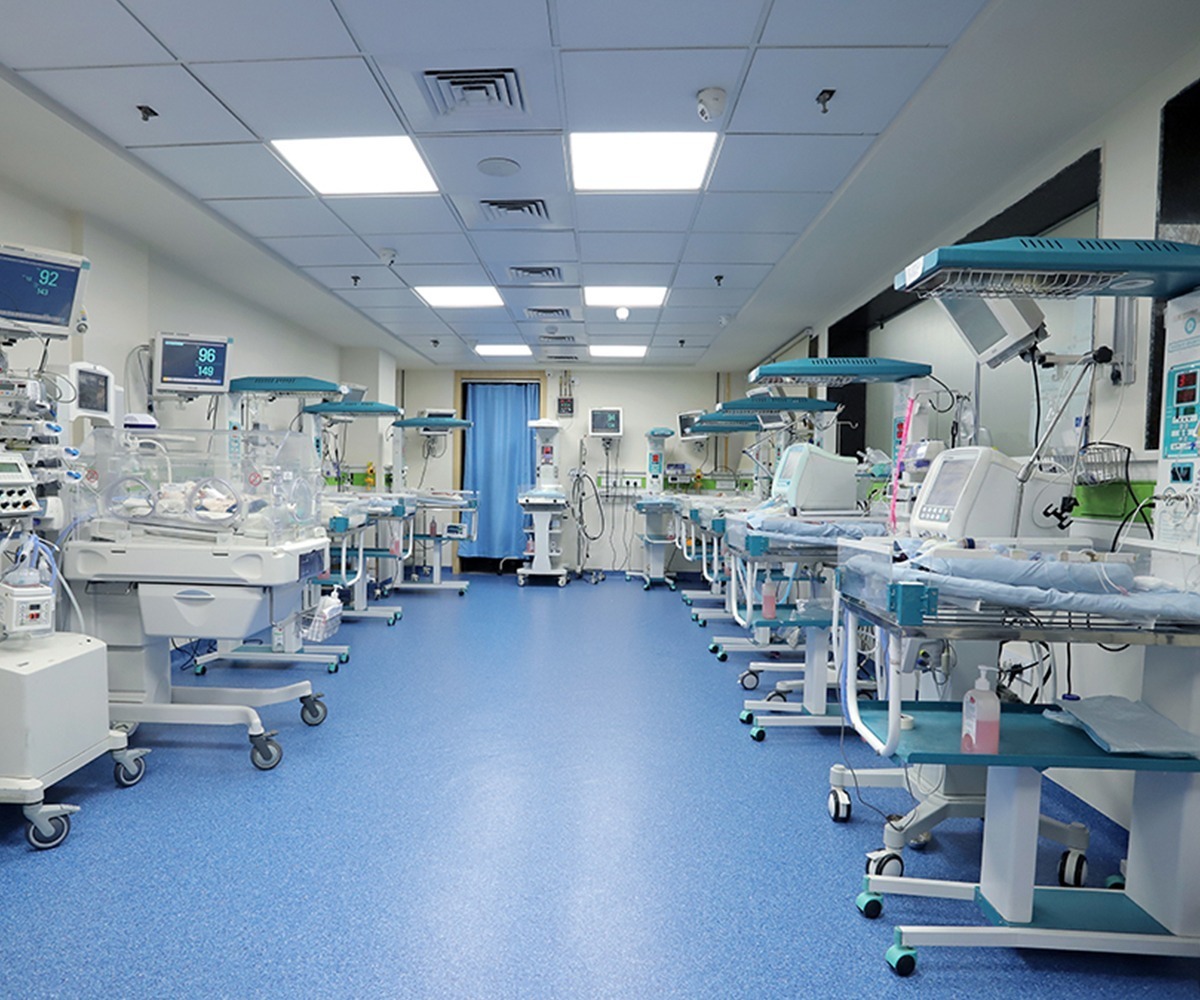
Several private hospitals, according to people familiar with the situation, have reduced or stopped providing some treatments under the government-funded scheme. For patients, that can mean that a procedure once available through a cashless insurance card is no longer readily accessible at a private facility.
The problem has created a difficult circle. Hospitals say they cannot sustain cashless treatment without timely reimbursement. Patients depend on the scheme precisely because they cannot afford to pay privately. And the government must keep the network functioning if the insurance promise is to mean anything when people fall seriously ill.
The resulting uncertainty has put both sides on edge.
For years, SEHAT has been one of the most consequential changes in access to healthcare in J&K, expanding financial protection for families and bringing a wide range of treatments within the reach of beneficiaries. But insurance coverage on paper is only as useful as the network willing and able to provide the treatment.
The current dispute is therefore not simply about an unpaid bill. It is about the financial machinery underneath a cashless health system.
Private hospitals have repeatedly complained about delayed settlement of approved claims.
The issue became particularly acute this year. In June, private hospitals and dialysis centres threatened to withdraw from SEHAT from July 1, citing delays in payment and the growing pressure on their finances.
The government subsequently sanctioned Rs 175 crore, providing some relief but leaving a substantial portion of the reported backlog unresolved.
Hospital administrators and their representatives raised the issue again in August, saying that payments had remained pending for roughly eight months.
For a hospital, the mathematics of delay can become unforgiving.
Doctors and nurses must be paid. Medicines and surgical supplies must be purchased. Diagnostic equipment requires maintenance. Electricity, oxygen, housekeeping, laboratory services and other operational costs continue regardless of whether an insurance claim has been settled.
A hospital can provide treatment today and wait months to receive reimbursement. But its suppliers may not be prepared to wait.
Representatives of private hospitals say the delays have begun affecting their ability to meet routine expenses and service loans. Some say they are struggling to pay doctors, technicians, nurses and suppliers.
The cashless model depends on precisely the opposite dynamic: hospitals must have enough liquidity to treat patients without demanding payment at the point of care.
When that liquidity begins to disappear, the promise of cashless treatment becomes increasingly fragile.
The impact on patients is not necessarily dramatic in every case. But it can be significant for those requiring specialised procedures.
J&K residents once had the option of undergoing procedures such as pacemaker implantation, gallbladder surgery and other operations at empanelled private hospitals under the scheme.
Some treatments have subsequently been restricted by the government to public hospitals, while hospitals themselves have curtailed other services amid the payment difficulties.
The result is a shrinking set of choices.
For a patient, the distinction between a government restriction and a hospital’s financial decision may matter less than the practical outcome: a treatment that was expected to be available under the health card may no longer be accessible at the facility they approach.
This is especially consequential for procedures requiring specialised equipment, specialist doctors or shorter waiting periods.
A government health insurance programme does not necessarily promise that every procedure will be available at every hospital. But beneficiaries reasonably expect the empanelled network to function when they need it.
That expectation is now colliding with the financial realities of the providers.
A representative of private hospitals attributed the impasse to several factors, beginning with what he described as funding constraints.
“When SHA has funds, it starts paying public hospitals first, leaving private hospitals behind,” he said.
The representative also pointed to the structure through which SEHAT has historically been implemented.
J&K’s State Health Agency has used an insurance-based model, selecting an insurer through a tendering process. Official tender records show Reliance General Insurance was selected in the relevant procurement process.
According to the private hospital representative, differences involving the insurer have complicated the flow of payments. He also said there was reluctance within parts of the administration to move away from an insurance arrangement and directly operate the scheme.
These are administrative and contractual questions, but their consequences are felt at the hospital counter.
When a claim moves slowly through authorisation, adjudication, insurer processing and eventual settlement, the patient may see only one thing: a hospital saying it cannot continue providing a particular treatment on a cashless basis.
That disconnect can make a systemic problem appear to be an individual hospital’s refusal.
The State Health Agency has previously taken action against private hospitals for denying treatment under SEHAT. But representatives of private hospitals now argue that enforcement alone cannot resolve a problem created by delayed reimbursement.
If a provider is required to treat patients without receiving payments for months, they say, the financial burden eventually becomes unsustainable.
The stakes are large because the beneficiary base is large.
As of February 28, 2026, J&K had generated 87.91 lakh Ayushman cards. Official records cited in the data show that 19.45 lakh claims had been submitted and 16.21 lakh had been paid.
Behind those numbers are millions of potential interactions between patients, hospitals, insurers and the public health system.
The scale also explains why periodic payment disruptions can quickly become a sector-wide concern.
The scheme was designed to reduce the financial shock of major illness. For families without substantial savings, the difference between cashless treatment and paying several lakhs of rupees out of pocket can determine whether treatment is undertaken at all, delayed or abandoned.
That makes continuity particularly important.
An insurance card cannot itself perform surgery. A network cannot remain functional merely because hospitals are technically empanelled. The money has to move through the system.
The dispute also highlights a longstanding tension within publicly funded healthcare: private providers are often essential to expanding capacity, but their participation depends on predictable payments.
In J&K, the issue becomes sharper when the government directs certain procedures towards public hospitals.
Public facilities are the backbone of healthcare delivery and have a vital role in any government-funded programme. But private hospitals can provide additional capacity, specialised services and geographic options, particularly where public facilities face heavy demand.
Reducing private participation without ensuring adequate public capacity can therefore change the practical experience of beneficiaries.
At the same time, allowing hospitals to continue indefinitely without settling legitimate claims is not a sustainable solution.
The policy challenge is to make both parts of the system work: ensure that public hospitals have the resources and capacity to handle their assigned procedures while maintaining timely, transparent reimbursement for private providers where they remain part of the network.
There is an important distinction between having insurance coverage and being able to use it.
The first is measured through cards issued and beneficiaries enrolled. The second is measured at the moment a patient enters a hospital.
That is where the health system’s credibility is tested.
If a family carrying an Ayushman card is told that a previously available treatment cannot be provided because the hospital has not received payments for months, the technical existence of coverage offers limited comfort.
And if private hospitals begin contemplating withdrawal from the scheme, the consequences could extend beyond their balance sheets.
The June threat by hospitals and dialysis centres to withdraw was a warning of what can happen when financial stress accumulates. The subsequent Rs 175 crore release demonstrated that the government could provide funds, but it did not eliminate the underlying dispute.
A durable solution would require more than periodic injections of money.
It would require clarity over the financing mechanism, predictable payment schedules, transparent claim processing and accountability at every stage of reimbursement. Hospitals need to know when approved claims will be paid. The administration needs reliable information on outstanding liabilities. Patients need to know where they can actually obtain covered treatment.
Without that transparency, every delay feeds another layer of uncertainty.
Healthcare debt is different from many other forms of household expenditure. A family can postpone buying a television or renovating a house. It cannot always postpone a heart procedure, dialysis session or emergency surgery.
That is why payment delays in a publicly funded health scheme have consequences far beyond accounting.
The reported Rs 500 crore backlog, if confirmed in full, would represent a significant financial strain on participating private hospitals. But the more important measure may ultimately be what that backlog does to patient access.
A scheme intended to protect families from catastrophic medical expenditure cannot work reliably if providers are forced to ration participation because reimbursements are uncertain.
J&K’s SEHAT experience has reached a point where the argument is no longer simply about how many people possess health cards. It is about whether the network behind those cards remains financially capable of serving them.
The government has expanded coverage on a scale that would once have seemed difficult to imagine. The next challenge is less visible but equally important: ensuring that the promise survives the journey from a patient’s card to a hospital’s cash register.
For now, that journey is where the system is showing its greatest strain.
About the Author
Moien Darial writes with the precision of an analyst and the sensitivity of a storyteller, exploring global economic shifts and emerging technologies.