
Every autumn, as the green of Kashmir’s high pastures begins to fade and the first chill settles over the mountains, an ancient journey begins. Canvas shelters are dismantled, belongings are packed, livestock gathered, and hundreds of Gujjar-Bakarwal families start their descent from the alpine meadows towards their winter destinations.
It is easy to see this as simply another seasonal movement. It is much more than that.
For generations, transhumance – the movement of pastoral communities and their livestock between seasonal grazing grounds – has been woven into the social and economic life of the Gujjar-Bakarwal community. The summer ascent to the higher reaches of Kashmir and the autumn return to the warmer plains are not merely dictated by tradition. They are dictated by necessity.
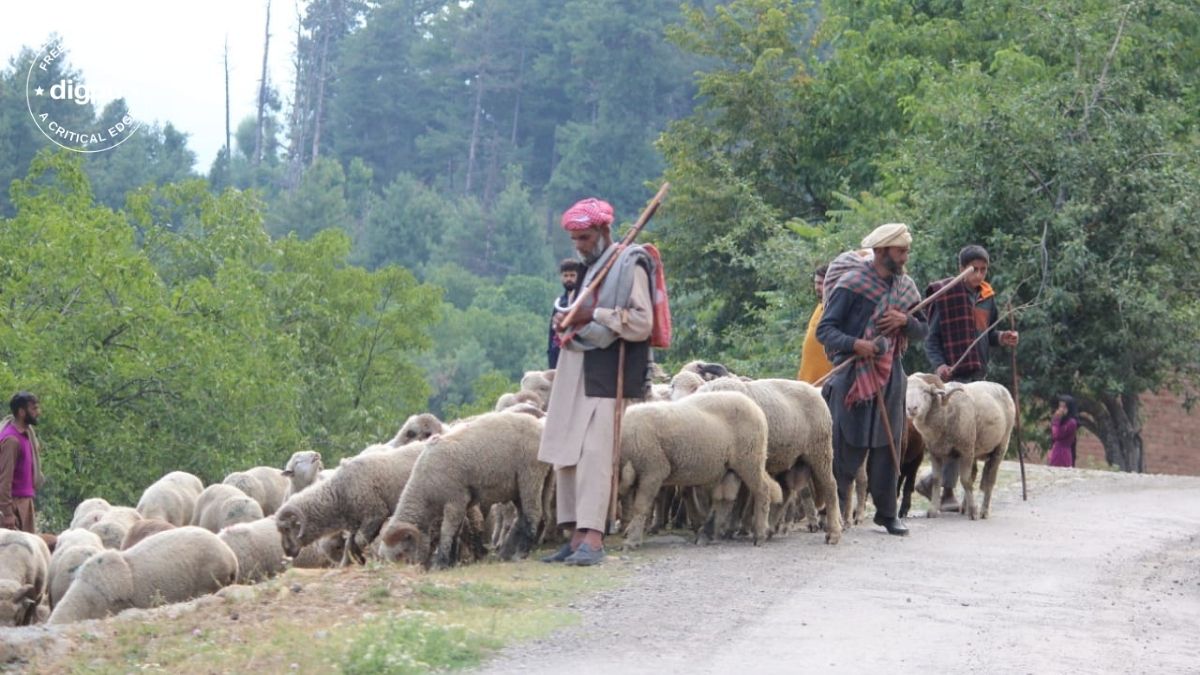
For more than four months, families camp in temporary shelters, locally known as dokhs, across pastures in Sonamarg, Vishansar, Thajiwas, Gurez and Drass. There, sheep and goats feed on abundant alpine grass. When temperatures begin to fall and pasture becomes scarce, the direction changes. The same mountains that offered sustenance in summer become increasingly inhospitable, and the long journey home begins.
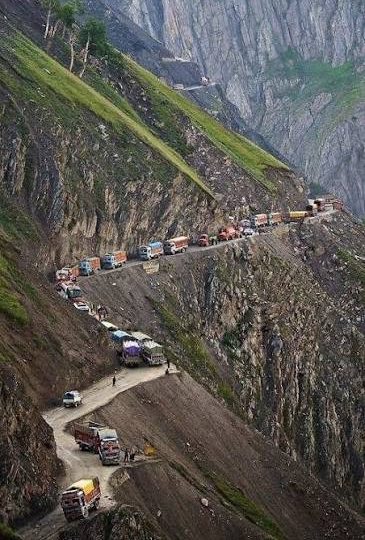
The journey is difficult by any measure. Families travel with large herds, horses and shepherd dogs along narrow mountain tracks, highways and traditional routes cutting through the Pir Panjal range and the Mughal Road. The descent can take weeks. Rain, early snowfall, landslides, rough terrain and traffic add to the risks.
Yet the most striking aspect of this migration is not its hardship. It is its resilience.
Livestock remains the community’s economic backbone. Sheep and goats are not simply animals accompanying the journey; they represent savings, income and food security. During the return, families sell portions of their herds at seasonal markets to meet household expenses and pay for winter grazing or land leases.
“For us, there is no other major source of livelihood,” one herder said, capturing the economic reality behind a practice often romanticised as folklore.
That distinction matters. The Gujjar-Bakarwal migration should not be preserved merely as a picturesque remnant of an older Kashmir. It must be understood as a living livelihood system.
The scale of this pastoral economy is considerable. Local authorities estimate that more than 700,000 sheep and goats were taken to high-altitude pasturelands across northern districts during the summer. Such numbers underline the importance of the community not only to itself but also to the wider livestock economy of the region.
There are encouraging signs of institutional support. Mobile veterinary teams and doctors from the Sheep Husbandry and Animal Husbandry departments were deployed during the summer to provide treatment to livestock in remote areas. Such services are crucial because veterinary care that depends on a journey to a distant facility is of little practical value to families constantly on the move.
But veterinary assistance alone cannot secure the future of pastoralism.
Traditional migration corridors are increasingly intersecting with roads, expanding infrastructure and growing traffic. Climate variability is altering pasture conditions and weather patterns that pastoralists have historically understood through generations of experience. The routes themselves need greater recognition and protection, while families need safer crossing points, access to water, healthcare, education and emergency services along migration corridors.
Most importantly, policy must recognise mobility as a way of life rather than an administrative inconvenience.
The knowledge carried by these families – when to move, where grazing will be available, how to navigate mountain terrain and how to care for animals under harsh conditions – is an intangible inheritance. It cannot simply be documented and archived. It must remain economically viable for the next generation.
The autumn migration therefore offers a larger lesson. Modernity need not mean abandoning inherited ways of living. Development can coexist with tradition if infrastructure and policy are designed around the realities of communities that move with the seasons.
As the Gujjar-Bakarwal families descend from Kashmir’s high pastures, they carry their homes, herds and histories with them. Their journey is a reminder that some traditions survive not because people refuse to change, but because those traditions continue to sustain them.
And as long as the mountains call them upward in summer and downward in autumn, this ancient rhythm will remain part of the living story of Jammu and Kashmir.