
For years, fatty liver disease has been treated as one of those modern ailments that can be postponed, watched and, perhaps, reversed with a better diet and more exercise. It rarely announces itself with dramatic symptoms. It can sit quietly inside the body while people carry on with their lives.
That quietness may be part of the danger.
A new scientific review led by Kashmir-born endocrinologist Dr Muhammad Shafi Kuchay, published in the journal Gut, offers a clearer map of how metabolic stress can push fatty liver disease toward inflammation, scarring and, ultimately, liver cancer. The work places a particularly destructive biological process – ferroptosis, an iron-dependent form of cell death – at the centre of that progression.
The finding matters because the global rise of fatty liver disease is not occurring in some distant laboratory problem. It is unfolding alongside obesity, diabetes, sedentary lifestyles and metabolic syndrome – conditions increasingly woven into everyday life.
The liver is extraordinarily resilient. It processes fats and sugars, filters substances and performs a remarkable array of functions without demanding much attention. But resilience has limits.
According to Dr Kuchay, when genetic susceptibility meets sustained metabolic stress, liver cells can become overloaded with harmful fats and reactive iron. Together, they can trigger a chain reaction that damages the membranes surrounding those cells.
A useful way to imagine it is rust.
Iron, in the wrong biological environment, can help generate damaging molecules that attack fats in cell membranes. Once the body’s antioxidant defences can no longer contain the damage, the membrane begins to fail. The cell dies, releasing signals that effectively sound an alarm.
The alarm summons the immune system.
Kupffer cells, the liver’s resident immune cells, and other inflammatory macrophages respond. They release cytokines and other inflammatory signals. But instead of resolving the original problem, the response can intensify the cellular stress, weaken antioxidant protection and cause more ferroptosis.
The result is a biological feedback loop: damaged cells provoke inflammation; inflammation makes cells more vulnerable; more vulnerable cells die; and their death generates still more inflammation.
This is where a seemingly simple accumulation of fat begins to acquire a much more serious meaning.
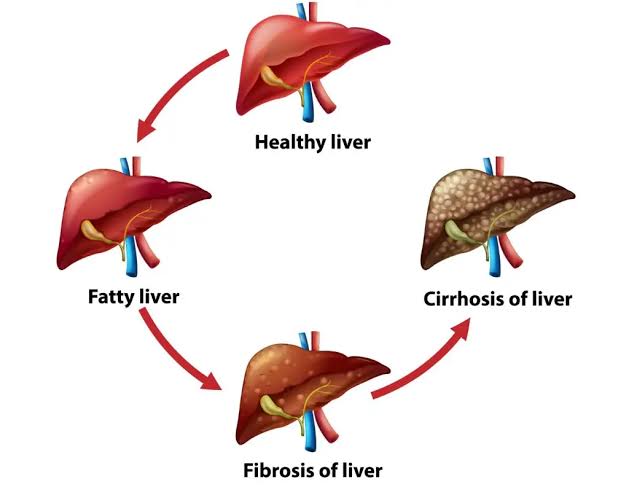
Chronic inflammation activates hepatic stellate cells, which contribute to fibrosis – the progressive formation of scar tissue in the liver. As fibrosis advances, the architecture and function of the organ can deteriorate. In some patients, this process can progress to cirrhosis and create conditions in which hepatocellular carcinoma, the most common primary liver cancer, can develop.
The significance of the Gut review is therefore not merely that it identifies another molecular mechanism. It connects the dots.
The researchers describe the progression in three broad stages: genetic and molecular priming; a self-reinforcing loop between ferroptosis and immune activity; and, finally, fibrosis and biological changes that can promote cancer.
That framework could prove valuable because medicine often struggles most with diseases that are visible only after they have become complicated.
MASH – the progressive form of metabolic dysfunction-associated steatotic liver disease – can remain silent for years. By the time a person develops obvious symptoms, substantial damage may already have occurred. What looks like a sudden diagnosis of cirrhosis or liver cancer may actually represent the final chapters of a process that began much earlier.
There is an uncomfortable lesson here.
Modern medicine has become exceptionally good at treating consequences. But metabolic liver disease reminds us of the value of preventing the cascade in the first place.
The foundations are not mysterious: maintaining a healthy weight, improving blood-sugar control, staying physically active and limiting excessive alcohol consumption can reduce the metabolic stress that places liver cells under pressure. None is glamorous. None promises a technological shortcut. Yet these remain central to prevention.
The new science may eventually open another door: therapies designed to interrupt ferroptosis or the inflammatory circuitry surrounding it. But no ferroptosis-specific drug is currently approved for MASH. Translating a biological mechanism into a safe and effective treatment will require further research.
That distinction matters. A promising pathway is not the same thing as a finished medicine.
It also matters that the work has emerged from a research team led by a scientist from Kashmir. Scientific recognition is rarely about geography, but the achievement carries a particular resonance in a region where medical talent has increasingly entered global research conversations.
The larger story, however, belongs to everyone.
Fatty liver is easy to dismiss because fat itself seems innocuous and because the disease often has no immediate symptoms. The research described by Kuchay and his colleagues suggests something more consequential: under sustained metabolic pressure, the liver can become the site of an escalating conflict among fat, iron, dying cells and the immune system.
The most important message may therefore be less about cancer than about timing.
The liver does not necessarily go from healthy to cancerous in one leap. There can be a long biological road between the two – and, increasingly, science is learning to see the signposts.
The challenge now is to make sure patients, doctors and health systems see them early enough.
About the Author
Bisma Rafiq is interested in human resources and its role in improving journalism and media organisations. She is also a passionate storyteller.