
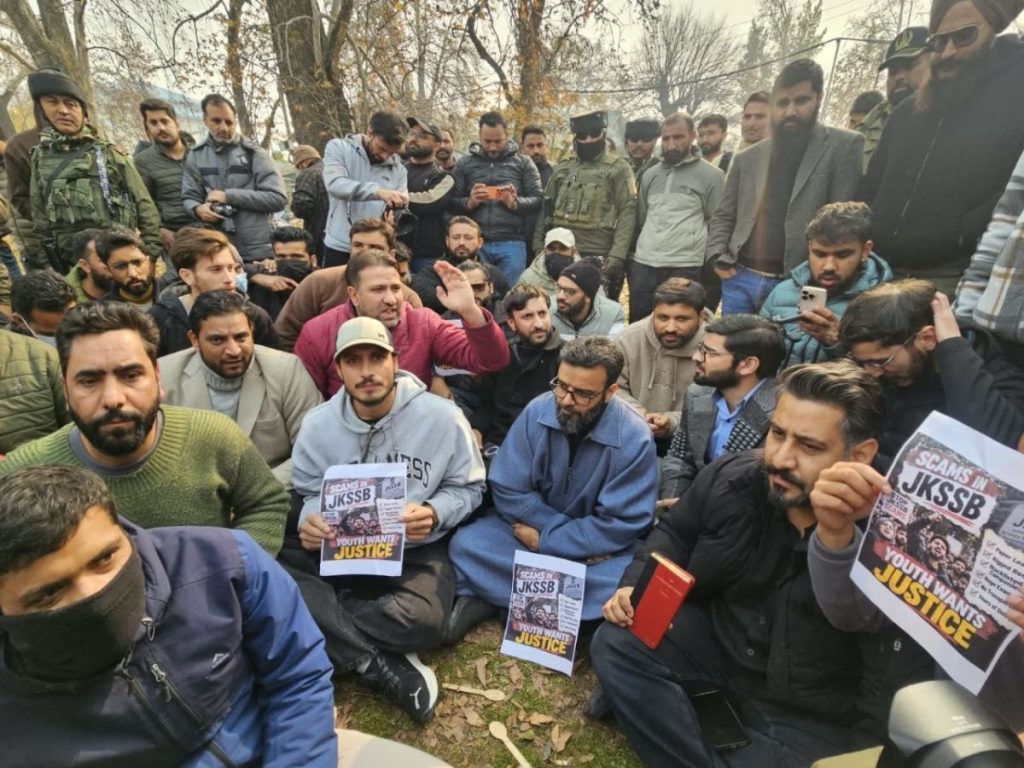
The latest controversy surrounding the Jammu and Kashmir Services Selection Board (JKSSB) is more than an administrative embarrassment. It is another blow to public confidence in a recruitment system that has repeatedly failed to reassure the very people it is meant to serve.
For thousands of young people in Jammu and Kashmir, a government examination represents years of preparation, family savings and personal sacrifice. It is often seen as a route to economic security in a region where employment opportunities remain limited. When allegations of organised cheating emerge, the damage goes beyond the credibility of an examination. It undermines faith in the fairness of the entire recruitment process.
The November 15 Finance Accounts Assistant examination, which attracted more than 1.61 lakh candidates competing for 600 posts across 493 centres, has once again brought the system under scrutiny. Police arrested 14 suspects and seized electronic equipment allegedly intended to facilitate the transmission of answers. Government employees have also come under investigation. The inquiry is continuing, while the JKSSB maintains that the examination was not compromised.
That distinction matters. An alleged attempt to manipulate an examination is not proof that its results were compromised. But it does not diminish the questions the episode has raised. How could such a network allegedly operate around a major recruitment examination? Were there insiders? Who financed and facilitated the operation? And how close did it come to undermining the prospects of deserving candidates?
These questions demand credible answers, not another round of official assurances.
Jammu and Kashmir’s recruitment history makes the latest controversy particularly troubling. The cancellation of the Police Sub-Inspector, Finance Accounts Assistant and Junior Engineer recruitment processes in 2022 left thousands of aspirants disillusioned. Subsequent investigations, arrests and prolonged uncertainty have reinforced the perception that the recruitment system cannot consistently guarantee a level playing field.
The Omar Abdullah government cannot distance itself from this responsibility by invoking the JKSSB’s institutional autonomy. The Board has its own statutory framework and operational responsibilities, but public recruitment remains a matter of public accountability. A government that announces vacancies and promises employment must also answer for the credibility of the machinery through which those jobs are filled.
Equally, the absence of established institutional complicity would not automatically mean that the system worked as it should. Even if investigators find no involvement of Board officials, the government must explain how vulnerabilities were allowed to persist and what it intends to do about them.
The administration must commission a comprehensive, independent security audit of the recruitment process, covering everything from question-paper preparation and printing to transportation, examination-centre management and result processing. CCTV cameras, biometric verification and electronic surveillance may help, but technology alone cannot substitute for accountability and institutional safeguards.
The findings of the investigation must be made public, and anyone found to have facilitated the alleged racket must face the law, regardless of position or influence.
The November 28 Police Sub-Inspector examination also requires careful consideration. The administration must address candidates’ legitimate concerns before proceeding. If postponement becomes necessary, it should come with a clear timetable and transparent explanation, not another indefinite delay.
Young people cannot be expected to spend years preparing for examinations only to face repeated controversies, cancellations and uncertainty. They should not have to wonder whether merit, rather than access or influence, will determine their future.
A government’s responsibility does not end with announcing vacancies or conducting examinations. It must ensure that every eligible candidate competes on equal terms. Jammu and Kashmir’s youth have waited long enough for that basic guarantee. They deserve more than promises of reform. They deserve a recruitment system they can trust.