
Kashmir’s electricity demand has begun to expose the pressure points in a power system entering its most demanding months. Consumption in the Valley touched 1764 megawatts on a Thursday evening, while Jammu and Kashmir’s combined load reached 2946 MW. At the same time, generation from local hydropower projects has fallen as river flows decline seasonally, leaving J&K increasingly dependent on electricity brought in from outside.
Kashmir accounted for nearly 60 percent of J&K’s total demand, while Jammu’s consumption stood at 1182 MW. With temperatures falling and households relying more heavily on electrical appliances for heating, officials expect the requirement to rise further through December, January and February.
The immediate concern is the gap between the electricity the Valley needs and the supply available to it. At a winter preparedness meeting chaired by Divisional Commissioner Kashmir Anshul Garg on November 13, officials put average winter demand at around 1700 MW and average availability at approximately 1300 MW. That left a deficit of nearly 400 MW even before the season reaches its peak.
The latest recorded demand of 1764 MW has already moved beyond the average winter requirement discussed at that meeting. Officials have projected that peak consumption in Kashmir could reach 2400 MW.
The pressure is not confined to Kashmir. Jammu and Kashmir’s overall requirement could approach 2900 MW during the peak winter period, with officials estimating that J&K may face a shortage of between 800 MW and 1000 MW at periods of maximum demand.
The figures underline the importance of power imports. On the evening when Kashmir’s demand reached 1764 MW, imports stood at 2580 MW against scheduled supply of 2485 MW. System frequency was recorded at 50.01 hertz.
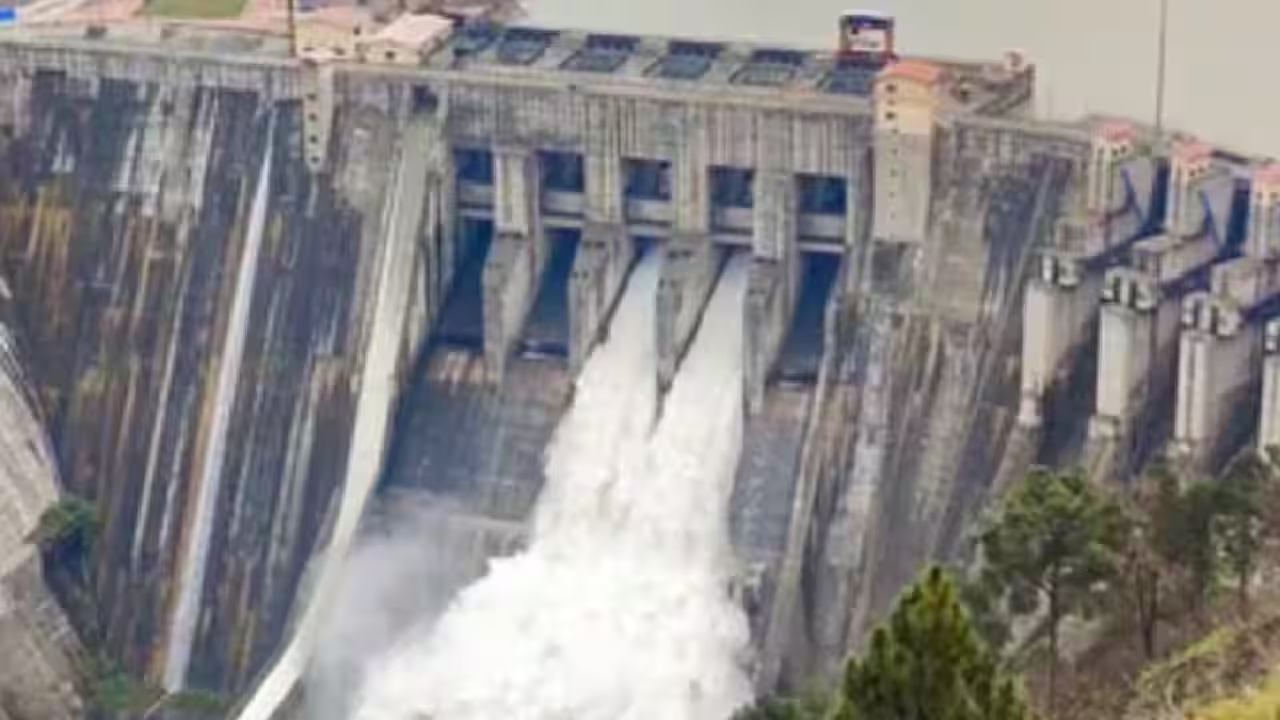
The reliance on electricity procured from outside J&K becomes more pronounced when local hydropower generation declines. Jammu and Kashmir has substantial installed hydropower capacity, but the amount of electricity generated at any given time depends on water availability. During winter, reduced river discharge limits generation from several projects.
According to power-sector officials, generation from J&K-owned hydropower projects had declined to around 250-280 MW in recent weeks, against their combined installed capacity of approximately 1197 MW.
The official generation data showed central-sector generation at 1677 MW and state-sector generation at 399 MW. Among the major central-sector projects, Uri-I, with an installed capacity of 480 MW, was generating 362 MW. Uri-II, which has a capacity of 240 MW, was contributing 60 MW.
Salal was generating 594 MW against an installed capacity of 690 MW, while Dulhasti was contributing 361 MW against 390 MW. The 120 MW Sewa-II project was generating 82 MW. Kishanganga, with an installed capacity of 330 MW, was generating 329 MW.
On the state-sector side, Baglihar-I, including Circuits 1 and 2, was generating 298 MW. Jammu Generation, an independent power producer, was contributing 12 MW, while Kashmir Generation was recorded at 90 MW. Baglihar-II and the Kishenpur-New Wanpoh generation entry were shown at zero.
The seasonal decline in generation makes additional allocations and purchases essential to meeting demand. The Union Ministry of Power has allocated an additional 329 MW to Jammu and Kashmir for December 2026, January and February 2027. The allocation is intended to partly offset reduced hydropower generation and higher consumption.
It will, however, have to be considered alongside the scale of the projected requirement. The additional allocation is for entire J&K, not Kashmir alone. The remaining demand will have to be met through existing allocations, local generation and purchases from power exchanges.
The widening gap has already translated into scheduled power cuts across Kashmir. The Kashmir Power Development Corporation Limited has linked the duration of scheduled curtailments to the Aggregate Technical and Commercial losses recorded by individual feeders.
Feeders with losses exceeding 65 percent have been assigned eight hours of daily curtailment. Those in the 40.5-65 percent category face six hours of cuts, while feeders with losses between 15 and 40.5 percent have three hours. Areas with losses below 15 percent have been assigned 30 minutes of scheduled curtailment.
The transmission system faces its own challenges. The Northern Regional Power Committee, in its winter preparedness assessment for 2026-27, has flagged the possibility of low-voltage problems in Kashmir during the period of rising demand and reduced hydropower generation.
The immediate winter response is therefore built around a combination of imports, additional allocations, local generation and scheduled curtailment. But the longer-term question is whether Jammu and Kashmir can expand its own capacity sufficiently to reduce its dependence on purchased power.
That question is closely tied to the hydropower projects being developed in the Chenab basin. Four projects – Pakal Dul, Kiru, Ratle, and Kwar – are expected to add a combined 3,014 MW to the region’s installed capacity. Their progress, however, has been uneven, and the projects have faced delays and cost increases.
The September 2026 Flash Report of the Ministry of Statistics and Programme Implementation, updated with information received up to October 23, shows that two projects are approaching completion while the other two remain well behind them.
The 1,000 MW Pakal Dul project had achieved 89 percent physical progress. The 624 MW Kiru project had reached 92.10 percent. Ratle, with a planned capacity of 850 MW, had recorded 33.14 percent progress, while the 540 MW Kwar project stood at 41.55 percent.
The difference in progress is reflected in their expenditure and revised completion schedules. Across the four projects, cumulative expenditure had reached Rs 18,078.10 crore against a combined revised estimated cost of Rs 27,945.06 crore. Their original combined cost was Rs 22,207.77 crore. The revised estimates therefore represent an increase of Rs 5737.29 crore, or around 25.8 percent.
Pakal Dul has recorded expenditure of Rs 10,038.05 crore against a revised cost of Rs 12,728 crore. Its original estimate of Rs 8112.12 crore has increased by Rs 4615.88 crore.
Kiru has recorded expenditure of Rs 4196.07 crore against a revised estimate of Rs 5409 crore. Its original cost of Rs 4287.59 crore has increased by Rs 1121.41 crore.
The MoSPI report lists December 2026 as the revised completion target for both projects. NHPC, however, outlined a more detailed schedule during its November 5 investor conference call. It said Pakal Dul was expected to be fully commissioned by June 2027, with two units targeted for March 2027. Reservoir filling was planned to begin towards the end of December 2026.
For Kiru, reservoir filling was scheduled to begin in November 2026, with all units targeted for commissioning by March 2027. An official involved with the projects was quoted in a November 11 media report as saying that the commissioning process for both projects had started.
The position is less advanced at Ratle and Kwar. Ratle, originally scheduled for completion in February 2026, has had its revised deadline extended to November 2028. It had recorded expenditure of Rs 1743.87 crore against an estimated cost of Rs 5281.94 crore. NHPC informed investors that dam concreting began on November 2 and that the project remained targeted for completion by November 2028.
Kwar had achieved 41.55 percent physical progress, with expenditure of Rs 2,100.11 crore against its estimated cost of Rs 4,526.12 crore. Its completion deadline, originally November 2026, was revised to March 2028 in the MoSPI report. NHPC’s November 5 conference call indicated a commissioning schedule of May 2028.
Unlike Pakal Dul and Kiru, the estimated costs of Ratle and Kwar had not registered an increase in the latest report.
The government has attributed the delays to a range of project-specific difficulties. In a written reply in the Rajya Sabha on July 20, 2026, the Ministry of Power listed court proceedings during the initial tendering process, the Covid-19 pandemic, slope failure at a tunnel-boring-machine adit site, labour strikes, tool stoppages, land-related delays and local agitations among the challenges affecting Pakal Dul.
Kiru faced flood damage to roads, road blockages, labour strikes and delays in the supply of dam tower-crane components from different countries during the pandemic. Ratle encountered high monsoon discharge, breached dykes, flooding of diversion tunnels, restrictions on blasting near inhabited areas and land-related disturbances. Kwar faced delays in awarding hydro-mechanical and electro-mechanical work packages, as well as labour strikes and work stoppages.
The projects are central to the region’s plans to increase electricity generation within Jammu and Kashmir. Their combined capacity of 3014 MW is significant in a system where winter demand can rise sharply while local generation falls.
But installed capacity and available generation are not the same thing. The winter experience shows how reduced water discharge can limit output even when power stations have substantial rated capacity. The new projects may expand the generation base, but their contribution will depend on their completion, commissioning and operating conditions.
For consumers, the immediate concern remains the electricity available during the coming months. The additional 329 MW allocation may provide some relief, but it does not remove the projected gap between demand and supply. Scheduled cuts, transmission constraints and the possibility of low voltage remain part of the winter outlook.
The longer-term answer depends partly on whether the Chenab projects can meet their revised schedules. Two are close to completion, while Ratle and Kwar have years of work remaining under the latest timelines. Their delays have pushed up the cost of the expansion programme and postponed the point at which the full additional capacity can become available.
For now, Kashmir enters winter with demand rising, local hydropower generation falling and the power system relying heavily on imports. The coming months will test the administration’s arrangements for managing that gap. The progress of the Chenab projects will determine how much of the region’s future electricity requirement its expanding hydropower infrastructure can eventually meet.
About the Author
Tabish Khan is a multimedia journalist and postgraduate in Convergent Journalism, working across text, video, social media, and digital storytelling.