
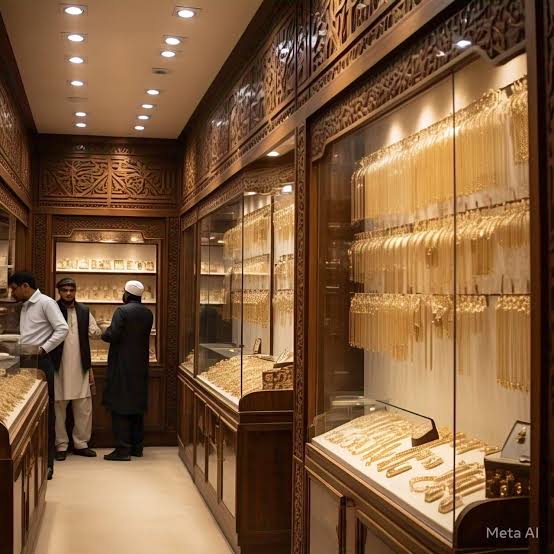
A fall in gold prices has brought a measure of relief to Kashmir’s jewellery markets, drawing customers back after months in which rising rates had made many households reconsider, postpone or scale down their purchases.
The change is being felt particularly among families preparing for weddings. Gold remains closely woven into marriage-related spending in Kashmir, where jewellery is bought not only for its material value but also for its place in family and social traditions. When prices climb sharply, the effect is therefore not confined to the jewellery trade. It reaches households trying to balance customary purchases against the demands of a wedding budget.
For months, the steady rise in rates had made that calculation increasingly difficult. Some families delayed buying jewellery in the hope that prices would ease. Others considered reducing the quantity they intended to purchase. The recent correction has given at least some of those prospective buyers a reason to return to the market.
Bashir Ahmad, a gold dealer in Srinagar, said customer enquiries and purchases had increased after the decline. Demand, he said, had remained subdued while prices were rising, with many customers choosing to wait rather than commit to buying at elevated rates.
The change is also visible in individual purchasing decisions. Salma Khan was among those who bought gold after the recent fall. Muhammad Amir, meanwhile, purchased a one-gram PAMP gold bar for investment. His choice reflects another dimension of the market: gold purchases in Kashmir are not limited to wedding jewellery. Some consumers buy small quantities of physical gold as a way of holding on to savings.
The recent price movement has brought the two forms of demand into sharper view. For one buyer, a lower rate may make it possible to proceed with a wedding purchase that had been deferred. For another, it may offer an opportunity to acquire a small quantity of gold as an investment. In both cases, the decision is influenced by the same question: whether the prevailing price is affordable enough to buy.
The correction has been substantial by recent market standards. Indicative rates in Srinagar put 24-carat gold at around Rs 1,25,100 per 10 grams and 22-carat gold at approximately Rs 1,14,690 per 10 grams.
The comparison with November 12 shows the scale of the decline. On that date, 24-carat gold was quoted at Rs 1,39,820 per 10 grams, while 22-carat gold stood at Rs 1,28,240. Over the following 10 days, the price of 24-carat gold fell by Rs 14,720 per 10 grams. The decline in 22-carat gold was Rs 13,550. Both categories registered a fall of more than 10 percent.
For households that had been tracking prices while putting off purchases, the difference is not merely a movement on a market screen. A reduction of this size can alter the amount a family needs to set aside for a given quantity of gold. It can also influence whether a planned purchase is made immediately, reduced in size or postponed again.
The decline has followed a sharp sell-off in international bullion markets. Gold futures on the Multi Commodity Exchange settled at Rs 1,21,949 per 10 grams on November 20, down Rs 5,503, or 4.32 percent, from the previous close.
Market analysts have attributed the pressure on gold to a stronger US dollar, rising bond yields and expectations of tighter monetary policy by the US Federal Reserve. These factors matter because gold does not offer the interest payments associated with many other financial assets. When yields rise, interest-bearing investments can become more attractive relative to a metal that does not generate an income. A stronger dollar can also weigh on international gold prices.
The movement in international markets eventually feeds into domestic prices, although the rates consumers encounter at jewellery shops are not simply a direct copy of the futures price. The amount paid by a customer depends on the purity of the gold, making charges, wastage and applicable taxes. The quoted market rate is therefore an important starting point, but it does not represent the complete cost of a finished piece of jewellery.
That distinction is particularly relevant for families purchasing gold for weddings. The final bill depends not only on the quantity they choose but also on the design and workmanship involved. A decline in the underlying gold price can ease the burden, but it does not remove the other components of the purchase.
The difference between 24-carat and 22-carat gold is also important in understanding the market. The former is a higher-purity form of gold, while 22-carat gold is commonly used in jewellery. The two rates therefore serve different buying requirements. A household purchasing jewellery is more likely to follow the 22-carat price, while someone buying a small gold bar for investment may look at a higher-purity product.
In Kashmir, the importance of gold extends beyond these distinctions. It has a place in household savings as well as in wedding expenditure. Families have traditionally regarded the metal as something that can be retained and, if necessary, relied upon during periods of financial uncertainty. That perception helps explain why gold buying can continue to attract interest even when prices are high, although the quantity purchased may change.
The recent rise in enquiries suggests that buyers who had stepped back are reassessing their decisions. It does not, by itself, establish that the market has entered a sustained recovery. Jewellery purchases can be sensitive to even relatively small changes in rates, and customers who have waited through a period of volatility may remain cautious about committing to larger amounts.
For dealers, the return of customers is encouraging after a period of subdued activity. But the durability of that improvement will depend on what happens next in international bullion markets. If prices stabilise or decline further, buyers who have delayed purchases may feel more confident about proceeding. If rates begin climbing again, some could return to waiting.
The market is consequently responding to two forces at once: the immediate relief offered by lower prices and the uncertainty surrounding the next movement. A household planning a wedding may have a reason to buy now, but it also has to consider whether the current rate represents a lasting change or a temporary pause in a longer period of volatility.
The small gold bar bought by Muhammad Amir illustrates how the same price movement can prompt a different kind of decision. Rather than buying jewellery for a specific family occasion, he chose a one-gram bar for investment. Such purchases allow consumers to acquire physical gold in smaller quantities, without committing to the larger outlay that a substantial jewellery purchase may require.
That does not make small bars immune to market risk. Their value, like that of jewellery, is linked to the price of gold, which can move in either direction. The recent correction may make a purchase more affordable, but it cannot guarantee that the price will rise afterwards.
For wedding buyers, the calculation is different but no less uncertain. Gold is often part of a larger set of expenses, and families must decide how much they can afford to spend. When prices rise, the options may include buying less, delaying the purchase or adjusting other parts of the budget. A fall can loosen that pressure, although the extent of the relief depends on the quantity and type of jewellery being bought.
The latest decline has therefore reopened a market that had become more difficult for many customers to enter. The increase in enquiries reported by dealers, alongside purchases by consumers like Salma Khan and Muhammad Amir, points to renewed interest. But it remains too early to determine whether that interest will translate into a sustained rise in sales.
For now, the correction has given buyers something they had been waiting for: a lower rate at which to reconsider purchases they had put on hold. Whether they act quickly or continue watching the market will depend on the next turn in gold prices.
About the Author
Amir Yaseen is a Srinagar-based journalist interested in Kashmir, policy, progress, and the human stories shaping everyday life.