
Kashmir Impulse Desk
Srinagar, Nov 23
Political leaders, environmentalists and civil society representatives have called for an investigation into the use of heavy machinery near Sheshnag Lake in south Kashmir, citing concerns over possible damage to the ecologically fragile Himalayan region.
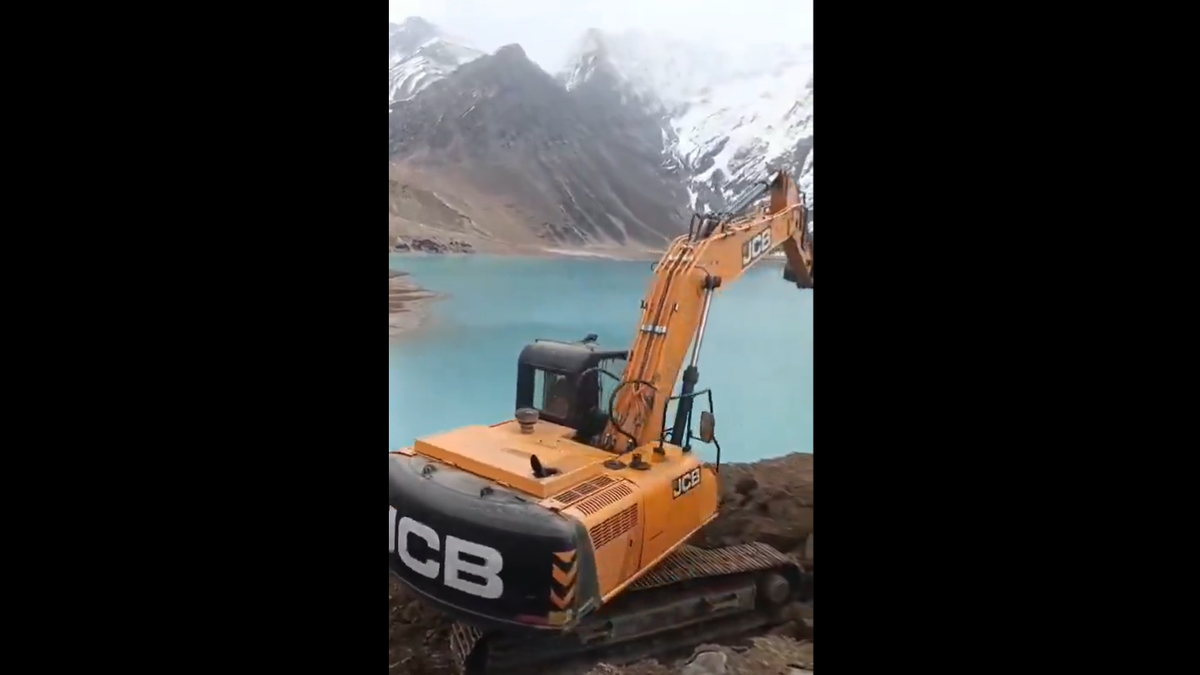
The demands followed the circulation of a video on social media showing a crawler excavator digging into the ground and levelling soil along the Amarnath Yatra route near the high-altitude glacial lake in Pahalgam.
The footage, initially shared by an excavator operator before being deleted, has raised questions about the nature of the work, the agencies involved and whether the activity could affect the lake and its surrounding ecosystem.
CPI(M) MLA from Kulgam Muhammad Yusuf Tarigami, who chairs the Jammu and Kashmir Legislative Assembly’s Committee on Environment, called for an immediate halt to the activity and an inspection by glaciologists and environmental experts.
He said Sheshnag was among 14 high-risk glacial lakes identified in Jammu and Kashmir and was surrounded by loose moraine and steep slopes, making the terrain particularly vulnerable to disturbance.
“Disturbing this fragile terrain with heavy machinery is an invitation to disaster,” Tarigami said in a statement.
He said infrastructure development was necessary to improve facilities for pilgrims, tourists and local residents but should be guided by scientific studies, environmental impact assessments and consultations with experts and local communities.
Citing the 2013 Kedarnath disaster, the 2023 South Lhonak Lake disaster in Sikkim and a recent glacier-related disaster in Nepal, Tarigami warned that interference in fragile mountain ecosystems could have serious consequences.
He said the potential impact could extend downstream to Pahalgam, settlements along the Lidder and other parts of south Kashmir.
Tarigami sought details of the project, the executing agency and the clearances obtained, besides an immediate suspension of any work that could threaten the lake and its surroundings.
Former chief minister and Peoples Democratic Party president Mehbooba Mufti criticised the government over the issue, alleging that it had failed to intervene despite growing environmental concerns.
She referred to the felling of Chinar trees and walnut trees at a university, and cautioned against infrastructure development in ecologically sensitive areas.
Mufti also drew parallels with construction linked to the Char Dham pilgrimage route in Uttarakhand, saying the region had experienced repeated natural disasters.
She said her party risked being accused of opposing the Amarnath Yatra if it raised objections to the work.
“If we talk about it, they will say we are against the Amarnath Yatra. What can I say? They try to polarise everything,” she told reporters.
National Conference Lok Sabha member Mian Altaf said Kashmir’s lakes, rivers and forests needed to be protected, describing their preservation as essential for tourism, the environment and public health.
Apni Party president Altaf Bukhari said the authorities should establish whether the video showing heavy machinery near Sheshnag Lake was authentic.
“If the video is genuine, the government owes the public a clear explanation: What is such heavy machinery doing in an ecologically fragile zone, especially around a high-altitude glacial lake?” he said.
Bukhari said unchecked construction and human interference had already contributed to the loss of glaciers, water bodies and natural habitats in Kashmir.
Former Srinagar MP Syed Aga Ruhullah also criticised the reported activity, saying the region’s mountains should not be treated as sites for unrestricted construction.
In a post on X, Ruhullah questioned the use of heavy machinery near a high-risk glacial lake after the extension of motor roads towards the Amarnath cave.
Kashmir’s chief cleric Mirwaiz Umar Farooq described the visuals as disturbing and said glacier retreat and recent glacier-related floods in Nepal should serve as warnings about the vulnerability of the Himalayan region.
He said improving facilities for Amarnath pilgrims was not an issue but should not come at the expense of the environment.
Environmental activist Nikhil Saini also sought clarification on the purpose of the work, saying construction could be justified for defence requirements or critical emergency connectivity but would otherwise raise serious concerns.
Sheshnag Lake is located at an altitude of around 11,800 feet and measures approximately 1.1 km in length and 0.7 km in width. The glacier-fed lake is a major stopover for pilgrims travelling from Chandanwari towards the Amarnath cave, about 18-20 km away.
The macadamised road ends at Chandanwari, beyond which pilgrims have traditionally travelled on foot, ponies or palanquins.
The lake feeds the Eastern Lidder, one of the two main tributaries of the Lidder River. The Western Lidder originates from the Kolahoi Glacier and flows through Lidderwat in the Aru region.
The two streams meet at Pahalgam to form the Lidder River, which flows through Anantnag district before joining the Jhelum near Mirgund-Khanabal. Its waters support downstream settlements, drinking water supplies and irrigation.
The Border Roads Organisation (BRO), meanwhile, said it was carrying out post-Amarnath Yatra works in accordance with applicable safety norms and environmental safeguards.
In a statement, the organisation said it was taking measures to ensure the safe disposal of excavated material, protect natural drainage and minimise disturbance to the surrounding terrain.
It described claims circulating on social media about new construction work as incorrect.
The BRO said it had begun widening existing tracks based on experience from previous yatras and requirements identified for improving the movement of pilgrims.
The work, it said, was focused on stabilising vulnerable stretches, widening tracks and reducing congestion to ensure safer passage.
The organisation said the work was confined to existing tracks and was intended to improve safety and accessibility for pilgrims, personnel and other users.