

For decades, Kashmir’s healthcare debate has centred on hospitals, doctors and medical equipment. But as medicine increasingly relies on specialised diagnostics and precision-based treatment, a less visible shortage has become critical: the lack of trained professionals to operate advanced medical technologies.
The Sher-e-Kashmir Institute of Medical Sciences (SKIMS), Srinagar, has taken a step towards addressing this gap by securing two postgraduate (MD) seats in Nuclear Medicine, becoming the first medical institution in Jammu and Kashmir to offer training in the discipline.
Though modest in number, the seats represent an effort to develop specialised expertise locally and reduce dependence on professionals from outside the region.
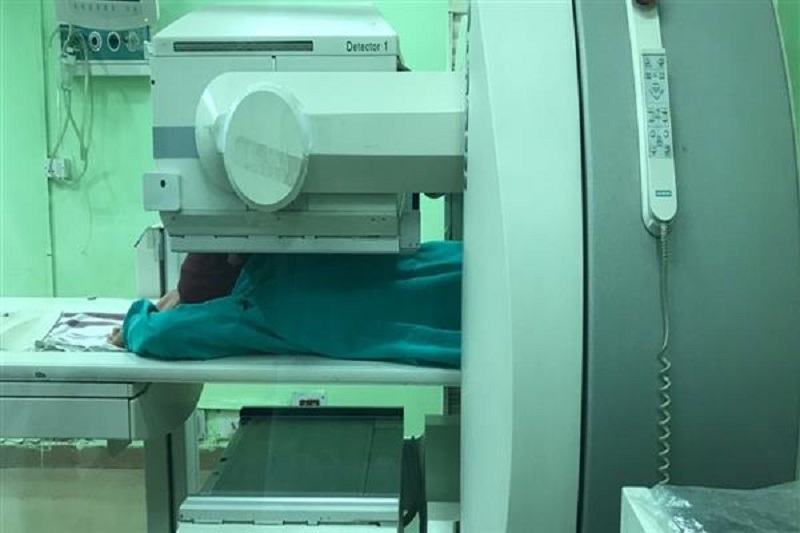
Nuclear Medicine plays an increasingly important role in cancer diagnosis, treatment planning and monitoring. Positron Emission Tomography (PET) scans use radioactive tracers to detect metabolic activity, helping identify cancers, assess their spread and evaluate treatment responses. But installing scanners alone cannot ensure access to these services. Trained specialists and regulatory clearances are equally essential.
SKIMS currently has the only Nuclear Medicine department in J&K, which has been functioning for 47 years. Its Director and EOSG, Prof Ashraf Ganai, has identified the shortage of qualified specialists as a major constraint on expanding PET scan services. He said regulatory authorities require the presence of trained professionals before granting licences for such facilities, particularly as court directions have called for PET scan installations in tertiary-care hospitals.
The postgraduate programme could help address this structural gap. Graduates may eventually serve SKIMS, government medical colleges, AIIMS facilities and private tertiary-care hospitals in J&K and beyond. However, two seats annually cannot immediately meet the manpower requirements of an expanding network of PET facilities. The initiative is a beginning rather than an immediate solution.
SKIMS has also commenced Prostate-Specific Membrane Antigen (PSMA) PET services in its Nuclear Medicine Department. The facility will support the diagnosis and management of prostate cancer, particularly in detecting disease spread and recurrence after treatment. Its availability could reduce the need for patients to travel outside the region for specialised investigations.
The announcement coincided with the inauguration of medical equipment and projects worth approximately Rs 4 crore. SKIMS says projects worth Rs 45 crore have been commissioned during 2026.
Major additions include a neuro-spine navigation system to improve precision in complex neurosurgical procedures and a 3D/4K visualisation tower for kidney transplantation. Microsurgery and open-surgery facilities, along with a portable isolation unit for transplant patients, have also been introduced.
Other equipment includes advanced ultrasound and X-ray systems, an endoscopy workstation, video gastro-endoscopy equipment, a fibre-optic bronchoscope, cystoscopes and a forced oscillation technique machine for respiratory assessment.
The institute has also signed memoranda of understanding with AIIMS New Delhi and PGI Chandigarh to strengthen academic collaboration and institutional capacity.
These investments reflect an effort to expand SKIMS’s capacity for specialised and complex interventions beyond conventional tertiary care. But infrastructure expansion at a premier institution must go hand in hand with stronger healthcare facilities at district and peripheral levels. Prof Ganai has acknowledged the need to improve services outside SKIMS to reduce the burden on the institute.
For Jammu and Kashmir, the challenge is no longer simply acquiring sophisticated equipment. It is building a healthcare system capable of staffing, maintaining and using it effectively, while ensuring patients can access these services across the region.
The Nuclear Medicine programme offers a starting point. Its real measure of success will be whether it produces enough specialists to support expanding PET scan facilities and makes advanced cancer diagnostics more accessible.
A new machine may attract attention at its inauguration, but its value ultimately depends on the expertise behind it. SKIMS has taken a step towards building that expertise. The larger test is turning this academic beginning into a wider network of specialised cancer care.
About the Author
Aasif Bashir is a visual journalist and postgraduate in Convergent Journalism, working at the intersection of imagery, narrative, and visual storytelling.