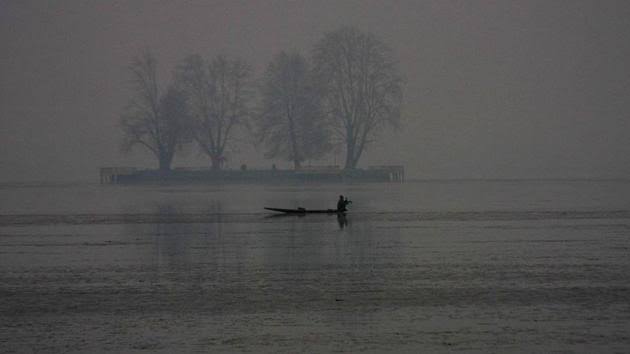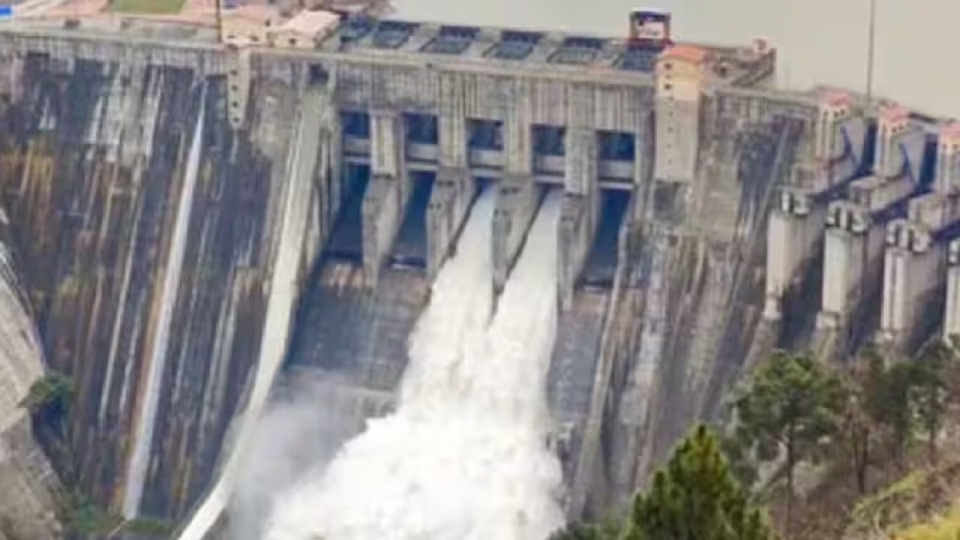

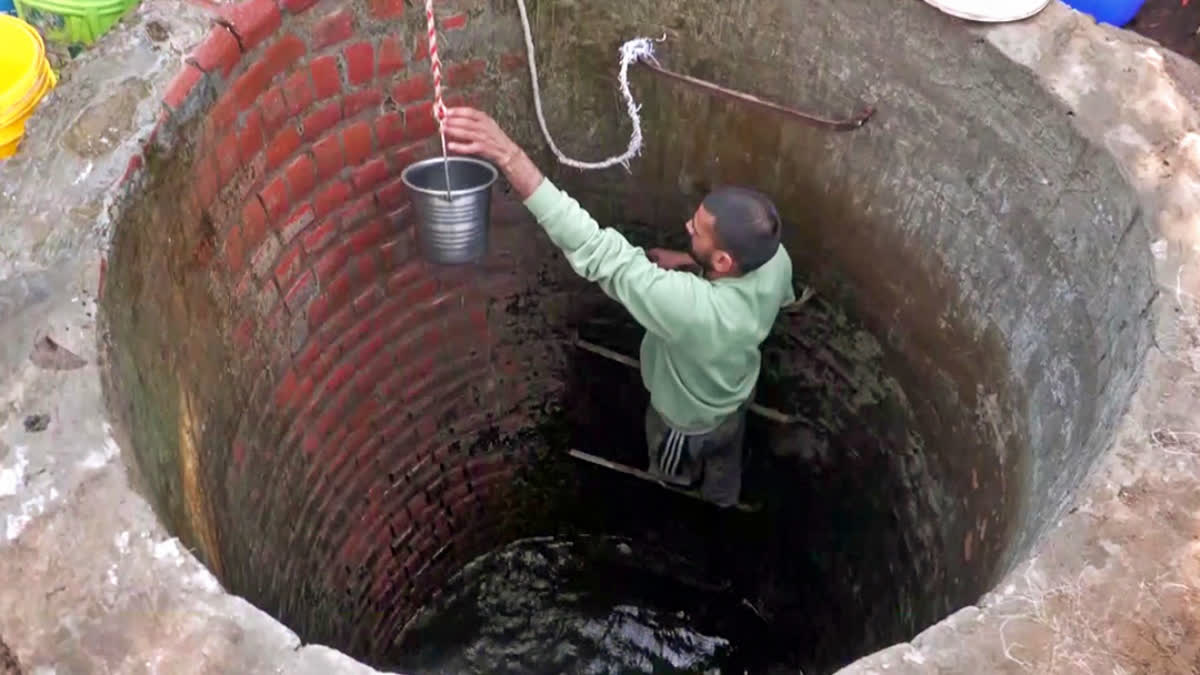
Water is often treated as one of Kashmir’s most dependable natural resources. Fed by mountain springs, underground aquifers and the Jhelum River system, it remains central to everyday life across the Valley. For many households, particularly outside urban centres, groundwater from wells and borewells is an important source of drinking water. Its apparent clarity, however, offers no guarantee of its chemical safety.
A new study published in Scientific Reports, a Nature Portfolio journal, raises questions about how much is known about the quality of this largely invisible resource. Analysing 234 groundwater and spring-water samples from the Upper Jhelum River Basin, researchers found arsenic, chromium and other trace elements exceeding drinking-water guideline values in some samples.
The findings do not establish that Kashmir’s groundwater is broadly contaminated, nor do they suggest that every well or spring poses a health risk. Their significance lies elsewhere: water quality varies considerably between locations and underground water systems, making general assumptions about its safety unreliable.
The research, conducted between 2019 and 2021, examined 51 shallow-groundwater samples, 103 deep-groundwater samples and 80 spring-water samples. Twelve trace metal(loid)s, including arsenic, chromium, iron, manganese, lead and cadmium, were analysed.
The results identified several exceedances. Arsenic concentrations crossed the drinking-water guideline adopted by the researchers in 22.5 percent of shallow-groundwater samples, 15.2 percent of deep-groundwater samples and 11.1 percent of spring-water samples.
Iron exceedances were recorded in 30 percent of shallow-groundwater samples, 11.9 percent of deep-groundwater samples and 15.8 percent of spring samples. Manganese levels were also above the study’s guideline in 20 percent of shallow-groundwater samples, 4.3 per cent of deep-groundwater samples and 1.5 percent of spring samples.
The maximum arsenic concentration reached 77 micrograms per litre in shallow groundwater and 147 micrograms per litre in deep groundwater, compared with 30 micrograms per litre in spring water.
More striking were the highest chromium readings: 2970 micrograms per litre in shallow groundwater and 4334 micrograms per litre in deep groundwater. The maximum recorded in spring water was considerably lower, at 2.4 micrograms per litre.
These figures warrant attention, but they must be understood in context. The researchers caution against extrapolating individual readings to the entire Upper Jhelum River Basin, let alone Kashmir as a whole. The study identifies localised hotspots and particular groundwater environments requiring further investigation. It is not a region-wide assessment declaring groundwater unsafe.
That distinction matters. Environmental findings can easily be reduced to alarming headlines, particularly when they concern something as fundamental as drinking water. But the appropriate response to evidence of localised contamination is neither panic nor dismissal. It is systematic testing, transparent reporting and targeted intervention.
The geology of Kashmir offers part of the explanation for the differences observed. The region’s underground water systems are complex, extending from shallow deposits to deeper aquifers and fractured rock formations that feed springs. As groundwater moves through these formations, it interacts with minerals under varying chemical conditions.
The researchers found that the presence of iron, manganese and arsenic in some groundwater environments was consistent with natural processes involving iron- and manganese-bearing minerals. The exact mineral-level reactions, however, were not directly demonstrated.
Elevated chromium at selected locations may have a combination of geological and human-related sources. Importantly, the researchers measured total chromium rather than separately analysing chromium-3 and chromium-6. The study therefore does not establish the concentrations of chromium-6, a distinction that matters when assessing potential health risks.
To investigate possible sources, the researchers employed Positive Matrix Factorisation, a statistical technique used to identify patterns in environmental data. Four broad categories emerged: geological weathering and redox processes, agricultural-associated contributions, combustion-related contributions and mixed sources.
The relative contribution of these factors varied across shallow groundwater, deep aquifers and springs. Geological weathering and redox processes accounted for between 25.4 and 37.3 percent of the overall contributions, while agricultural-associated sources ranged from 11.9 to 29.7 percent. Combustion-related contributions accounted for 12.7 to 34.3 percent, and mixed sources for 16.6 to 32 percent.
These findings suggest that groundwater quality cannot be understood through a single explanation. Natural geological processes and human activities may both influence the chemical composition of groundwater. Identifying the precise sources at individual locations will require further investigation.
The study also conducted health-risk screening assessments, identifying arsenic and chromium as important contributors to estimated potential risks. But these calculations relied on exposure and toxicity assumptions. They do not constitute evidence that people consuming water from the sampled sources have developed particular illnesses.
Even with these limitations, the findings raise an important public-health question: how regularly are individual groundwater sources in Kashmir tested for trace elements?
Unlike visible pollution, chemical contamination may go unnoticed. Water can appear clear, have no unusual smell and remain suitable in appearance while containing concentrations of certain elements that warrant attention. This makes periodic laboratory testing particularly important for households and communities dependent on private wells and borewells.
The researchers recommend closer monitoring of agricultural and horticultural recharge areas, deeper aquifer intervals where elevated arsenic was recorded, and locations identified as trace-metal hotspots. They also call for repeated seasonal sampling, further investigation of contaminant sources and better understanding of the chemical forms of elements such as chromium.
These recommendations point towards a more targeted approach to groundwater management. Testing should not be restricted to broad regional surveys or occasional investigations. Individual wells, borewells and springs need to be assessed according to their location, aquifer characteristics and potential exposure to contamination.
Seasonal monitoring is equally important because groundwater conditions and recharge patterns can change over time. A reading from one sampling exercise cannot establish the long-term quality of a water source. Repeated assessments would help determine whether elevated concentrations persist, fluctuate or emerge under particular conditions.
There is also a need to make water-quality information accessible. Local authorities and relevant departments could strengthen public awareness by communicating testing results, identifying vulnerable sources and guiding communities towards appropriate precautions where exceedances are confirmed. Such information should distinguish between individual hotspots and broader regional conditions.
For a region that relies heavily on natural water sources, groundwater protection deserves a more prominent place in public-health planning. The focus must extend beyond the availability of water to its actual quality.
The researchers offer a useful principle in their study: the practical implication is not panic, but better targeting.
That is perhaps the most important message. Kashmir does not need sweeping conclusions about the safety of all its groundwater sources. It needs reliable information about which sources are safe, which require closer scrutiny and where intervention is necessary.
Water’s appearance can be reassuring, but appearances are not a substitute for scientific evidence. Ensuring the safety of groundwater begins with knowing what lies beneath the surface.
About the Author
Danish Mohuiddin is a postgraduate in Convergent Journalism with interests in cinematography, filmmaking, and the human dimensions of news.