
Every toll transaction is supposed to leave a trail.
A vehicle approaches a plaza. A toll is collected. A receipt is generated. The money enters an authorised accounting system and, ultimately, the highway authority can reconcile what motorists have paid with what has been deposited.
The alleged fraud now being examined by the Enforcement Directorate turns that seemingly straightforward chain into something far more complicated.
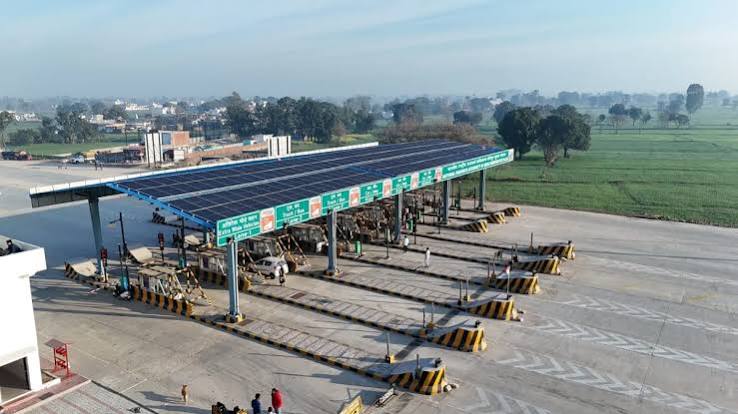
On Wednesday, the agency searched the residence and office of a prominent businessman in Jammu as part of a nationwide operation spanning about 14 locations, in a money-laundering investigation linked to alleged irregularities in toll collection at plazas operated for the National Highways Authority of India.
The searches, conducted under the Prevention of Money Laundering Act, extended across Uttar Pradesh, Rajasthan, Maharashtra, Madhya Pradesh, Delhi-NCR and West Bengal, bringing a geographically dispersed investigation into a common question: whether unauthorised software was used to generate toll receipts while diverting part of the money collected outside the official accounting mechanism.
By Wednesday evening, the ED had not issued an official statement detailing the operation. But people familiar with the searches said investigators were examining documentary and digital records in an effort to reconstruct the flow of money, identify the beneficiaries and establish how the alleged mechanism operated.
In Jammu, the operation began in the morning.
ED officials, accompanied by central forces, searched the businessman’s residence in the Green Belt area of Gandhi Nagar and his office premises in Trikuta Nagar. The entry and exit points at both locations remained sealed during the operation as investigators went through records and electronic material.
The focus was not simply on finding evidence of a transaction.
It was on reconstructing a system.
The allegations at the heart of the investigation are deceptively technical.
According to sources, two police FIRs form part of the basis for the ED’s action. The allegations concern the use of unauthorised software applications to generate toll receipts and the diversion of money collected from motorists outside the official accounting framework.
If established, such a system could exploit the very mechanism designed to make toll collection traceable.
A receipt tells the motorist that a transaction has occurred. The official accounting system is supposed to tell the highway authority the same thing.
The alleged manipulation, investigators suspect, may have created a gap between those two records.
That gap is where money can disappear.
The central question for investigators is therefore not simply how much money was collected at a particular toll plaza. It is whether the amount represented in official records accurately reflected the transactions taking place on the ground.
Such an inquiry inevitably creates a much larger evidentiary trail.
Digital records. Software applications. Transaction logs. Bank accounts. Company records. Contracts. Communications. Accounting entries.
And, above all, the movement of money after the toll was collected.
That appears to be why the investigation has spread across several states.
Money-laundering investigations are rarely confined to the place where an alleged offence occurred.
The underlying offence may take place at a toll plaza, but the proceeds can move through bank accounts, businesses, intermediaries or jurisdictions far removed from the original transaction.
The ED’s nationwide searches suggest that investigators are attempting to follow precisely such a chain.
Sources said officials were examining documentary and digital evidence and analysing financial flows across several states.
The task is potentially enormous.
Investigators have to determine which transactions were legitimate, which may have been generated through unauthorised systems and where the proceeds of any alleged diversion ultimately went.
That requires matching different kinds of records that were never necessarily designed to be examined together.
Toll-plaza data has to be compared with official accounting records. Digital evidence has to be matched against financial transactions. Bank movements have to be traced to businesses and individuals. And where discrepancies emerge, investigators have to establish whether they were technical errors, accounting irregularities or evidence of deliberate manipulation.
The distinction is critical.
A discrepancy is not, by itself, proof of fraud.
That is why the forensic examination of electronic records could become central to the case.
The allegation concerning unauthorised software is particularly significant because modern toll collection depends heavily on digital systems.
The technology is supposed to reduce discretion, improve speed and create an auditable record of each transaction.
But the same dependence on software can create vulnerabilities if systems are bypassed, duplicated or manipulated.
According to sources, forensic examination and NHAI records have indicated the use of unauthorised software in the alleged scheme.
If investigators are able to establish how such software was introduced into the toll-collection process, what it was capable of recording or generating, and how its output differed from the authorised system, they could potentially reconstruct the mechanics of the alleged fraud.
The question would then become whether those technical irregularities translated into an unlawful financial benefit.
That is the point at which a toll-collection investigation becomes a money-laundering investigation.
The ED’s task under the PMLA is not merely to establish that an irregularity occurred. It must trace the proceeds of the alleged criminal activity and identify the people or entities that benefited from them.
That explains the importance of the financial records reportedly being examined during the searches.
The presence of Jammu in a nationwide operation adds a local dimension to what is otherwise a sprawling investigation.
The businessman whose premises were searched is described by sources as a prominent figure. His residence in Gandhi Nagar and office in Trikuta Nagar became the focus of the ED operation from around 9 a.m. on Wednesday.
Officials remained inside for hours, examining material and electronic devices as part of the evidence-gathering exercise.
The searches themselves do not establish wrongdoing by the businessman.
They indicate that investigators consider the premises relevant enough to warrant a search under the ongoing probe.
The eventual significance of the Jammu searches will depend on what investigators recover, what links they establish and whether those links can be connected to the alleged toll-collection operation and the movement of its proceeds.
That distinction is particularly important in an investigation still at the evidence-gathering stage.
The case also raises broader questions about the vulnerability of large public-collection systems.
Toll plazas handle enormous volumes of relatively small transactions.
Each individual payment may be modest. Collectively, however, the sums involved can be substantial.
That makes the integrity of the accounting chain critical.
For a highway authority, the issue is not only revenue.
Accurate toll data is part of the infrastructure of the road itself. It can be used to measure traffic, reconcile collections, monitor operators and assess whether contractual obligations are being met.
Any mechanism that creates a shadow accounting system therefore has implications beyond a missing sum in a ledger.
It can undermine confidence in the entire collection process.
The alleged use of unauthorised software is consequently one of the most consequential aspects of the investigation.
If a system can generate a legitimate-looking receipt without ensuring that the corresponding transaction is captured in the authorised financial records, the technology designed to improve transparency could potentially become a tool for obscuring it.
That is precisely the kind of question forensic investigators will have to answer.
For now, however, the investigation remains in the search-and-evidence phase.
The nationwide operation gives investigators access to records and devices that may help connect transactions, people and companies.
What follows will be more painstaking.
Digital evidence has to be extracted and authenticated. Financial transactions have to be reconstructed. Corporate relationships have to be mapped. Investigators have to determine whether different entities were acting independently or as parts of a common arrangement.
And the alleged proceeds have to be identified.
Sources said legal proceedings by the ED and NHAI would follow as the investigation progresses.
That could eventually lead to further searches, questioning, attachment proceedings or other action, depending on what the evidence establishes.
For motorists, the immediate consequences may be invisible.
They will continue to drive through toll plazas, make payments and receive receipts.
But behind those ordinary transactions lies a vast digital and financial infrastructure that has to ensure every rupee collected is accounted for.
The investigation now underway is testing whether that chain worked as it was supposed to.
Its most important question may ultimately be the simplest one:
When a motorist paid a toll, where did the money go?
The answer, investigators believe, may lie somewhere between the receipt generated at the plaza, the software that recorded the transaction and the bank accounts through which the money eventually moved.
That is the trail the ED is now following – from toll booths to databases, from databases to ledgers, and from ledgers to the people who may have benefited.
For a system built on millions of small transactions, the alleged fraud may have depended on making each individual discrepancy difficult to notice.
The investigation is attempting to do the opposite.
It is looking at the whole picture.
About the Author
Tabish Khan is a multimedia journalist and postgraduate in Convergent Journalism, working across text, video, social media, and digital storytelling.