
The Himalayas have always been a difficult place to build.
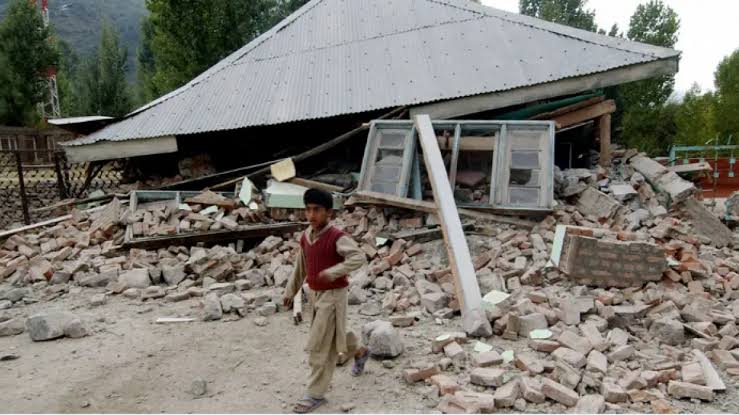
The mountains are young by geological standards, still rising, still shifting and still being carved by rivers, ice and rain. Their valleys can narrow abruptly into gorges. Slopes can fail with little warning. Rivers can change character within hours.
Yet across the range, the ambition to harness those rivers has only grown.
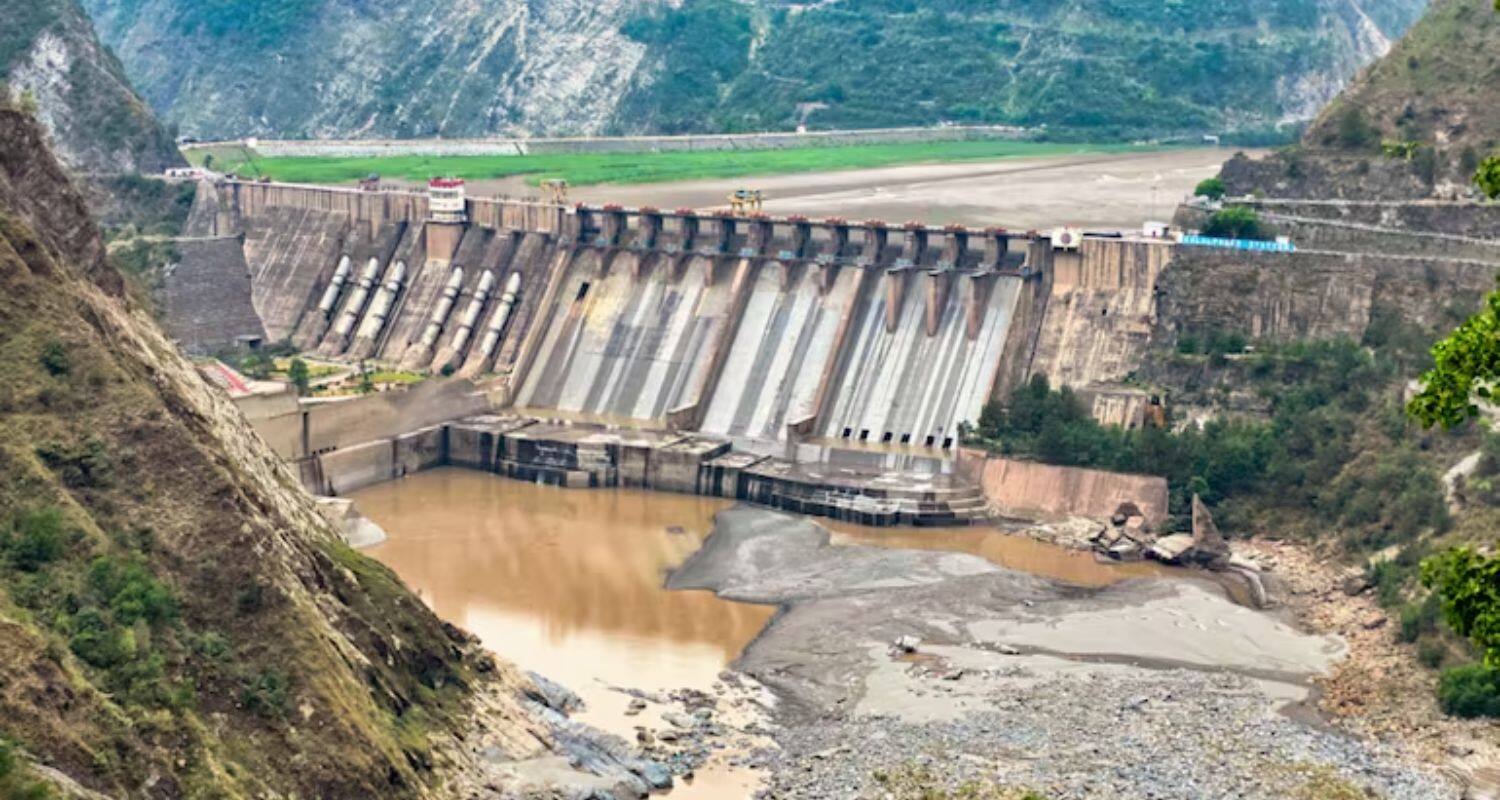
In Jammu and Kashmir, that ambition is entering a particularly consequential phase. Several large hydropower projects are under construction or development, with more than 3000 megawatts of additional capacity planned in the Chenab basin alone.
Then, from elsewhere in the Himalayas, came another reminder of the terrain’s unpredictability.
A recent glacier-related collapse and flash flooding in Nepal’s Langtang-Trishuli region has again drawn attention to the vulnerability of settlements and infrastructure in narrow mountain valleys. The disaster was a natural event, and there is no evidence that hydropower development caused it. But its implications extend beyond Nepal.
The question for Jammu and Kashmir is not whether such an event will happen in exactly the same form. It is whether the risks used to plan long-lived infrastructure are keeping pace with a Himalayan environment that is itself changing.
Across the mountains, the warning signs have been difficult to ignore.
In February 2021, a sudden flood in Uttarakhand’s Chamoli district devastated the 13.2-megawatt Rishiganga hydropower project and severely damaged the under-construction 520-megawatt Tapovan-Vishnugad project. More than 200 people were reported dead or missing.
Two years later, in October 2023, a glacial lake outburst flood from South Lhonak Lake in Sikkim sent a powerful surge through the Teesta basin. The 1,200-megawatt Teesta-III project at Chungthang was severely affected, while bridges, roads and other infrastructure downstream were damaged.
These events do not amount to a verdict against hydropower.
They do, however, complicate the assumptions on which Himalayan infrastructure has traditionally been planned.
For decades, the basic calculation was relatively straightforward: identify a river’s flow, measure its elevation drop, assess the geology, estimate the electricity that can be generated and determine whether the project is technically and financially viable.
But a mountain river is not simply a source of water and energy.
It is part of a system.
A landslide upstream does not stop at the boundary of one project. A debris flow can enter a reservoir. Extreme rainfall can overwhelm roads and bridges serving several projects. Sediment can travel through an entire river system. A sudden flood can reach tunnels, construction camps, intakes and powerhouses within the same valley.
That is why some experts and officials in the power sector believe Jammu and Kashmir should now examine hydropower risk at the scale at which the hazards themselves occur: the river basin.
“The question is not whether hydropower should be developed. The question is whether we are assessing the risks at the scale at which they actually occur,” said a power-sector expert familiar with Himalayan hydropower development.
The stakes in Jammu and Kashmir are substantial.
Pakal Dul is planned at 1,000 megawatts. Ratle at 850 megawatts. Kiru at 624 megawatts. Kwar at 540 megawatts.
Together, they represent more than 3,000 megawatts of additional generation in the Chenab basin.
For a region that continues to depend on power purchases from outside, particularly during periods of low local generation, the projects are strategically important. More domestic generation could improve energy security and reduce dependence on external supplies.
That makes the debate more complicated than a simple argument between development and conservation.
The issue is not whether the Chenab’s hydropower potential should be used. It is whether its potential has been calculated only in terms of electricity — or also in terms of what the basin can safely sustain.
A river can possess the technical potential for another dam without necessarily possessing the environmental, geological or disaster-management capacity for another major intervention.
That distinction is becoming increasingly important as the concentration of infrastructure grows.
Large hydropower projects do not consist only of dams. They require tunnels, underground powerhouses, access roads, bridges, transmission infrastructure, construction sites and places to dispose of excavated rock and other material.
During construction, the risks can be particularly acute.
Thousands of workers may be concentrated in remote valleys while slopes are being cut, mountains excavated and tunnels driven through complex geological formations. A road built to reach one site can alter drainage or destabilise a slope. Blasting and excavation can change local terrain. A sudden flood or landslide can turn an isolated construction camp into a dangerous trap.
The completed project has one set of risks.
The years of construction can have another.
The climate dimension adds another layer of uncertainty.
The Himalayas are experiencing changes in their cryosphere – the snow, glaciers and frozen water systems that help regulate mountain hydrology. At the same time, precipitation patterns are becoming increasingly difficult to predict, with extreme rainfall capable of producing sudden and destructive floods.
For infrastructure expected to operate for many decades, that raises an uncomfortable question.
How much confidence should engineers place in historical patterns when the physical system itself is changing?
Flood estimates, sediment assumptions, slope-stability assessments and hydrological models are necessarily based on available evidence. But infrastructure designed for the future cannot assume that the future will behave exactly like the past.
That does not mean every extreme event represents a new climate trend, nor that every Himalayan disaster can be attributed to climate change.
It means that uncertainty itself has become a planning consideration.
A dam expected to operate for half a century or longer must be able to withstand conditions that may not resemble those observed during the period in which it was designed.
That is why experts say existing infrastructure should not simply be left to operate under old assumptions.
Periodic stress tests could examine dams, spillways, intakes and underground powerhouses, but also the infrastructure that is sometimes less visible: tunnels, access roads, bridges, slopes, muck-disposal areas and emergency evacuation routes.
The objective would be to ask a basic question repeatedly: If the worst plausible event happened today, would the system still be safe?
Jammu and Kashmir has already begun strengthening its disaster-preparedness systems around hydropower projects.
Efforts include early-warning mechanisms and the development of a GIS-based multi-hazard risk atlas. Such systems can provide valuable information and, in some circumstances, precious minutes or hours in which people can be moved out of danger.
But warning systems have limits.
They can tell people that a flood is coming. They cannot make an unstable slope stable.
They can provide time to evacuate a construction camp. They cannot prevent a debris flow from reaching it.
And they cannot answer the larger policy question of whether a particular river basin is becoming too densely packed with major infrastructure.
That is where cumulative assessment becomes important.
Project-by-project environmental and geological assessments can tell planners whether an individual proposal is viable. But they may not fully capture what happens when several large projects occupy the same river system.
What happens when multiple reservoirs alter sediment movement?
What happens when roads and tunnels repeatedly cut into the same mountain slopes?
What happens when a single extreme flood encounters a sequence of dams and construction sites?
And what happens when the assumptions behind all of those projects are based on similar historical data?
Those questions are difficult precisely because the answer is not contained within the boundaries of a single project.
For some experts, the immediate response should not be to abandon projects already under construction.
It should be to reconsider what happens next.
A temporary pause on fresh large hydropower commitments could allow an independent basin-level assessment of the Chenab and other vulnerable Himalayan river systems before additional projects are sanctioned.
Such a review could examine geological hazards, seismic vulnerability, glacier and glacial-lake behaviour, extreme rainfall, probable maximum floods, sediment loads and slope stability.
It could also assess the cumulative effects of tunnelling, blasting, road construction and muck disposal.
Most importantly, it could examine whether existing design standards and emergency-management arrangements remain appropriate for present and projected conditions.
Such an exercise would not necessarily produce a verdict of “stop.”
It might instead produce a map of where development is relatively safe, where additional safeguards are required and where the concentration of infrastructure has become too high.
That would be a more useful answer than treating every project as an isolated engineering problem.
There is another reason Jammu and Kashmir cannot approach this debate casually.
Hydropower remains central to the region’s energy strategy. Local generation is important not only for economic reasons but also for energy security, particularly during periods when electricity demand rises and hydropower output falls.
Any decision to slow new large projects would therefore need to be accompanied by another question:
What replaces the electricity?
Solar power offers one part of the answer.
Rooftop and distributed solar installations can be deployed closer to consumers without requiring dams, long diversion tunnels or extensive mountain road networks. They can help meet daytime demand and diversify the region’s energy mix.
That does not make solar a substitute for every function performed by hydropower. The two technologies can complement one another.
The broader opportunity is to move away from the idea that energy security requires maximising one resource.
Jammu and Kashmir could pursue hydropower where the risks are manageable while accelerating decentralised renewables, improving grid management and reducing unnecessary pressure on fragile mountain systems.
The goal would not be less ambition.
It would be smarter ambition.
The disasters in Chamoli and Sikkim, and the latest catastrophe in Nepal, do not prove that hydropower is inherently unsafe.
Nor do they demonstrate that a disaster in one Himalayan valley will inevitably be repeated in another.
But they do reveal something harder to dismiss: the Himalayas can produce natural events of extraordinary speed and scale, sometimes overwhelming infrastructure that appeared technically sound under more conventional assumptions.
That should matter in Jammu and Kashmir.
The Chenab basin is not an empty landscape waiting to be filled with power projects. It is a living geological system, shaped by earthquakes, glaciers, rainfall, rivers, erosion and landslides – all interacting across administrative and project boundaries.
The more infrastructure placed inside that system, the more important it becomes to understand the system as a whole.
For J&K, the choice may therefore be less dramatic than “hydropower or no hydropower.”
The more consequential choice is whether to continue measuring the Himalayan future with the assumptions of the Himalayan past.
Before another dam is sanctioned, another tunnel driven or another mountain road carved into a narrow valley, there is a case for stepping back and looking at the entire basin.
A pause for assessment would not necessarily be a pause in development.
It could be an investment in making development last.
The Himalayas will continue to move, whether planners account for that movement or not.
The question is whether the infrastructure built among them will be ready when they do.
About the Author
Mir Suneem is a filmmaker and postgraduate in filmmaking from Jamia Millia Islamia, with a strong interest in editing and narrative craft.