

The bribe was only Rs 10,000.
But the damage corruption causes is rarely measured by the amount changing hands.
In 2014, a complainant seeking payment for work on an “Apna Panchayat Ghar” in Ganderbal was allegedly asked to pay money to get a government bill cleared. A decade later, a court in Srinagar has convicted the former executive engineer accused of demanding the bribe and a departmental orderly who allegedly accepted it on his instructions.
Both men have been sentenced to four years in prison.
The case is old. The problem is not.
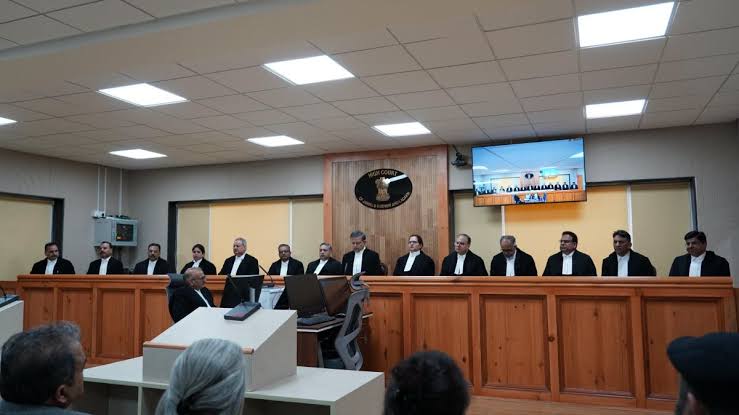
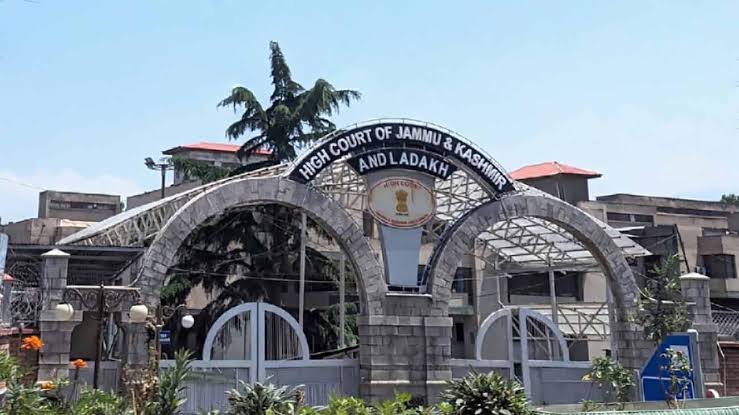
Special Judge Anti-Corruption Srinagar Tasleem Arief convicted Ghulam Nabi Dar, then executive engineer of the Rural Engineering Wing in Ganderbal, and Muhammad Shameem Parrah, then an orderly in the same office, under provisions of the Jammu and Kashmir Prevention of Corruption Act and Section 120-B of the erstwhile Ranbir Penal Code.
Each was fined Rs 10,000, with the prison sentences to run concurrently.
The Vigilance Organisation Kashmir, now the Anti-Corruption Bureau, had laid a trap after receiving the complaint. During the operation, Rs 3,000 in treated currency notes were recovered from Parrah, who the prosecution said had received the money on Dar’s instructions.
The court found that the evidence established demand and acceptance of illegal gratification and criminal conspiracy.
It also made a larger point.
Corruption, the court said, is not merely a transaction between a public servant and a citizen. It is an assault on the institutions that are supposed to serve the citizen.
That distinction is worth dwelling on.
A bribe of Rs 3000 or Rs 10,000 can look small in a government budget running into thousands of crores. But for the person required to pay it, the amount can represent something else entirely: the price of accessing a service that should already belong to them as a matter of right.
A contractor waiting for a legitimate payment is not asking for a favour. A pensioner seeking a pension is not asking for a favour. A family seeking a certificate, a permit, compensation or a welfare benefit is not asking for a favour.
These are obligations of the state.
When an official places a price on them, the citizen is effectively taxed again.
That is why corruption is more than dishonesty. It changes the relationship between government and governed.
The citizen begins to believe that rules are negotiable, that files move only when money changes hands and that public office is a private source of income.
And once that belief becomes widespread, even honest officials operate in a system whose credibility has been damaged.
The Ganderbal case offers a particularly clear example because the alleged transaction was connected to the release of a payment for public works.
Such transactions are especially corrosive.
A contractor who has completed work and is owed money may have already borrowed to pay labourers, purchased materials and invested capital. If the payment is delayed unless a bribe is paid, corruption becomes an additional cost of doing business.
That cost eventually travels.
It can be absorbed by the contractor through lower margins. It can encourage inflated project estimates. It can reduce the quality of construction. Or it can simply be passed into the price paid by the public.
The citizen may never see the envelope changing hands.
But the citizen can still pay for it.
This is why the fight against corruption cannot depend only on catching people after they accept bribes.
A functioning anti-corruption system needs to make the bribe unnecessary, difficult and dangerous.
The first task is reducing discretion where discretion is not required.
Government services should have clearly defined timelines. Bills should be trackable. Files should have digital timestamps. Citizens should be able to see where a request is pending and which official is responsible for the next action.
The more opaque the process, the greater the opportunity for someone to sell access to it.
Digitisation can help, but technology is not a magic cure.
A corrupt system can become a digital corrupt system if officials retain unexplained discretion over approvals.
A portal that merely transfers a paper file onto a screen does little if the citizen still has no way of knowing why the file has stopped moving.
The objective should be transparency, not simply digitisation.
The Ganderbal case also exposes another problem: time.
The alleged bribery took place in 2014. The conviction came in 2026.
The court took into account that the accused had spent about a decade facing trial and had no previous conviction for a similar offence. It also considered Dar’s age and compulsory retirement, as well as Parrah’s subordinate position.
Those considerations are understandable within the criminal justice system.
But a decade-long journey from allegation to judgment has a broader consequence.
Justice delayed weakens deterrence.
For a public servant considering whether to demand a bribe, the prospect of consequences matters. If the system appears incapable of reaching a conclusion for many years, the deterrent effect is weakened.
The answer is not hurried trials at the expense of fairness.
It is better-designed anti-corruption prosecution.
Specialised courts need adequate staffing, prosecutors need resources and investigations need to be completed efficiently. Cases involving documentary evidence, trap operations and identifiable transactions should not languish indefinitely.
There is also a need for stronger internal accountability before a case reaches court.
A department should not have to wait for an anti-corruption agency to discover that an officer repeatedly delays bills, accumulates unexplained complaints or exercises unusual control over routine approvals.
Patterns can be detected.
If a particular office consistently receives complaints about delayed payments, those complaints should trigger an administrative review. If one official’s files remain pending far longer than comparable cases, that should be visible. If contractors repeatedly report demands for money, the system should not treat each complaint as an isolated event.
Corruption often leaves administrative fingerprints before it leaves criminal evidence.
Government needs to learn to read them.
There is another essential principle: protection for those who report wrongdoing.
The first step in many corruption cases is a citizen deciding that paying is not the only option.
That decision can be difficult.
A person may fear retaliation. A contractor may worry about losing future work. An employee may fear transfer or harassment. A citizen may simply believe that complaining will create more trouble than paying.
The state must reverse that calculation.
Reporting corruption should be safer than participating in it.
Complaints should be confidential where necessary. Whistleblowers should be protected from retaliation. Anti-corruption agencies should be accessible without requiring citizens to navigate another bureaucratic maze.
And when a trap operation is successful, the system should communicate that success.
Not as a spectacle, but as a signal.
The message should be simple: public office is not a licence to demand payment for doing one’s job.
The court’s ruling in Srinagar carries precisely that message.
It noted that government officials are expected to deal with members of the public with honesty, fairness and promptness and that corruption offences require adequate punishment.
That principle should extend beyond the courtroom.
It should shape recruitment, transfers, promotions and performance assessments.
An officer’s record should not be measured only by how many files were disposed of. It should also reflect complaints, compliance, transparency and integrity.
At the same time, anti-corruption policy must avoid becoming an instrument for arbitrary punishment.
An effective system needs both accountability and due process.
Every complaint is not proof of corruption. Every administrative delay is not a bribe demand. Officials must be protected from malicious allegations, just as citizens must be protected from corrupt officials.
That balance is not a weakness.
It is the foundation of credible enforcement.
The goal should be a system in which honest officers can work without fear and corrupt officers cannot work without scrutiny.
That requires independent institutions.
The Anti-Corruption Bureau must have the professional capacity to investigate complex cases, follow financial trails, protect complainants and prosecute evidence-based cases. Departments must cooperate rather than treat investigations as an institutional embarrassment.
Asset declarations and conflict-of-interest rules should also be meaningful rather than ceremonial.
An officer who controls public contracts, land approvals, procurement or payments exercises significant power. That power should come with proportionate transparency.
And when corruption is proved, consequences should follow quickly enough to retain meaning.
The Ganderbal case also offers a lesson about public money.
The alleged bribe was connected to a government payment. Every rupee delayed through corruption represents more than an inconvenience to the recipient. It can slow the delivery of public infrastructure itself.
A road contractor waiting for payment may delay further work. A supplier may stop deliveries. A small firm may struggle to pay workers. A project may accumulate costs.
The bribe therefore becomes a hidden transaction inside the public procurement system.
The state pays twice: once through the official contract and again through the inefficiency and distortion created by corruption.
There is a temptation to think of corruption as something that happens at the top — in large contracts, major procurements or high-value scandals.
But everyday corruption can be just as damaging to public trust.
The small bribe demanded to move a file can be the citizen’s first direct encounter with the state.
That encounter can determine whether the government is seen as an institution of rights or a marketplace of favours.
Jammu and Kashmir has invested heavily in infrastructure, digital governance and public service delivery. Those investments will matter less if citizens believe that government access still depends on whom they know or what they are willing to pay.
The answer is not simply more raids.
It is a system in which fewer opportunities for bribery exist in the first place.
That means automatic payments wherever possible. Transparent queues. Time-bound services. Online tracking. Rotation of officials in high-risk posts. Regular audits. Independent complaints mechanisms. Data-driven detection of unusual administrative patterns. Strong protection for complainants. Fast and fair prosecution.
And, when guilt is established, punishment that is certain enough and timely enough to matter.
The four-year sentences imposed in the Ganderbal bribery case are the final chapter of one prosecution.
They should not be the beginning and end of the conversation.
The more important question is how many citizens were asked for money before this case reached court, how many paid because they did not know where to complain, and how many others remain silent today.
Those questions cannot be answered by a single judgment.
But they can be addressed by changing the system that makes corruption possible.
A government is strongest not when it catches the most corrupt officials.
It is strongest when its ordinary systems make corruption increasingly difficult to practise.
The Ganderbal case began with a citizen refusing to accept that a legitimate payment required an illegitimate price.
That refusal travelled through an investigation, a trap, a prosecution and, after a decade, a conviction.
The lesson should be clear.
A public servant’s signature should open a file, not a wallet.
A citizen’s right should not become an official’s opportunity.
And the price of public service should never be paid under the table.
About the Author
Bilquees Punjabi holds a Master’s in Computer Applications and explores the evolving relationship between technology, digital media, audiences, and journalism.