
The walnut harvest arrives in Kashmir with the familiar rhythm of autumn: orchards filling with workers, long sticks striking branches and the sound of walnuts falling through the leaves.
For some families, it is also the season when a day’s wages can become a matter of life and death.
At least six workers have died in walnut-tree falls since harvesting began in late August, over a period of roughly two weeks. Several others have suffered serious injuries, including spinal trauma that has left some permanently paralysed.
The victims have largely been men who depend on seasonal agricultural labour to support their families. They climb trees that can rise 20 to 30 feet above the ground, often without helmets, harnesses, safety nets or fall-arrest equipment.
A slip can mean a broken bone. A harder fall can mean a lifetime of dependence. And sometimes, it means a family loses its only breadwinner.
For Muhammad Maqbool Bhat, 46, of Damjan in Qazigund, the walnut harvest ended on August 30.
He fell while collecting walnuts and died, leaving behind his wife, Meena Jan, a daughter pursuing graduation and a son in Class 12.
“I don’t know who will take care of my two children now,” his wife said. “He used to sustain our family and was everything for us.”
The harvest had been a source of seasonal income for men like Bhat, but the work offered little protection against the risks involved.
The trees themselves are part of the problem.
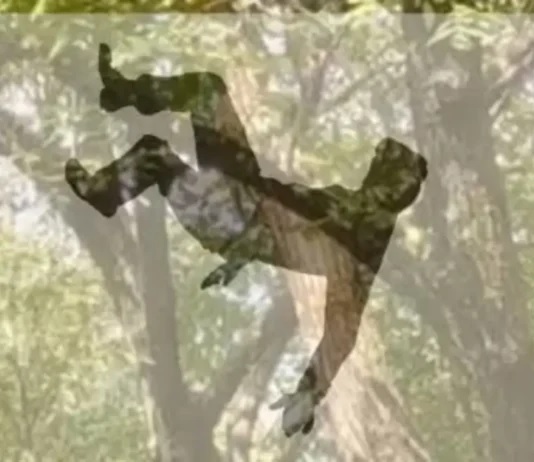
Many walnut trees in Kashmir are old and exceptionally tall. Workers must climb their slippery trunks and move along branches while wielding long sticks, locally known as Laanz, to knock the fruit down.
The job demands balance at considerable height.
It also leaves little room for error.
Abdul Hamid Wani, 55, of Kund in Kulgam, fell on September 4 while harvesting walnuts in his orchard.
He was first taken to GMC Anantnag and then referred to SKIMS Soura. He died the following day.
His family owned only a small number of walnut trees. Harvesting them was one of the ways Wani helped keep the household going.
“We own only a few walnut trees,” said his son, Gowhar Wani, a pharmacist. “My father harvested them to support the family. We are already struggling to survive.”
Wani left behind his wife, two sons and four daughters.
In Laribal, Tral, Ghulam Muhammad Ganai, 50, worked as a seasonal labourer. He reportedly earned between Rs 1,000 and Rs 1,500 for harvesting eight large bags of walnuts.
He fell while threshing walnuts on September 1. He later died at SMHS Hospital in Srinagar.
His wife described a familiar imbalance in the economics of the harvest.
“The businessman earns well, but it is always the labourer’s life on the line,” she said. “My husband worked hard, yet his life was not valued.”
In Khaipora Khag, Beerwah, 33-year-old Muhammad Ashraf died on September 5 after falling from a walnut tree.
“He lived in abject poverty,” a neighbour said. “He was a hardworking man, and his death leaves a void impossible to fill.”
Hilal Ahmad Mir, 33, of Puchal, Pulwama, died on September 2 after suffering serious injuries in a fall. He left behind a wife and two young children.
Ashiq Hussain, 35, of Pawadan village in Uri, Baramulla, died earlier in August after falling while threshing walnuts.
Taken together, the deaths are a reminder that the danger is not an isolated accident. It is woven into the harvest itself.
From the ground, walnut harvesting can look deceptively simple.
Workers climb. They strike branches. Walnuts fall. The fruit is gathered and sorted.
But the work is carried out high above the orchard floor, often on wet or uneven branches and trunks.
A worker may have to balance on a branch while using a long pole to reach fruit. A sudden movement, a broken limb or wet bark can send him falling.
Rain makes the conditions worse.
Yet protective equipment remains rare.
“People think this is simple work,” said Farooq Ahmad, chairperson of Help Poor Voluntary Trust, which supports victims of walnut-tree falls. “But one slip can be catastrophic.”
“These men risk their lives because they have no other livelihood,” he said.
The trust provides medicines and hospital care to injured workers and is also attempting to provide safety equipment to poor seasonal labourers.
Muhamad Ali Lone of the organisation said the responsibility for preventing such accidents should not rest solely with workers.
“Revenue and law enforcement agencies must ensure labourers are fully protected before they climb,” he said. “No one should be allowed to risk life for a bag.”
That last phrase captures the harsh economics of the harvest.
For a worker earning seasonal wages, the risk is immediate and personal. The financial return from a day’s labour may be modest, but refusing dangerous work can mean losing the income altogether.
The death toll tells only part of the story.
A study from Srinagar’s Bone and Joint Hospital, titled “Walnut Tree Falls as a Cause of Musculoskeletal Injury” – A Study from a Tertiary Care Centre in Kashmir, led by Dr Asif Nazir Baba and other researchers, documented the wider medical consequences of the harvest.
Falls can cause fatal head injuries, spinal trauma, fractures, and other damage that can leave survivors permanently dependent on others.
In 2025 alone, eight men died in walnut-tree accidents, while dozens suffered spinal injuries and hundreds were treated in hospitals across Kashmir for fractures and other serious trauma.
“Most victims are young men, the sole earners for their families,” said Baba, a professor of orthopaedics. “The burden on hospitals is tremendous, and these injuries are largely preventable.”
Another study published in 2025 examined the economic consequences of those injuries.
The research, titled “From Injury to Economic Strain: Assessing the Unseen Costs of Labour Risks in Kashmir’s Walnut Harvesting Industry,” looked at 150 labourers in Kupwara and Ganderbal and medical records of 95 workers treated at SKIMS Soura.
Falls from height emerged as the main occupational hazard.
The injuries included spinal trauma, head injuries, internal bleeding and lung damage.
Of the 95 hospital cases examined, 12 workers were brought dead and another 13 died within 24 to 72 hours of admission.
The workers typically spent 7.5 to 8.5 hours a day harvesting, often using long bamboo or wooden sticks from significant heights.
The study identified the absence of helmets, harnesses, and fall-arrest systems as major concerns. It recommended mechanical harvesting and pruning equipment, mandatory safety kits, worker training, health insurance and compensation for injured workers and the families of those killed.
Such measures would represent a significant shift in a harvest that still depends heavily on manual labour.
There is another dimension to the danger: the trees themselves.
Many of Kashmir’s walnut orchards contain old, tall trees. Their height can make harvesting difficult, while ageing or decomposed branches can increase the possibility of accidents.
Farmers and safety advocates have called for the replacement of ageing trees with shorter hybrid varieties.
“Old trees need to be replaced as many of them have low yields, while decomposed branches also pose a serious risk to workers,” said Muhamad Ashraf, a walnut farmer from Salia in Anantnag.
He called for free distribution of hybrid walnut plants.
The argument is partly agricultural and partly human.
Shorter trees can make harvesting easier and potentially safer. New varieties can also improve productivity, giving farmers an incentive to move away from older orchards.
But replacing trees is a long-term proposition.
The labourer standing on a branch today cannot wait years for a safer orchard to mature.
That leaves an immediate question: how can a traditional harvest be made safer before the trees themselves change?
Safety advocates say the first steps are straightforward – helmets, harnesses, safety nets and non-slip footwear, combined with training before the season begins.
They also propose mapping high-risk trees and controlling or removing those considered particularly dangerous.
The solutions are less exotic than the technology sometimes associated with modern disaster management.
They are simply protections that make it less likely for a worker to fall.
Kashmir’s walnut industry is substantial.
Walnut cultivation covers about 95,601 hectares in Jammu and Kashmir, accounting for more than 85 percent of India’s walnut cultivation area, according to departmental data.
Kashmir accounts for roughly 56,721 hectares, with Anantnag, Budgam, Pulwama and Kupwara among the major producing districts.
The region produces about 2.66 lakh metric tonnes of walnuts annually.
But the industry is also facing commercial pressures, including competition from imported walnuts from countries such as China, Chile and the United States.
For farmers, traders and businesses, the harvest is part of an important agricultural economy.
For seasonal labourers, it is something more elemental. It is a few weeks of work. A chance to bring money home. A way to pay school expenses, buy food or keep a household running until the next opportunity arrives. That dependence can make the danger difficult to refuse.
In 2025, eight people died in walnut-related accidents. Among them was Noor Muhammad, 38, of Lankreshipora in Bandipora, who died after being struck by a walnut branch.
His death left five children and his wife.
“Our father left behind five children and my mother,” said his elder son, Umar, who was 17. “He worked every day to provide for us. Now we are struggling to survive.”
Relatives have helped the family, he said, but their lives have changed permanently.
A neighbour, Farooq Ahmad Reshi, said Muhammad had lived in severe poverty and had built a small house only months before his death.
The details vary from family to family. The pattern does not.
Every autumn, the walnut trees fill again. The sticks are lifted. Workers climb. The fruit falls. The harvest continues because it must.
But the deaths have exposed an uncomfortable reality behind Kashmir’s walnut economy: the people doing the most dangerous work often have the least ability to protect themselves.
A worker with no harness may still climb because he needs the wages.
A family with no savings may still send its breadwinner into the orchard because there is no alternative.
And when an accident occurs, the consequences do not end with the fall. They move into the household.
A widow may lose her income. Children may leave school. A surviving worker with spinal damage may require care for decades. Hospitals absorb the cost of preventable trauma. Communities step in where formal compensation may not be enough.
The walnut itself remains valuable. The labour required to harvest it is essential. But the lives behind that labour have often been treated as an invisible cost of doing business. That cost is no longer invisible.
The deaths of six workers in roughly two weeks have once again forced Kashmir to confront a danger that returns with every harvest.
The question is not whether walnuts can be harvested.
It is whether they can be harvested without asking the poorest people in the orchard to gamble their lives for them.
About the Author
Mir Suneem is a filmmaker and postgraduate in filmmaking from Jamia Millia Islamia, with a strong interest in editing and narrative craft.