
For candidates waiting to enter government service in Jammu and Kashmir, the silence of an examination calendar can be as consequential as the announcement of a result. Applications have been submitted, posts advertised and preparations begun. But when the body responsible for conducting recruitment is operating without its chairman and with two member positions vacant, the next step is difficult to predict.
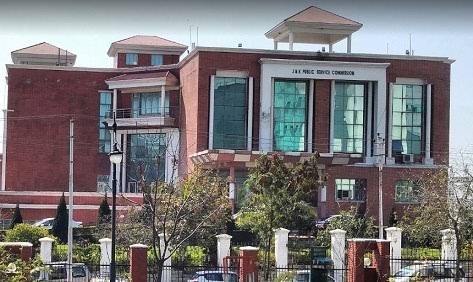
The Jammu and Kashmir Public Service Commission, which recruits for gazetted government posts, has been without a chairman for more than two months. Two of its member positions are also vacant. The leadership gap has raised concerns about the pace of examinations, interviews, selections and departmental promotion-related work at a time when aspirants are waiting for schedules for several advertised posts.
A K Choudhary, the former chairman, retired on August 15, 2026. He had been appointed on February 24, 2024. The commission’s membership had already been reduced by the retirement of Yashpal Kotwal on January 2 and Tariq Ahmad Zargar on June 19 this year.
The commission currently has two members: Rajiv Singh, a former professor at Sher-e-Kashmir University of Agricultural Sciences and Technology of Jammu, and Asaf Mehmood Sagar, a former Indian Forest Service officer. Singh was appointed in June 2024 and is due to retire in December 2029. Sagar joined on July 10, 2024, and is due to retire in August 2028. Shahbaz Ahmad Mirza has been serving as the commission’s secretary since September 1.
The sanctioned strength is a chairman and eight members. With the top post vacant and two member positions unfilled, the commission is working with a substantially reduced leadership. The consequences are being felt by applicants who have no control over the appointment process but whose career plans depend on it.
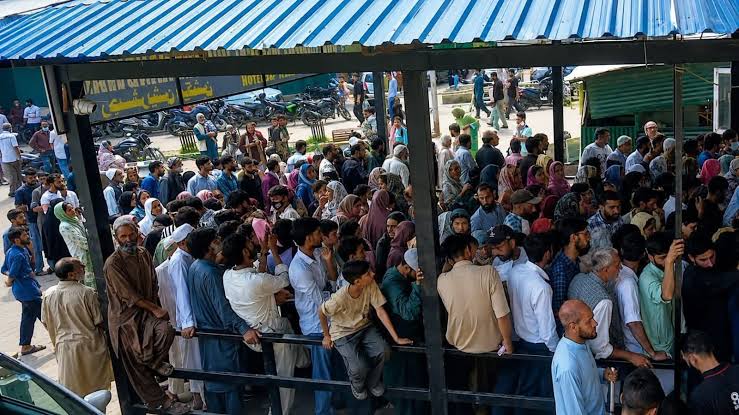
“There is complete frustration among candidates who have applied for different posts,” one aspirant told Greater Kashmir. The commission had advertised several assistant professor vacancies in colleges, the candidate said, but had not announced the examination schedule. For applicants, an advertised post can set in motion months of preparation and expectation. Without a schedule, it is difficult to know when to intensify preparation, whether to continue pursuing other opportunities or how long the process may remain open.
An official at the commission said recruitment activity had been held up because the chairman’s position was vacant. Around 1,200 posts were in the pipeline, the official said, adding that the commission could not move ahead with the recruitment process without a chairman. The pending work included the Jammu and Kashmir Administrative Service examination and recruitment of prosecution officers, besides other examinations.
The official expressed hope that the government would appoint a new chairman by the end of October. That was an expectation voiced at the time of the original reporting, not a confirmation that an appointment had been made. The central issue remains the absence of a functioning leadership arrangement capable of moving recruitment work forward.
The numbers supplied by the commission also suggest a change in output. It completed more than 700 recruitments for gazetted posts during 2024–25, according to the information cited in the report. For 2025–26, 1,152 candidates were listed for different gazetted positions, though the source material does not fully clarify whether this figure refers to candidates processed, vacancies or a completed recruitment total. That distinction matters: recruitment figures can describe different stages of a process, and they should not be treated as interchangeable.
The immediate concern is the backlog. Recruitment is not a single act. It includes identifying vacancies, obtaining requisitions from departments, issuing advertisements, accepting applications, preparing examination arrangements, conducting tests, evaluating answer scripts, holding interviews where required and publishing recommendations. A delay at one stage can push every later stage further into the future.
The commission’s work also has implications beyond new entrants. It is involved in processes relating to departmental promotions and other personnel matters. When the institution’s capacity is reduced, the effects may reach serving employees as well as candidates seeking their first government appointment. The available reporting, however, does not quantify how many promotion cases have been delayed or how much time has been added to individual recruitment cycles.
For applicants, uncertainty is difficult to plan around. Government recruitment often attracts large numbers of candidates, many of whom invest months or years in preparation. They may pay application fees, purchase study material, travel for coaching or examinations and defer other employment options while waiting for a selection process to advance. An unexplained delay can leave candidates in a prolonged state of readiness without a date on which that effort will be tested.
The commission’s reduced strength also raises a question about institutional continuity. Vacancies in senior positions are not unusual in public bodies, but the timing and duration of appointments matter. A commission can have a secretariat and administrative staff, yet major decisions and the conduct of its statutory functions may require the participation of its appointed leadership. The official’s statement that recruitment cannot proceed without a chairman indicates that the vacancy is not merely ceremonial.
The government’s responsibility is therefore twofold. It must fill the vacant positions through a transparent and timely appointment process, and it must communicate clearly with candidates about the status of advertised recruitments. If examinations cannot be scheduled until a chairman is appointed, applicants should not be left to rely on speculation. A public update identifying pending stages and realistic timelines would help restore some predictability.
There is also a need to distinguish between a post being in the pipeline and a recruitment being formally ready for examination. Departments may still need to complete requisitions, confirm vacancies or resolve administrative requirements. The commission’s leadership gap is the immediate concern raised by the official, but the full status of each recruitment should be disclosed so that responsibility for delay is not obscured.
The JKPSC is not simply an office that publishes job advertisements. It is part of the machinery through which public institutions recruit professional and administrative personnel. A stalled recruitment calendar affects the aspirations of candidates, but it can also leave departments waiting for staff in roles that require specialised qualifications and public accountability.
For the young people who have applied for assistant professor posts, JKAS and prosecution officer positions, the question is not abstract. They need to know whether an examination will be held, when it might take place and whether the advertised opportunity remains on track. The commission’s own estimate of about 1,200 positions in the pipeline gives the delay a measurable scale.
The appointment of a chairman would not, by itself, clear every pending recruitment. Examination schedules would still have to be prepared, vacancies processed and selection stages completed. But restoring the commission’s full leadership is a necessary first step towards resuming work and giving applicants a credible timetable.
For now, the commission has two serving members where its sanctioned structure provides for eight members and a chairman. The candidates waiting outside the process can do little but prepare and watch for an announcement. In public recruitment, a vacancy is a gap on an official chart. For an applicant, it can become months of uncertainty about the future.
About the Author
Tabish Khan is a multimedia journalist and postgraduate in Convergent Journalism, working across text, video, social media, and digital storytelling.