
Kashmir Impulse Desk
New Delhi, Nov 26
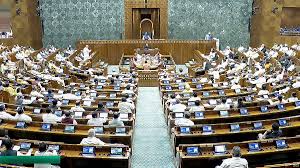
The Centre has asked the presiding officers of Parliament to reconvene the Lok Sabha on November 30 and the Rajya Sabha on December 2 to transact essential government business, with the sittings likely to conclude on December 3.
Union Parliamentary Affairs Minister Kiren Rijiju announced the proposed schedule on Thursday, saying the government had written to Lok Sabha Speaker Om Birla and Rajya Sabha Chairman C P Radhakrishnan.
In a post on X, Rijiju said the Lok Sabha had been requested to meet on Monday, November 30, and the Rajya Sabha on Wednesday, December 2.
“Subject to exigencies of the Business, the sitting of both Houses may conclude on December 3, 2026,” he said.
The government has not disclosed the legislative agenda for the proposed sittings.
The announcement has, however, renewed speculation over a possible attempt to revive legislation relating to delimitation of constituencies and implementation of the 33 per cent reservation for women in legislatures.
The proposed reconvening is also significant because Parliament’s Monsoon Session, which was adjourned sine die on August 13, has not been prorogued.
More than 100 days have passed since the two Houses were adjourned, making the interval the longest of its kind in India’s parliamentary history.
The previous record was 87 days in 2008.
An adjournment sine die ends the sitting of a House without specifying the date of its next meeting. Prorogation, ordered by the President, formally brings a parliamentary session to an end.
Since the Monsoon Session has not been prorogued, the government can seek to reconvene Parliament within the existing session rather than summon a fresh one.
The prolonged gap had triggered questions about the government’s intentions, particularly after its legislative proposals on delimitation and women’s reservation failed to secure the required support in the Lok Sabha earlier this year.
The proposed sittings have brought renewed attention to the legislative package comprising the Constitution (131st Amendment) Bill, 2026, the Delimitation Bill, 2026, and the Union Territories Laws (Amendment) Bill, 2026.
The proposals sought to change the framework governing delimitation, increase the strength of the Lok Sabha and state legislative assemblies, and facilitate the implementation of women’s reservation.
The Constitution (131st Amendment) Bill was put to vote in the Lok Sabha on April 17 but failed to secure the constitutionally required two-thirds majority.
Of the 528 members who voted, 298 supported the Bill, and 230 opposed it.
A constitutional amendment requires the support of at least two-thirds of members present and voting. The government therefore fell short of the required numbers.
Following the defeat, Rijiju withdrew the accompanying Delimitation Bill and the Union Territories Laws (Amendment) Bill.
The government has not clarified whether it intends to reintroduce the proposals or bring forward revised legislation during the proposed sittings.
Delimitation involves redrawing electoral constituency boundaries and determining the allocation of seats among states and Union Territories.
The government’s earlier legislative package sought to expand the strength of Parliament and state assemblies alongside changes to the delimitation framework.
The proposals were linked to the implementation of the 33 per cent reservation for women, provided for under the Constitution (106th Amendment) Act, 2023.
The 2023 legislation provides for reserving one-third of seats for women in the Lok Sabha, state legislative assemblies and the Delhi Assembly.
Its implementation was linked to the completion of a future Census and a subsequent delimitation exercise.
The 2026 proposals sought to modify the existing framework to facilitate the implementation of the reservation alongside changes in the number and boundaries of constituencies.
Opposition parties had questioned the timing, methodology and possible political consequences of the proposed delimitation exercise.
They argued that women’s reservation should not be linked to a large-scale redrawing of constituencies, while the government maintained that changes were necessary to address representation requirements.
The decision to reconvene Parliament has also drawn criticism from Opposition leaders, who have questioned why the government has not announced a regular Winter Session.
Congress leader and Lok Sabha MP Manish Tewari criticised the proposed arrangement, saying a special sitting should not replace the regular parliamentary calendar.
“This request mocks the institution of Parliament,” Tewari said in a post on X.
He argued that the government should convene the Winter Session instead of relying on a special sitting.
Tewari also suggested that the government could use the proceedings to bring back legislation that had previously been defeated.
Congress MP Karti Chidambaram had also questioned the delay in announcing the dates for the Winter Session.
The Congress is scheduled to hold a meeting of its Parliamentary Strategy Group in New Delhi on Friday to discuss its approach to the proposed proceedings.
Despite speculation over the possible legislative business, the government has so far referred only to essential government business.
Rijiju’s announcement did not mention delimitation, women’s reservation or any specific Bill.
Under the proposed schedule, the Lok Sabha would meet from November 30, followed by the Rajya Sabha from December 2, with proceedings in both Houses potentially concluding on December 3.
The final schedule remains subject to parliamentary business requirements and decisions by the presiding officers.
For now, the government has not indicated whether the proposed sittings will include a fresh attempt to advance the delimitation-related legislation or whether other government business will take priority.