
The weapon was meant to serve a purpose larger than the person carrying it.
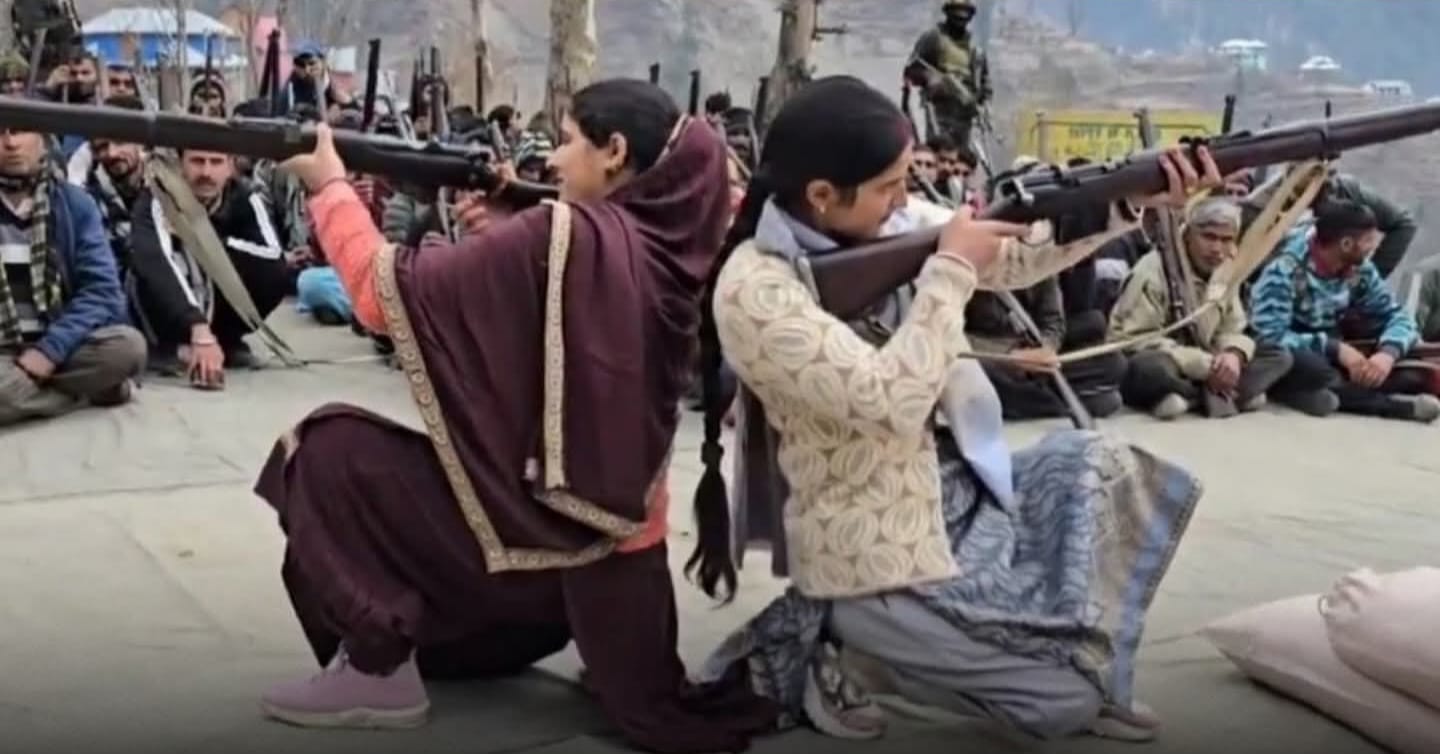
In the remote villages of Jammu and Kashmir, where difficult terrain can leave communities far from police stations and delay the arrival of security forces, the Village Defence Guard system was created as an additional layer of protection. Its members were meant to help safeguard vulnerable communities when the formal security apparatus could not respond immediately.
But in Moughri village of Udhampur district, police say a weapon issued to a VDG member was allegedly used after an argument between two sides.
One man was killed. Another was seriously injured.
The deceased was identified as Baldev Singh, son of Kartar Singh. The injured man was identified as Ramesh Singh, son of Nek Ram. Police said both suffered gunshot wounds allegedly fired from a weapon issued to a VDG member. Several suspects, including VDG members, have been detained and an investigation is under way.
The circumstances of the shooting will have to be established by investigators and, ultimately, the courts.
But the incident raises a question that goes beyond one village or one argument: What safeguards are sufficient when the state places firearms in civilian hands for the purpose of protecting a community?
The question is not an argument against community defence. It is an argument for taking the responsibilities that come with it seriously.
A firearm changes the nature of an ordinary disagreement. An argument that might otherwise end with anger, separation or even a physical confrontation can become irreversible when one person has access to a gun.
That is why the distinction between possessing a weapon for a defined public purpose and using it in a private dispute is not a technicality.
It is the foundation of the system.
A weapon issued for community defence is not an ordinary possession. It is entrusted power. The person carrying it is expected to understand when that power may legitimately be exercised – and, just as importantly, when it must remain unused.
That requires more than handing over a firearm.
It requires training, discipline, supervision and accountability.
The Udhampur shooting should therefore prompt a careful examination of the safeguards surrounding VDG weapons, without prejudging the investigation.
Are members regularly trained in safe handling and the limits of their authority? Are weapons properly inspected and accounted for? What happens when a member becomes involved in a personal dispute or displays threatening behaviour? Who has the authority to intervene before an argument becomes a shooting?
These are not merely administrative questions. They are questions of public safety.
A village defence system depends on trust. Residents must believe that the person entrusted with a weapon will use it only when circumstances genuinely require it. If that confidence is damaged, a weapon intended to make a community safer can have the opposite effect.
There is also something different about an argument when one participant is armed.
The mere presence of a firearm can alter the balance of a confrontation. It gives one person an immediate capacity for lethal force that the other may not possess. That makes restraint, judgement and clear rules especially important.
The state does not simply give a VDG member a weapon. It gives that individual a measure of public authority.
With authority comes responsibility.
And responsibility requires oversight.
The temptation after a shooting is to focus entirely on the individual accused of pulling the trigger. That is necessary in a criminal investigation. But a serious review should also examine the system around that individual.
VDG members should have clear rules governing when weapons may be carried, how they should be stored and what procedures apply when a member becomes involved in a personal dispute.
Residents should also have straightforward channels through which concerns about a member’s conduct can be reported. A complaint should not automatically be treated as proof of wrongdoing, but credible warnings should not be ignored until something irreversible happens.
Where justified under established procedures, temporarily withdrawing a weapon may be safer than waiting for a dispute to escalate.
Training, too, should not be a one-time exercise. Refresher programmes should cover not only weapons handling but judgement, de-escalation, identification of genuine security threats, legal responsibilities and the consequences of misuse.
The principle should be unmistakable: carrying a weapon does not confer a right to use it.
Accountability after alleged misuse is equally important.
If a state-issued weapon is used against civilians in circumstances unrelated to legitimate community defence, the investigation must be prompt, impartial and capable of establishing what happened. Where wrongdoing is proved, consequences must follow.
That is not an attack on the VDG system.
It is what protects the system’s legitimacy.
A community defence programme can survive the misconduct of an individual member if the institution responds decisively and fairly. It becomes much harder to defend when misconduct is ignored or treated as an isolated exception without examining how it happened.
The VDG system exists because some communities face genuine security vulnerabilities. The answer to those vulnerabilities cannot be to assume that an armed civilian will automatically become a safer guardian.
Weapons magnify responsibility. They do not replace judgement.
That principle is particularly important in villages where neighbours may be relatives and personal, land or family disputes can have long histories. Most disagreements never become shootings. But when one party has access to a state-issued firearm, the consequences of losing control can be irreversible.
The Udhampur case remains under investigation. Several suspects have been detained, and the circumstances of the shooting are yet to be fully established.
But the larger questions should be asked now.
Not after another weapon is fired.
The people who receive firearms in the name of community protection should be held to a standard higher than that expected in an ordinary private dispute. Their weapons should remain subject to clear rules, regular review and meaningful accountability.
The purpose of a VDG weapon is protection.
The moment it becomes an instrument for settling personal differences, the very logic on which the weapon was entrusted begins to collapse.
Community defence works only when the community trusts those who defend it.
And that trust rests on a simple principle: a weapon granted for protection must never become a weapon for settling personal scores.
About the Author
Syed Sameer Ahmad Nazki is a filmmaker skilled in editing and videography, with an interest in visual storytelling and sports.
**********