
In the mountains of Jammu and Kashmir, a highway is never simply a road.
It is a lifeline carved into slopes that are constantly moving, a narrow corridor connecting towns and villages to markets, hospitals and the rest of the country. When the road closes, the consequences can travel hundreds of kilometres.
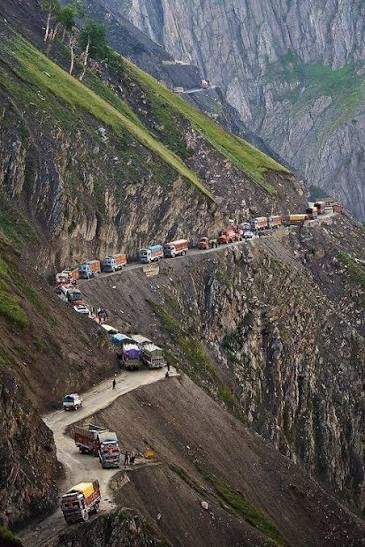
A landslide can stop a truck carrying apples from Kashmir.
A cloudburst can send debris across a carriageway.
A damaged retaining wall can turn an ordinary journey into a long wait.
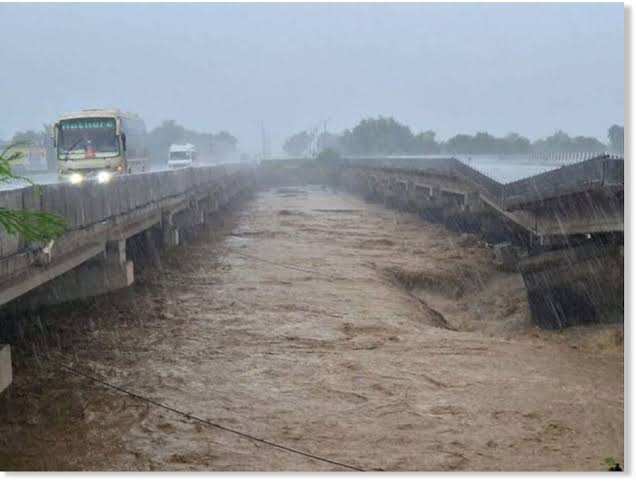
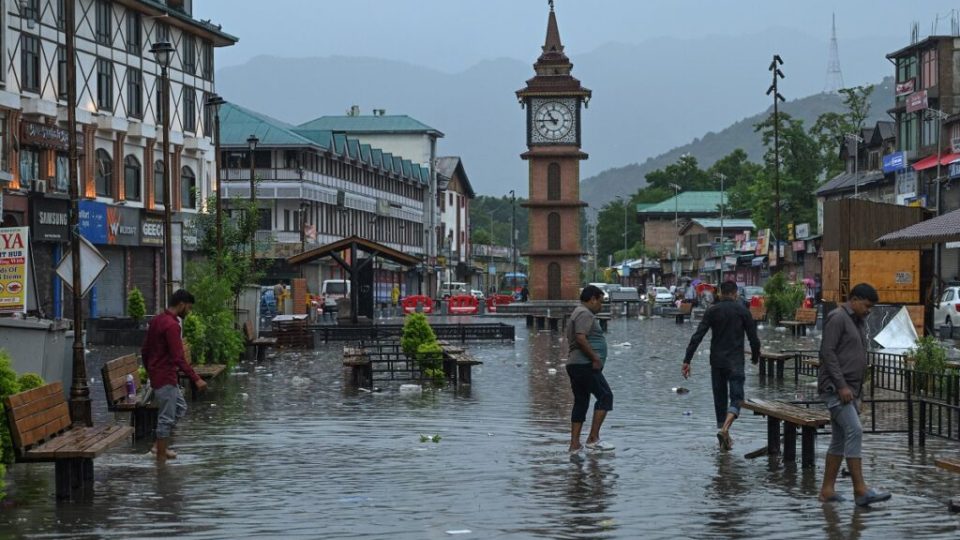
And a few hours of heavy rain can expose vulnerabilities that took years to build.
That pattern has played out repeatedly along some of Jammu and Kashmir’s most important national highway corridors, according to details provided by the federal government to Parliament.
National Highway-44 and National Highway-244 were repeatedly affected by landslides, cloudbursts and heavy rainfall during 2025 and 2026, with several incidents recorded along the Udhampur-Ramban, Ramban-Banihal and Chenani-Sudhmahadev corridors.
The disruptions have underscored a difficult reality of road-building in the Himalayas: infrastructure can be engineered, strengthened and maintained, but it remains exposed to the terrain and weather surrounding it.
On the Udhampur-Ramban section of NH-44, cloudbursts and heavy rainfall triggered landslides at Bali Nallah and Tharad in 2025, the Ministry of Road Transport and Highways said.
At Karol and Kowbagh, muck and slush accumulated on the road.
Then, in 2026, a major landslide near Dewal-Samroli, at kilometre 79, blocked both carriageways and damaged a retaining wall.
Clearance and restoration work was subsequently completed, according to the ministry.
The incidents were not isolated.
Further north, the Ramban-Banihal section also suffered repeated disruptions.
A cloudburst in 2025 triggered flash floods. Heavy slush and debris accumulated at Seri. Muck entered Tunnel T-2. A landslide occurred at Kela Mor.
Another landslide in 2026 blocked both carriageways before clearance operations restored traffic.
A separate landslide was reported at Marog on NH-44 in 2025.
On NH-244, multiple landslides affected the Chenani-Sudhmahadev section.
Taken individually, the incidents may look like a series of engineering and maintenance problems.
Taken together, they reveal something larger: the vulnerability of the road network that carries much of the region’s traffic through steep and geologically fragile terrain.
NH-44 is particularly important.
The highway is the principal road connection between Kashmir and the rest of India, carrying passengers, commercial vehicles and essential supplies through the mountains.
When it works, the journey becomes routine.
When it fails, Kashmir feels the interruption quickly.
The highway has experienced major closures in recent years.
In April last year, persistent rainfall triggered shooting stones and rockfalls and washed away sections of the Banihal-Ramban road, resulting in a closure that lasted for more than three weeks.
The highway was disrupted again for much of August and September as monsoon rainfall brought landslides, mudslides, shooting stones, rockfalls and flash floods.
For motorists, the immediate consequence was delay.
For Kashmir’s economy, the consequences were more complicated.
Among those most exposed were the region’s fruit growers.
Kashmir’s horticulture sector depends heavily on road connectivity. Every season, thousands of trucks carrying apples and other agricultural produce leave the Valley for markets elsewhere in India.
The timing matters.
Fruit is perishable.
A truck delayed for hours can create problems. A truck stranded for days can turn a commercial shipment into a loss.
When the highway remained blocked, fruit-laden trucks were stranded on the road. Growers reported that significant quantities of produce deteriorated in transit, resulting in losses worth millions of rupees.
The road, in other words, became part of the supply chain.
When the road failed, the supply chain failed with it.
That is why landslides in the Himalayas cannot be understood only as local geological events.
They can become economic events.
A slope collapses somewhere between Ramban and Banihal, and the consequences can eventually reach a wholesale market far away.
A truck carrying apples is delayed in the mountains, and the financial impact is felt by a grower in the Valley.
A passenger misses an appointment.
A family postpones a journey.
A supply vehicle waits for clearance.
A road crew begins work in difficult terrain while another storm may already be approaching.
The geography creates a chain of dependence.
The government has acknowledged the recurring disruptions while also outlining measures intended to improve the resilience of national highways in vulnerable terrain.
Road Transport and Highways Minister Nitin Gadkari told Parliament that action had been taken against contractors where deficiencies were established.
The Centre separately reported one case of major structural failure on a National Highway project in Jammu and Kashmir since 2014.
That failure occurred in 2022.
The contractor involved was penalised an amount equivalent to 1 percent of the project cost and was blacklisted under contractual provisions, according to the government.
The distinction is important.
Not every landslide is evidence of faulty construction.
Mountain roads can be damaged by forces that exceed the assumptions made during design.
The government said highway projects include drainage systems and measures intended to protect hillsides, but extreme weather remains a significant challenge in mountainous regions.
At the same time, authorities are under pressure to establish whether infrastructure failures are caused by extraordinary natural events, inadequate design, poor construction or insufficient maintenance.
That question becomes more important as extreme rainfall events put greater stress on mountain infrastructure.
The government told Parliament that no cases had been recorded in Jammu and Kashmir in which faulty national highway construction had caused flooding of low-lying areas or agricultural fields, based on the data submitted.
Nationwide, three such cases were reported, involving stretches in Telangana and Maharashtra.
But the absence of such cases does not eliminate the broader problem of vulnerability.
A road can be properly constructed and still be overwhelmed by a landslide.
A drainage system can function as designed and still face an extraordinary volume of water.
A retaining wall can stand for years before the slope behind it becomes unstable.
The challenge is therefore not simply to build roads.
It is to build roads that can withstand a landscape that is itself unstable.
The Centre says it is moving toward that goal through a combination of engineering, monitoring and improved planning.
Measures include stronger slope stabilisation, mandatory quality assurance for rockfall mitigation, real-time landslide monitoring and better preparation of detailed project reports.
The government has also cited cooperation with institutions including the Geological Survey of India, the Defence Geo-informatics Research Establishment, the National Institute of Rock Mechanics and IIT Roorkee.
The objective is to improve the understanding of vulnerable terrain and make roads safer before disaster strikes.
That approach represents a shift from responding to landslides after they happen toward identifying where failures are most likely to occur.
Real-time monitoring could provide earlier warnings.
Better geological assessment could influence road alignments and protection measures.
Improved slope stabilisation could reduce the likelihood of debris reaching the carriageway.
More detailed project reports could account for risks that become apparent only when a road enters difficult terrain.
But the scale of the problem remains formidable.
Jammu and Kashmir’s highways pass through some of the most challenging landscapes in the country.
Roads are cut into mountainsides. Tunnels carry traffic through rock. Bridges cross fast-moving rivers and streams. Slopes rise above carriageways, while drainage channels have to manage water descending from higher ground.
Every element is connected.
Water can weaken a slope.
A weakened slope can produce a landslide.
A landslide can block a road.
A blocked road can delay emergency services and commercial traffic.
And prolonged closure can begin affecting markets and livelihoods.
This interconnectedness makes highway resilience more than an engineering issue.
It is also a question of economic resilience.
For Kashmir, the dependence is particularly visible during the horticulture season.
Apples and other fruit products represent a major source of income for growers and workers across the Valley. Their journey to markets depends on a transport network that is vulnerable to weather at precisely the time when large volumes of produce are moving.
When trucks are stranded, growers cannot simply wait indefinitely.
The fruit continues to ripen.
Markets continue to operate.
Costs continue to accumulate.
A road closure therefore creates a race against time.
For road authorities, the priority is to clear the route.
For truckers, it is to get moving.
For growers, it is to protect the value of a crop that may represent months of work.
The highway becomes the point at which all three interests meet.
The repeated disruptions along NH-44 and NH-244 also illustrate the difficulty of maintaining connectivity in mountainous regions.
Unlike a flat road network, where traffic can often be diverted onto alternative routes, mountain corridors offer fewer options.
One blocked section can create a bottleneck over a large area.
That makes restoration speed critical.
The government said restoration and clearance work was completed following the major landslide near Dewal-Samroli and after the 2026 blockage on the Ramban-Banihal section.
Such work is often invisible when it succeeds.
A road reopens.
Vehicles move.
The incident quickly becomes yesterday’s news.
But behind the reopening are workers clearing tonnes of debris, engineers assessing damage, machinery operating close to unstable slopes and authorities deciding when it is safe to allow traffic through.
The next storm can begin the cycle again.
That is the challenge facing the region’s highway planners.
The goal is not simply to prevent every landslide — an impossible task in such terrain.
It is to make the network more resilient when landslides occur.
That means identifying vulnerable slopes, strengthening them where possible, designing effective drainage, monitoring movement, maintaining emergency response capacity and ensuring that contractors meet required standards.
It also means recognising that climate and weather patterns are part of the infrastructure equation.
A highway designed around historical rainfall patterns may face a different risk environment if intense rainfall becomes more frequent or concentrated.
The government’s emphasis on real-time monitoring and geological expertise reflects that evolving understanding.
But technology will not eliminate the mountains.
The road will still run through a landscape shaped by rain, rock and gravity.
For motorists travelling through the Valley, the experience is often reduced to a simple question: Is the highway open?
Behind that question lies a much larger system.
There are engineers, contractors, geologists, road crews, transporters, growers, security personnel and emergency workers.
There are tunnels and retaining walls, drainage channels and slopes.
And there is the weather.
The recent disruptions have shown how quickly that system can be tested.
For Jammu and Kashmir, the highway is more than an artery.
It is a connection to markets, supplies, employment and the wider country.
When it closes, the region does not simply lose a road.
It loses time.
And in the mountains, time can be expensive.
The Centre’s response – stronger engineering standards, greater monitoring, geological assessment and accountability for established deficiencies – is aimed at reducing that cost.
But the ultimate test will come not in Parliament or in project documents, but on the road itself.
When the next cloudburst comes, when the next slope begins to move and when thousands of vehicles are once again waiting for the mountains to settle, resilience will be measured in something very practical.
How quickly can the road open?
How safely can it open?
And how long can it stay open once the rain begins?
About the Author
Wajahat Iqbal Kashtwari is a filmmaker and multimedia professional with a keen interest in the environment, ecology, and climate change.