

From Ganderbal to the high Himalayas, cloudbursts are becoming a recurring feature of Kashmir’s summers, raising troubling questions about climate change, fragile ecosystems, and the Valley’s preparedness for a wetter, more unpredictable future. Wajahat Iqbal Kashtwari writes.
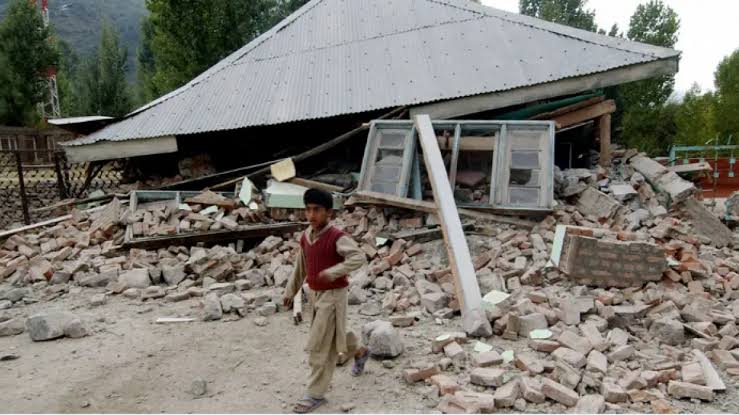
The rain arrived without warning. In the forested heights above Ganderbal district, dark clouds gathered over the Darend forests before releasing a torrent of water in a matter of minutes. Streams swelled, slopes loosened and muddy floodwaters rushed downhill, carrying debris into the Padshahi Canal. By the time the water reached Reshipora village, homes had been inundated, paddy fields submerged and livelihoods disrupted.
For residents, the destruction felt sudden. For climate scientists, it felt increasingly familiar.
The cloudburst that struck Ganderbal this week was not an isolated incident. Over the past decade, Kashmir has witnessed a noticeable rise in extreme weather events – intense rainfall, flash floods, landslides and cloudbursts occurring with a frequency that many residents say they do not remember from earlier generations.
The Valley’s weather, once regarded as relatively predictable, appears to be entering a new and more volatile phase. And while a single storm cannot be attributed solely to climate change, the broader pattern is becoming harder to ignore.
A cloudburst is among the most dramatic weather phenomena in mountainous regions. Meteorologists define it as an extremely intense rainfall event occurring over a small geographical area within a short period. In some cases, several centimetres of rain can fall within an hour. The consequences can be devastating.
Mountain slopes rapidly become saturated. Small streams transform into torrents. Loose soil and rocks are swept downhill. Floodwaters accumulate faster than drainage systems can handle.
Unlike conventional floods, cloudburst-induced flooding often leaves little time for preparation. Residents may go from normal daily activity to emergency conditions within minutes.
The Himalayan region, including Jammu and Kashmir, has always experienced occasional cloudbursts. What concerns scientists today is the growing frequency and intensity of extreme rainfall events across mountain ecosystems.
Events once considered rare are appearing more often. And they are affecting locations previously regarded as relatively safe.
Any discussion about extreme rainfall in Kashmir inevitably returns to September 2014. That year, unprecedented rainfall triggered catastrophic flooding across the Valley. Large parts of Srinagar were submerged. Entire neighbourhoods disappeared beneath water. Hundreds of thousands of people were affected.
The floods exposed vulnerabilities that had accumulated over decades. Wetlands had shrunk. Natural floodplains had been encroached upon. Drainage channels had narrowed. Urban expansion had altered the Valley’s hydrology. The disaster became a defining moment in Kashmir’s environmental history. Yet experts increasingly argue that the lessons of 2014 remain only partially understood. The flood was not simply a natural disaster. It was also a warning about the interaction between extreme weather and human activity. A decade later, cloudbursts and flash floods continue to test those same vulnerabilities.
For much of the twentieth century, climate change often seemed like a distant concept in Kashmir. People associated it with melting polar ice caps, rising sea levels and international conferences. Today, it is increasingly visible closer to home. Scientists have documented significant changes across the Himalayan region. Temperatures are rising. Glaciers are retreating. Snowfall patterns are shifting. Seasonal weather cycles are becoming less predictable. Extreme rainfall events are increasing. The Himalayas are warming faster than many other parts of the world. Warmer air can hold more moisture. When weather systems release that moisture, rainfall often becomes more intense.
The result is a growing tendency toward short-duration, high-intensity precipitation events—the very conditions associated with cloudbursts. In simple terms, the atmosphere is carrying more water. And when it releases that water, the consequences can be dramatic.
Traditionally, Kashmir’s summers were associated with moderate rainfall and pleasant temperatures. Farmers planned agricultural activities around relatively predictable seasonal patterns. Communities understood the rhythms of weather. Those rhythms are becoming increasingly difficult to read. Recent years have brought prolonged heatwaves, sudden downpours, erratic rainfall distribution and unusual weather fluctuations.
Instead of steady rainfall spread across days, larger quantities of precipitation are increasingly arriving in shorter bursts. For agriculture, this creates a paradox. A season may receive normal rainfall totals overall while still experiencing drought-like conditions and flooding. Farmers need rainfall distributed over time.
Cloudbursts deliver too much water too quickly. Fields become inundated. Topsoil is eroded. Crops suffer damage. Water resources remain unevenly replenished. The result is growing uncertainty for rural communities.
Cloudbursts reveal an uncomfortable truth about Himalayan ecosystems. Mountains are beautiful because they are dynamic. But their dynamism also makes them vulnerable. Steep slopes, fragile geology and rapidly flowing rivers create landscapes that can change dramatically during extreme weather. When intense rainfall strikes mountain terrain, gravity becomes a powerful force. Soil moves. Rocks shift. Streams overflow. Landslides occur. Entire hillsides can become unstable. Human activity often amplifies these risks. Road construction cuts into slopes. Deforestation reduces natural stabilisation. Unplanned development alters drainage patterns. Encroachments restrict waterways. As a result, weather events that might once have been manageable can become disasters. The Ganderbal incident illustrates this relationship. Residents blamed inadequate canal maintenance and desilting for worsening the flooding. Whether or not infrastructure failures were the primary cause, the broader point remains important: environmental resilience depends on preparation. Extreme weather cannot always be prevented. Its impacts can often be reduced.
One of Kashmir’s most overlooked environmental challenges is the decline of wetlands. Historically, wetlands functioned as natural sponges. They absorbed excess water during heavy rainfall and gradually released it back into river systems. They reduced flood peaks. They protected settlements. They sustained biodiversity.
Over decades, many wetlands have shrunk due to encroachment, urbanisation and land-use changes. As these natural buffers disappear, flood risks increase. Water that once spread across marshlands now rushes into settlements and infrastructure. Environmentalists frequently describe wetlands as Kashmir’s first line of defence against extreme rainfall. Yet many continue to face pressure. Cloudbursts therefore expose not only meteorological challenges but also ecological ones. The condition of wetlands may determine how well the Valley copes with future storms.
The first casualties of cloudbursts are often farmers. The Ganderbal incident submerged paddy fields and damaged agricultural land. Similar stories are repeated across Kashmir whenever flash floods occur. For farming communities, extreme weather represents more than temporary inconvenience. It threatens income. Food security. Debt repayment. Household stability.
Agriculture remains deeply intertwined with Kashmir’s economy and culture. Changes in rainfall patterns therefore have consequences extending far beyond individual farms. A single storm can erase months of labour. Multiple extreme events within a season can undermine entire harvest cycles. As climate risks increase, agricultural adaptation is becoming increasingly urgent.
Improved forecasting, resilient crop varieties and better water management systems may become essential components of future farming strategies. Meteorological science has advanced considerably in recent decades. Forecasting capabilities are improving. Weather monitoring networks are expanding. Satellite observations provide increasingly detailed information. Yet cloudbursts remain notoriously difficult to predict. Their localised nature means they often develop rapidly. A storm affecting one valley may leave a neighbouring area untouched. This unpredictability creates challenges for disaster management agencies. Early-warning systems remain crucial, but communities must also develop local preparedness measures. Awareness can save lives. Emergency planning can reduce losses. Infrastructure can be designed with climate risks in mind. The goal is not to eliminate disasters. It is to improve resilience.
Climate researchers caution against attributing every cloudburst directly to climate change. Weather remains influenced by multiple factors. Natural variability continues to play a role. However, the broader scientific consensus is increasingly clear. A warming climate is increasing the likelihood of extreme precipitation events in many regions, including mountain ecosystems. This does not mean every year will be wetter. Rather, it means rainfall is becoming more erratic. Long dry spells may be interrupted by intense downpours. Traditional weather expectations may become less reliable. The future climate of Kashmir is unlikely to resemble its past climate. That reality carries profound implications for planning, infrastructure and environmental management.
The story of cloudbursts is often told through images of destruction. Flooded homes. Damaged roads. Submerged fields. These images are important. But they tell only part of the story. Cloudbursts are also signals. They reveal weaknesses in infrastructure. They expose ecological degradation. They highlight the consequences of unplanned development. Most importantly, they force societies to confront changing realities. The question is not whether extreme weather will occur again. It will. The question is whether Kashmir will adapt quickly enough.
In Reshipora, residents are assessing losses. Officials are evaluating damage. Farmers are calculating what can be salvaged. The immediate concern is recovery. Yet the cloudburst carries a broader message. The Valley is entering an era of climatic uncertainty. Weather patterns that once seemed dependable are becoming unpredictable. Environmental pressures are intensifying. The relationship between people and landscape is being tested. The cloudburst in Ganderbal may eventually fade from national headlines. But its significance extends beyond one village and one storm. It is part of a larger story unfolding across the Himalayas – a story of warming temperatures, changing rainfall patterns and growing environmental vulnerability.
For Kashmir, that story is no longer about the future. It is already here. The clouds gathering over the mountains are telling us so.
About the Author
Wajahat Iqbal Kashtwari is a filmmaker and heads a multi-media production company. He navigates diverse formats from visual narratives to digital content. With an interest in environment, ecology, and climate change, Kashtwari follows environmental developments and interprets it in ways that resonate beyond geography.