
Kashmir Impulse Desk
New Delhi, Aug 13
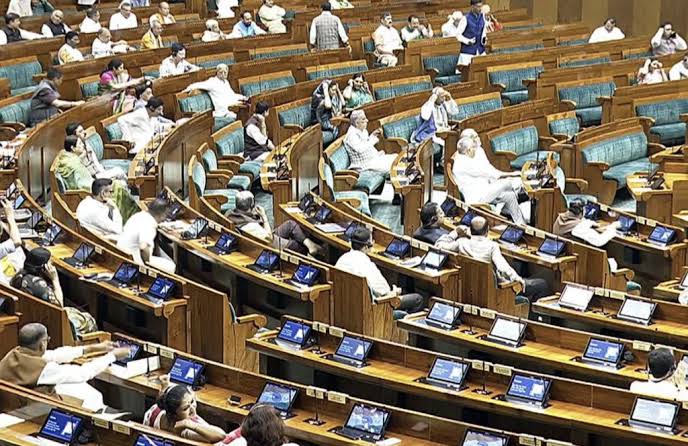
India’s Parliament adjourned its Monsoon Session sine die on Thursday after 25 days of proceedings, during which both Houses passed 12 Bills, according to an official account of the session.
The session began on July 20 and comprised 19 sittings.
Eleven Bills were introduced in the Lok Sabha and two in the Rajya Sabha. Both Houses passed 12 Bills during the session.
Among the measures approved was legislation replacing two ordinances promulgated before the session – amendments concerning the number of Supreme Court judges and income tax.
Parliament also dealt with Demands for Excess Grants for 2022-23, with the related Appropriation Bill passed by the Lok Sabha on Aug. 4 and returned by the Rajya Sabha two days later.
The Foreign Contribution (Regulation) Amendment Bill was referred to a joint parliamentary committee for examination.
A major measure concerning public examinations was also passed and subsequently received presidential assent.
The Public Examinations (Prevention of Unfair Means) Amendment Bill seeks to strengthen enforcement against malpractice by providing for faster investigations and trials, special fast-track courts and prosecutors, higher penalties and a time-bound appeals mechanism.
The legislation provides for investigations to be completed within two months and trials within three months. It also allows the central government to establish special task forces where necessary.
Other legislation passed during the session included amendments dealing with national honour, registration of births and deaths, micro, small and medium enterprises, bankers’ books, cooperative development, tribunals and mineral regulation.
The National Honour amendment seeks to extend legal protection to Vande Mataram by bringing it within the scope of the relevant law on preventing insults to national honour.
Amendments to the law governing registration of births and deaths seek tighter procedures for delayed registration, requiring different levels of approval depending on how long registration has been delayed.
The MSME legislation provides for a national digital platform for voluntary registration, measures to improve access to finance and faster resolution of delayed-payment disputes, and changes to penalties for certain offences.
The Bankers’ Books Evidence Bill expands the legal definition of bankers’ books to cover physical, electronic, digital, virtual and cloud-based records.
The Tribunals Reforms Bill seeks changes aimed at improving efficiency, independence and transparency in tribunals and proposes a National Tribunals Commission.
The Mines and Minerals amendment seeks greater certainty in the fiscal regime governing the mineral sector, with the government saying the changes are intended to encourage investment and support economic growth.
The Kerala (Alteration of Name) Bill seeks to change the constitutional name of the state from “Kerala” to “Keralam”.
Despite the legislative output, the supplied parliamentary data put Lok Sabha productivity at approximately 19 percent and Rajya Sabha productivity at about 39 percent during the session.