
Srinagar has no shortage of plans, policies, projects or government agencies. What it appears to lack is a single chain of accountability for the outcomes.
Srinagar has a Master Plan 2035, mobility and transport plans, drainage schemes, parking policies, waste-management programmes and the Smart City mission. Its urban responsibilities are divided among the Srinagar Municipal Corporation (SMC), Srinagar Development Authority (SDA), Roads & Buildings, Jal Shakti, Traffic Police, Housing and Urban Development, Srinagar Smart City Limited and the Lakes Conservation and Management Authority.
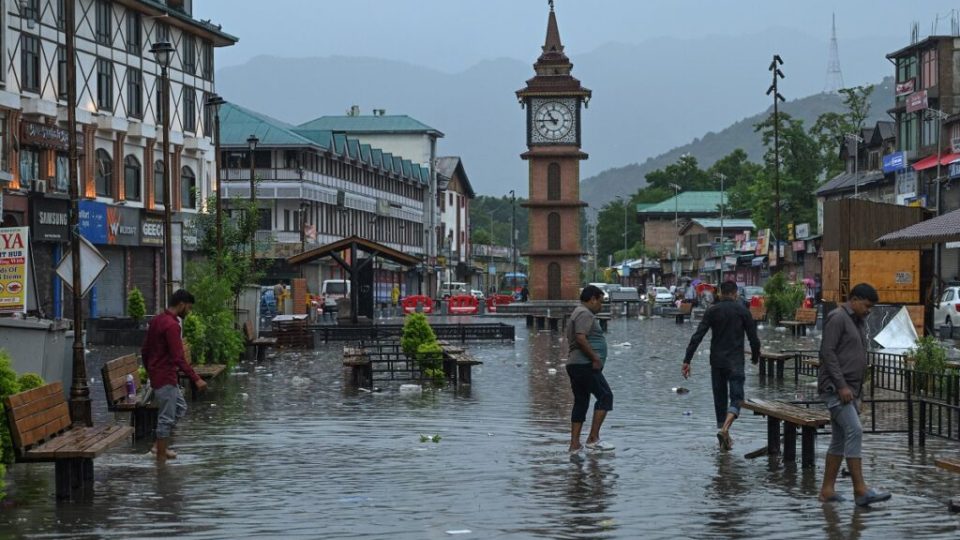
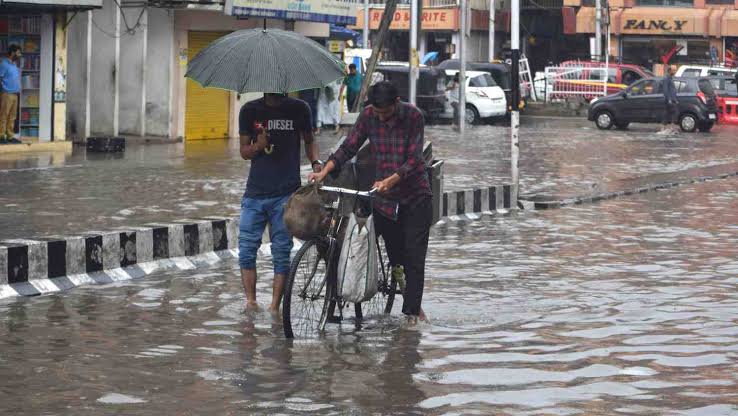
Yet the city’s problems remain familiar: roads flood after rain, traffic crawls, pedestrians struggle for space, roads are repeatedly dug up, parking spills onto carriageways, garbage management remains under pressure and wetlands and water bodies continue to shrink.
A review of official planning documents, government records, CAG findings and academic research suggests that many of these are not problems awaiting a plan. They are problems for which plans and institutional responsibilities already exist.
The central question is: what was promised, what was funded, who was responsible—and what happened?
The drainage system provides perhaps the clearest example of the gap between planning and outcomes.
In August 2026, SMC told the Chief Minister that Srinagar has around 680 km of storm-water deep drainage, but faces a deficit of nearly 2500 km against requirements envisaged under Master Plan 2035. A five-year integrated roadmap was presented.
What does the 2500-km deficit represent – missing drains, inadequate capacity, missing links or infrastructure ultimately required under the Master Plan?
CAG findings add another layer. In an AMRUT drainage project at Gangbug, the approved DPR envisaged 5680 metres of ductile-iron drainage, while 5436 metres of RCC pipes were laid. CAG flagged Rs 74.85 lakh in extra expenditure.
In another case, the Rs 12.80-crore Nadroo-Hyderpora stormwater project was designed to carry stormwater and sewage. Between October 20 and 30, 2023, its dewatering station discharged 1.72 crore litres of wastewater into a flood channel despite no rainfall.
The questions are therefore about both quantity and quality. How much has Srinagar spent on drainage over the past 10-15 years? How much went into permanent infrastructure and how much into pumping, desilting and emergency response? What percentage of the 680-km network is functional? How many dewatering stations exist and what is their capacity? Who is responsible for blocked or undersized drains?
And why did it take until 2026 to officially acknowledge a nearly 2,500-km drainage deficit after decades of planning?
Srinagar’s Comprehensive Mobility Plan found that around 91 percent of the road network had peak-hour speeds of up to 20 km/h, while only around 6 percent recorded speeds above 30 km/h.
It identified footpath encroachment, unorganised on-street parking, inadequate pedestrian facilities and poorly organised shared-auto operations as contributors to congestion.
Master Plan 2035 estimates that around 80,000 vehicles enter Srinagar daily, while identifying missing road links, bottlenecks and inadequate road widths.
The crisis, therefore, is not simply about the number of vehicles. It reflects shortcomings in road connectivity, public transport, parking and traffic management.
Which transport proposals in the Master Plan have actually been implemented? Where are the missing links? How much has been spent on junction improvements? What is the current peak-hour speed? What share of congestion is caused by parking, encroachment, junction design and inadequate public transport? What happened to proposals for integrated transport?
Srinagar does not need another diagnosis. It needs an accounting of the solutions already identified.
Where did the pavements go?
Only around 15 percent of the surveyed road network had footpaths.
That is significant because pedestrians constitute a substantial share of urban trips. Planning documents identify major pedestrian-vehicle conflict points at Jahangir Chowk, Karan Nagar, Batamaloo, SMHS and Dal Gate.
The Smart City concept itself envisages walkable localities and infrastructure for pedestrians and cyclists.
Yet footpaths are frequently discontinuous or occupied by parked vehicles, vendors and utility infrastructure, pushing pedestrians onto carriageways.
How many kilometres of footpaths actually exist? How many are continuous, accessible and unobstructed? Who owns and maintains them – SMC, SDA, R&B or another agency? Who is responsible for enforcement and pedestrian crossings?
If walking is a major component of urban mobility, why do usable footpaths cover such a small share of Srinagar’s road network?
Srinagar’s encroachment problem is also a regulatory issue.
SDA has a statutory mandate for planned development, while Master Plan 2035 provides the land-use framework. Planning documents state that encroachments should not be permitted on existing roads. Building regulations provide mechanisms for violations of the Master Plan and sanctioned plans, including removal and demolition.
Yet March 2021 state-land records recorded 4,557 Proforma C entries and 1,415 Proforma D entries relating to Srinagar encroachments.
What happened after these cases were recorded? How many notices were issued, structures removed or cases regularised? Who approved construction where permission existed? How many officials faced action?
There is also the question of selective enforcement: are visible roadside violations targeted while larger permanent structures remain for years?
If an illegal structure survives for years, responsibility cannot rest solely with the builder. It also raises questions about the regulator.
Srinagar Smart City was approved in 2017. Government figures put its estimated Area Based Development component at Rs 2869.24 crore and Pan-City component at Rs 765.03 crore, or about Rs 3634 crore combined.
Its objectives included walkability, public transport, open spaces, improved infrastructure, disaster resilience and citizen-friendly governance.
Yet the July 2026 waterlogging episode highlighted fragmented responsibility. Srinagar Smart City Limited said several affected roads had not been executed under Smart City, while on roads it had executed, it pointed to pre-existing drainage or sewerage systems.
That may establish project responsibility, but raises a larger planning question: why redevelop a road surface without resolving the infrastructure beneath it?
How much was released and spent? Which projects were completed and remain operational? Which roads and drainage systems were included or excluded? How much went to roads, drainage, beautification, parking, and pedestrian infrastructure? Were outcomes independently measured?
The test of Smart City spending is whether residents became safer, more mobile and less vulnerable to flooding.
Under CITIIS 2.0, Srinagar has formulated a Rs 67-crore integrated waste-management action plan, including a proposed 700 TPD pre-processing facility, 150 KLD leachate-treatment plant and 300 TPD briquetting plant, along with RFID tagging of 2.40 lakh households and 80,000 commercial units.
The government reported in 2025 that around 550 tonnes of municipal solid waste was being handled at Achan daily.
But tonnage alone does not establish whether the system works.
How much waste does Srinagar generate? How much is collected, segregated, recycled and processed? How much reaches Achan, what happens after it arrives and how much legacy waste remains?
Has the 700-TPD facility been constructed and commissioned? Is leachate treatment operational? Has RFID tagging improved collection and accountability?
A modern system should allow waste to be traced from household or commercial collection to its final scientifically documented destination.
Srinagar’s flooding problem cannot be separated from its changing landscape.
Academic research cited in the material estimates that approximately 91.2 sq km of wetland area was lost between 1911 and 2004. Another peer-reviewed study found water-body area declined from 19.36 sq km in 2000 to 14.44 sq km in 2020 – a 25.41 percent reduction.
Wetlands historically absorbed floodwater; encroachment and infrastructure reduced that storage capacity.
The Master Plan itself recognises encroachment around parts of Dal and Nigeen. The CAG’s 2026 performance audit of J&K lakes – including Dal, Wular, Hokersar, Mansar, Surinsar and Manasbal – examined land-use changes, encroachments, sewage treatment, planning and financial management.
The question is whether Srinagar is treating a land-use problem as a drainage problem.
How much flood-storage capacity has been lost? How many encroachments exist in wetlands and water bodies? How much sewage enters them? How much has been spent on conservation and sewage treatment, and what has that spending achieved?
If the natural sponge disappears, the city becomes increasingly dependent on pipes, pumps and dewatering stations.
Another familiar sight is the newly repaired road being dug up again.
J&K has appointed R&B as nodal department for Call Before u Dig (CBuD), requiring excavation agencies to coordinate and utility agencies to map underground assets. The system is intended to minimise disruption from unmonitored digging.
But is it working?
How many kilometres of Srinagar roads are excavated annually? How many permissions are issued and how many go through CBuD? Who certifies restoration, who pays for it and how quickly must roads be restored? How often are roads repeatedly excavated because utilities were not properly mapped?
Without coordinated underground infrastructure planning, Srinagar’s roads risk remaining permanent construction sites.
The Master Plan proposed Parking Management Districts, priced parking, enforcement, off-street facilities and multi-level parking, identifying demand centres such as Lal Chowk, Batamaloo, Dalgate, Batwara, Hari Singh High Street and Karan Nagar. It also proposed specific multi-level parking locations and capacities.
A new Parking Policy was formally notified in 2026.
Yet roads continue to function as parking lots.
How many legal parking spaces exist? How many vehicles compete for them? Which proposed facilities were actually built and what are their occupancy rates? How much revenue does paid parking generate? How many vehicles are challaned or towed?
Parking cannot be treated solely as enforcement. Without sufficient managed legal parking, enforcement alone cannot solve the problem.
Perhaps Srinagar’s central urban problem is the fragmentation connecting all these failures.
SMC’s responsibilities include urban planning, roads, sanitation, solid waste, environmental protection, parks, parking and bus stops. SDA handles planned development and Master Plan functions, while R&B, Jal Shakti, Traffic Police, Housing & Urban Development, Srinagar Smart City and LCMA control other parts of the urban system.
The Master Plan itself acknowledges institutional fragmentation and proposes stronger metropolitan coordination, including a Srinagar Unified Metropolitan Transport Authority.
For citizens, these boundaries do not exist.
A flooded road is a flooded road. A blocked drain is a blocked drain. A broken footpath is a broken footpath. A traffic jam is a traffic jam.
Srinagar needs an accountability framework that follows each major intervention from plan to budget, department to project, completion to maintenance and finally to outcome.
Every major project should have a public record showing what was promised, how much was allocated and spent, who executed it, whether it functions, who maintains it and what measurable result it produced.
The city does not lack plans. It lacks a reliable mechanism for answering what happened after those plans were approved.
The drainage deficit was identified. Traffic bottlenecks were mapped. Footpath deficiencies were documented. Parking requirements were projected. Encroachments were recorded. Wetland loss was studied. Waste reforms were designed.
The question is therefore no longer simply what is wrong with Srinagar?
The city already knows.
The question is: who was responsible for fixing it, how much was spent, what was delivered – and why does the problem remain?
When everybody is responsible for Srinagar, who is actually accountable for Srinagar?
About the Author
Moien Darial writes with the precision of an analyst and sensitivity of a storyteller, exploring global economic shifts and emerging technologies.