
For years, Jammu and Kashmir’s electricity challenge has been framed as a problem of supply: how to produce more power, buy more power, and keep pace with a population whose appetite for electricity continues to grow.
The next part of that story may be closer to home – on rooftops, above homes that have traditionally been counted only as consumers.
The number of domestic electricity consumers in J&K is projected to rise from 23.11 lakh in 2026-27 to about 28.10 lakh by 2028-29, according to projections approved by the J&K Electricity Regulatory Commission. That means nearly five lakh new domestic connections could be added in two years.
The increase is not merely a question of connections. Domestic electricity sales by JPDCL and KPDCL are projected to rise from around 8641 million units in 2026-27 to about 10,802 million units in 2028-29 – an increase of roughly 25 percent.
For a region already carrying a substantial electricity subsidy burden, the numbers point toward a difficult choice: continue expanding a conventional system designed primarily to deliver electricity to households, or begin changing the role of households themselves.
Energy-sector analysts say J&K should move toward a long-term domestic solarisation mission, rather than treating rooftop solar as a scheme with a fixed target and an end date.
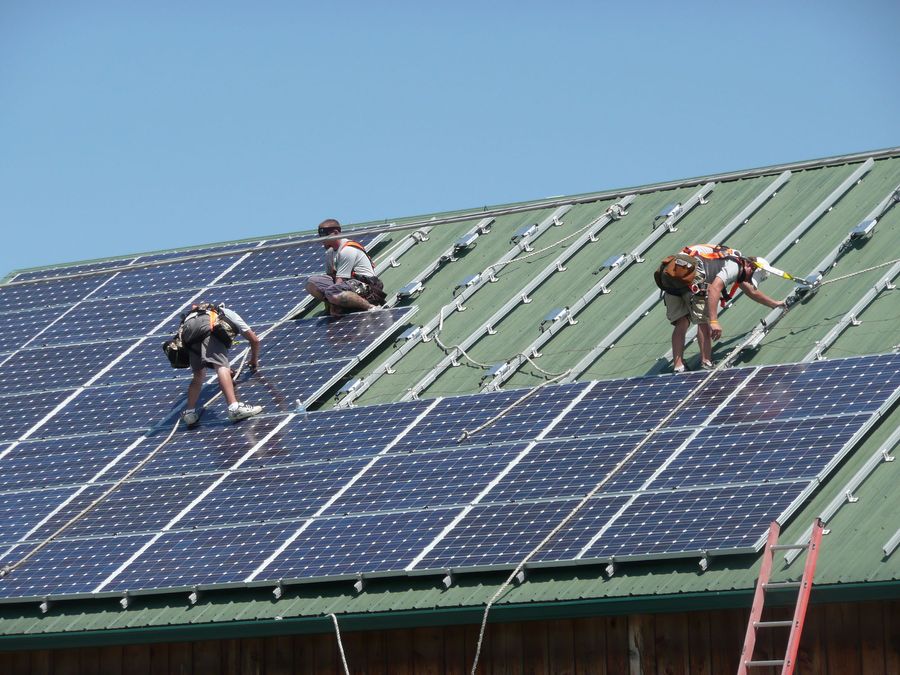
The idea is simple but potentially consequential. A household with a suitable roof could become, at least for part of the day, a small power station.
J&K has already begun that transition under the Centre’s PM Surya Ghar scheme. At a review chaired by Chief Secretary Atal Dulloo in July, officials reported that 37,138 residential consumers had been solarised, with 133.40 MW of rooftop capacity installed.
The households had received Rs 291.38 crore in Central Financial Assistance, while J&K had provided another Rs 10.50 crore in subsidy.
By August 12, the number of beneficiary households had risen to 40,620 and Central assistance to Rs 307.63 crore.
The current PM Surya Ghar target covers 83,500 consumers – 39,500 under JPDCL and 44,000 under KPDCL. The administration’s monthly reviews have helped accelerate implementation, with the Power Development Department ranked second nationally and recognised for its performance in implementing the scheme in May 2026.
But the larger question is what happens after those targets are met.
The number of households will not remain fixed. New houses will be built, families will divide into separate households and new electricity connections will be added. A solarisation programme designed around a single target could therefore keep chasing a moving number.
A 10 to 12-year rolling mission, periodically revised according to the growth in domestic consumers, would offer a different approach.
The economics are already beginning to make the case.
A 2-kW rooftop system has an indicative benchmark cost of about Rs 1.10 lakh and can attract Central assistance of Rs 66,000. With the present J&K subsidy of Rs 6,000, the household contribution would be around Rs 38,000, either paid directly or financed through a bank loan.
But the arithmetic cannot simply be multiplied across all 28 lakh households.
Some homes will not have suitable roofs. Some families will consume more electricity than others. Others may be unable to finance even a subsidised system.
That makes a one-size-fits-all policy impractical.
A more durable programme could divide households according to both rooftop suitability and financial capacity. Families able to make their contribution could use Central subsidies and affordable loans. Middle-income households could receive interest support or additional assistance from the administration.
The poorest households would require a different model.
One such model is already being developed. On J&K’s recommendation, the Ministry of New and Renewable Energy has sanctioned 2-kW rooftop systems for about 2.22 lakh Antyodaya Anna Yojana households under the Renewable Energy Service Company, or RESCO, model.
Under the J&K government’s 2026-27 budget, those systems are expected to provide beneficiaries about 200 units of electricity a month free of cost over an operational life of 20 years.
The model could also help fulfil the government’s commitment to provide 200 units of free electricity to eligible households. Chief Minister Omar Abdullah has indicated that the commitment should be met through solar power.
That distinction matters in a territory where electricity subsidies already require significant public expenditure.
Under the latest tariff determination, the government has committed Rs 2,420.78 crore in financial support to prevent the entire revenue gap from being passed on to consumers. Domestic consumers, the largest consumer category and recipients of concessional tariffs, are among the major beneficiaries of that system.
Rooftop solar would not make the grid unnecessary. Homes would still depend on conventional electricity at night, during prolonged cloudy periods and, particularly, through J&K’s harsh winters. The distribution network would still need to be maintained and strengthened.
But every unit generated on a rooftop during the day is a unit that does not have to be purchased from elsewhere.
The scale of the possibility is striking.
If just half of the 28.10 lakh domestic consumers projected for 2028-29 were found suitable and willing to install an average 2-kW rooftop system, the resulting distributed capacity would be about 2,800 MW.
That is not a proposed target for 2028-29. It is an illustration of the generation potential contained in J&K’s residential rooftops.
A serious long-term policy could begin by making every new domestic electricity connection eligible for a rooftop-solar assessment. Building regulations could encourage solar-ready roofs, while financing could be tailored to different income groups.
The money need not come entirely from the J&K government. Central subsidies, additional UT support, concessional institutional credit and green or multilateral financing could be combined. Over time, savings from lower power purchases and reduced subsidy requirements could help finance additional installations.
The result would be a different kind of electricity policy – one in which public support helps households acquire generating assets, those assets reduce dependence on purchased power, and the resulting savings help finance the next round of solarisation.
J&K’s projected growth in domestic consumers makes that possibility increasingly difficult to ignore.
If electricity demand keeps rising by roughly a quarter in just two years, simply adding more consumers to the existing supply model will mean continually financing a greater demand.
The alternative is more ambitious: to change the equation itself.
The home, in that vision, is no longer only the final destination of the electricity network.
It becomes part of the network’s power supply.
About the Author
Bisma Rafiq is interested in human resources and its role in improving journalism and media organisations. She is also a passionate storyteller.