
Kashmir Impulse Desk
Ramban, July 1
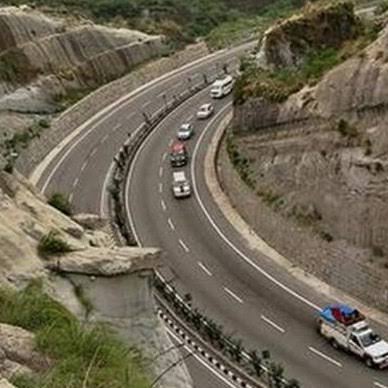
Authorities have imposed a series of traffic restrictions on the Srinagar-Jammu National Highway ahead of the annual Amarnath Yatra, regulating vehicular movement and diverting select categories of traffic to ensure the smooth passage of yatra convoys and minimise congestion along the strategic corridor.
The Traffic Police and district administration issued an advisory on Wednesday prescribing fixed travel windows for passenger vehicles and light motor vehicles (LMVs) from both Jammu and Kashmir sides, while advising commuters to avoid night travel because of landslide risks and ongoing road construction.
The restrictions will remain in force during the yatra, which begins on July 3 and is expected to witness the movement of thousands of yatris to the twin base camps at Pahalgam and Baltal under security escort.
Under the revised traffic plan, vehicles travelling from Kashmir towards Jammu will be allowed to leave Qazigund between 11:30 am and 5:30 pm.
From the Jammu side, LMVs and private passenger vehicles will be released from Nagrota between 7 am and noon, while vehicles departing from Jakheni in Udhampur towards Srinagar will be permitted to travel between 8 am and 1 pm.
Officials said no vehicle would be permitted to travel outside the prescribed timings, with traffic movement being closely monitored to facilitate the safe movement of yatra convoys.
Authorities have strongly advised against night travel on the highway, particularly along the Ramban-Banihal stretch, citing the persistent threat of landslides, shooting stones and ongoing construction activity that frequently disrupts traffic during adverse weather.
Heavy motor vehicles will be permitted to ply on alternate days, subject to weather and road conditions, while no heavy vehicle will be allowed to operate on the highway after 7 p.m., the advisory said.
Traffic Control Units in Srinagar, Jammu and Udhampur have been instructed to maintain close coordination before releasing traffic to ensure orderly movement along the highway.
Special arrangements have also been made for the movement of freight carrying essential supplies and perishable commodities.
Goods carriers transporting livestock, vegetables, fruits and other essential commodities have been directed to adhere to schedules notified by the traffic authorities.
Fruit growers and transporters sending produce from Kashmir to markets outside the Valley have been instructed to assemble and park their vehicles before 9 a.m. at designated locations between the Navyug Tunnel and Levdoora on convoy days to facilitate regulated movement.
The advisory also directs truck operators to avoid overloading, ensure roadworthiness of vehicles and carry sufficient fuel before commencing their journey, while cautioning drivers against unnecessary halts in vulnerable stretches of the highway.
In a significant traffic management measure, authorities have directed that empty fuel tankers, liquefied petroleum gas (LPG) cylinder carriers and Food Corporation of India (FCI) vehicles returning to Jammu will be diverted via the Mughal Road instead of using the national highway.
Other goods vehicles with up to 10 axles carrying perishable commodities may also be diverted through the alternate route on designated convoy days, depending on traffic requirements.
Officials said the restrictions were aimed at balancing the movement of pilgrims, civilian traffic and essential supplies while reducing congestion on the only all-weather road connecting Kashmir with the rest of the country.
The Srinagar-Jammu National Highway serves as the Valley’s principal transport corridor and assumes added significance during the Amarnath Yatra, when thousands of pilgrims travel daily under security escort.
Authorities appealed to commuters, transport operators and the general public to strictly adhere to the traffic advisory and cooperate with law enforcement agencies to ensure safe and uninterrupted movement throughout the pilgrimage period.