
Five men left for work in Kishtwar on Saturday.
They were travelling along a mountain road in the Yaivan area of Dachhan, heading from Yainwan towards Sounder in the Dangdaroo area, where they were employed on an under-construction power project.
They never reached their destination.
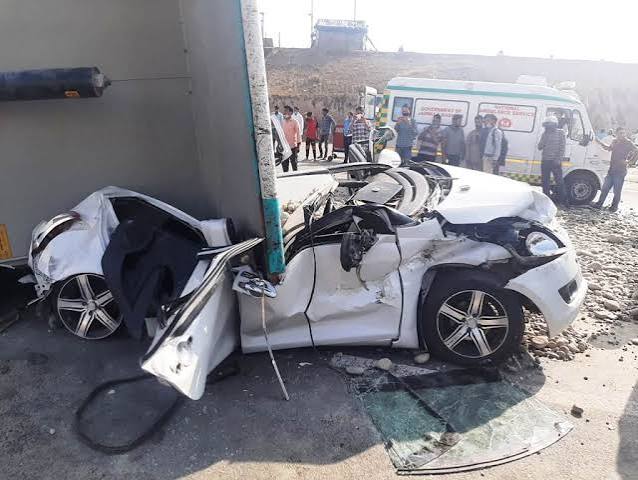
Their Light Motor Vehicle skidded off the road, rolled down a steep gorge, and plunged into the fast-flowing Chenab River. All five people inside were killed.
The men were Yasir Malik of Suid Dachhan, Mohasin of Tander in Dachhan, Muhammad Younis of Suid Dachhan, Murad Ahmed of Dharmkund in Ramban and Saddam Hussain Naik of Neel in Ramban.
Three were from Kishtwar. Two were from Ramban.
Five families now have an empty chair, a phone that will no longer ring and a future abruptly divided into a before and an after.
The accident is being investigated. Police, residents and volunteers began rescue and recovery efforts immediately. The powerful current of the Chenab complicated the operation, potentially carrying the vehicle downstream. The bodies were eventually recovered and taken to Dachhan Hospital for identification and medico-legal formalities.
But for residents, the immediate questions extend beyond what happened inside the vehicle.
They are asking why a stretch of road used by workers, commuters and residents was so vulnerable to a fatal departure from the carriageway.
They are asking whether crash barriers could have stopped the vehicle.
They are asking whether the road was wide enough, whether dangerous bends had been identified, whether warning signs were adequate and whether the safety of workers travelling to major infrastructure projects had received enough attention.
Those questions are not unique to Dachhan.
Across Jammu and Kashmir, roads wind through some of the most dramatic and difficult terrain in the country. They connect remote communities to hospitals, schools, markets and workplaces. They carry buses, trucks, construction vehicles, taxis, two-wheelers and pedestrians along slopes where a small mistake can become a catastrophic fall.
In the mountains, road safety is not merely about traffic rules.
It is about engineering.
A vehicle that leaves a road on a flat plain may strike another vehicle or a roadside object. On a Himalayan mountain road, it can fall hundreds of metres.
The difference between an accident and a mass-casualty accident can therefore be a few metres of road design.
A crash barrier can matter. A properly engineered retaining wall can matter. Adequate road width can matter. Drainage can matter. Reflective markings can matter. A warning sign placed before a dangerous curve can matter. A speed restriction that is actually enforced can matter. And the condition of the vehicle itself can matter.
The Kishtwar accident has once again brought those basic questions to the surface.
Residents protested after the crash, blaming road conditions and alleging that the vulnerable stretch lacked adequate safety measures, including crash barriers. They called for widening and improvement of accident-prone stretches in Dachhan and raised concerns about the safety of workers and commuters travelling on the narrow road network.
Their demands should not be treated merely as a reaction to grief.
They point toward a larger problem in the way road safety is often approached.
Too much attention is paid to the crash after it happens. Not enough is paid to identifying the road before it becomes the scene of one.
A dangerous road is not a surprise.
Road agencies know where sharp bends exist. They know where roads narrow. They know which stretches have steep drops, poor visibility or weak shoulders. They know where traffic has increased because of construction projects. They know where landslides, snowfall or heavy rain routinely damage roads.
The information exists.
The challenge is turning it into action before someone dies.
The government should begin with a systematic safety audit of vulnerable mountain roads, particularly those serving major infrastructure projects and remote settlements.
Such audits should not be limited to checking whether a road technically meets a standard on paper. Engineers should examine what happens when a driver makes a mistake – because people will make mistakes.
The question should be: What prevents a momentary error from becoming a fatal fall?
That is the philosophy behind forgiving road design.
A safer road assumes that a driver may brake late, lose control, encounter an unexpected obstacle or misjudge a curve. The infrastructure is designed to reduce the consequences.
On mountain roads, that means properly designed crash barriers along dangerous edges, especially where a vehicle could plunge into a gorge or river. It means barriers strong enough and correctly installed for the type of vehicles using the road. It means maintaining them after installation rather than allowing damaged sections to remain open.
It also means identifying roads where widening is necessary.
But widening alone is not a solution.
A wider road without drainage, slope stabilisation, barriers, markings and speed management can still be dangerous.
Nor should every road be widened without considering the mountains around it.
In fragile terrain, engineering must account for slopes, rainfall, landslides and erosion. Cutting deeper into a mountain to widen a road can itself create instability if the work is poorly designed.
The goal should be a safer road, not simply a larger road.
The government also needs to look closely at the roads being used by workers on large infrastructure projects.
The Dangdaroo power project is one of many major infrastructure developments taking place in Jammu and Kashmir’s mountainous districts. Such projects bring jobs and investment, but they also generate traffic – construction vehicles, labour transport, machinery, supply trucks and contractor vehicles.
That additional traffic changes the risk profile of roads.
A road that was once used by a limited number of local vehicles may suddenly become part of a heavy construction corridor.
Safety requirements should change accordingly.
Project authorities and contractors should be required to assess worker transportation routes, vehicle fitness, driver training, working hours and emergency response arrangements. Workers should not have to accept dangerous transportation as an unavoidable part of employment.
The families of workers should be able to assume that the journey to work is not itself a major occupational hazard.
There is another part of the equation: emergency response.
In the Kishtwar accident, the Chenab’s strong current complicated recovery. The difficult terrain also meant that rescuers had to work in challenging conditions.
Remote mountain communities need emergency systems designed for exactly these circumstances.
That means strategically placed rescue equipment, trained teams, communication systems and clear protocols for incidents involving rivers and deep gorges.
It means knowing where ambulances can reach and where specialised rescue teams may be needed.
It means ensuring that hospitals serving remote areas have the capacity to receive serious trauma cases and that evacuation routes are understood before an emergency occurs.
A minute saved after a crash can be as valuable as a barrier installed before it.
But prevention remains the first line of defence.
The government should also create a public database of accident-prone road sections across Jammu and Kashmir.
Residents should know which stretches have been identified as high-risk. Legislators should know. District administrations should know. Road agencies should have measurable deadlines for correcting them.
The database should include the number and nature of crashes, road geometry, traffic volumes, barriers, signage, lighting where necessary, pavement condition and emergency access.
Most importantly, it should show whether corrective work has actually been completed.
Road safety cannot be managed as a collection of isolated tragedies.
Five deaths in Kishtwar should not disappear from public attention after condolences are issued and an investigation is opened.
The same pattern may already exist elsewhere.
A curve that has nearly claimed a vehicle several times is a warning. A broken barrier is a warning. A road edge that drops directly into a river is a warning. A cluster of crashes at the same location is a warning.
The government does not need to wait for the next five names.
There is also a need for stronger accountability.
When a fatal accident occurs on a known dangerous stretch, authorities should be able to answer basic questions: Was the road previously identified as hazardous? When was it last inspected? Were safety recommendations made? Were they implemented? Was the vehicle compliant? Was the driver properly licensed and rested? Was the project contractor meeting transport-safety requirements?
These questions are not about assigning blame before an investigation is complete.
They are about learning.
A road-safety system that investigates only the immediate cause – “the driver lost control” – risks missing the conditions that made losing control fatal.
Drivers lose control. Vehicles fail. Rain falls. Mist descends. Roads deteriorate.
A resilient transport system anticipates those realities.
Jammu and Kashmir has invested heavily in roads, tunnels, bridges, power projects and connectivity. Better infrastructure has transformed access to many parts of the region and is essential to economic development.
But connectivity has little meaning if the route itself becomes a source of avoidable death.
The objective should not be to stop construction or restrict movement.
It should be to make development safer.
For the government, the Kishtwar crash presents a choice that is repeated after every major accident.
There can be condolences, compensation, and an inquiry.
Or there can also be a systematic effort to make sure the next vehicle does not leave the road at the same place.
The first response addresses grief. The second addresses the cause. Both are necessary.
Lieutenant Governor Manoj Sinha and Chief Minister Omar Abdullah have expressed condolences and directed authorities to assist the affected families. Union Minister Jitendra Singh also expressed grief and said he had spoken to the Kishtwar deputy commissioner. MLA Shagun Parihar offered condolences as well.
Such support matters to families confronting an unbearable loss.
But compensation cannot replace a son, a husband, a father or a brother.
Nor can a repaired road bring five workers home.
The only meaningful way to honour lives lost on dangerous roads is to make the next journey safer.
That requires money, engineering, enforcement and political attention.
It requires crash barriers where they are needed, not merely where they are easiest to install. It requires roads designed for the vehicles actually using them. It requires contractors to treat worker transport as a safety responsibility. It requires regular inspections, transparent accident data and deadlines for correcting known hazards. And it requires a change in mindset: road safety must be considered part of infrastructure, not something added after the infrastructure is built.
The Chenab will continue to run through Kishtwar. The mountains will remain steep. The roads will remain difficult.
Accidents cannot be eliminated. But a vehicle leaving a road does not have to mean five people leave this world.
Sometimes the difference between a crash and a catastrophe is a strip of steel at the edge of the road. Sometimes it is a warning sign. Sometimes it is a safer curve, a wider shoulder, a better-trained driver or a properly maintained vehicle. And sometimes it is simply the decision to act before the names of the dead are known.
Five workers went to work in Kishtwar on Saturday.
They should have come home.
About the Author
Bisma Rafiq is interested in human resources and its role in improving journalism and media organisations. She is also a passionate storyteller.