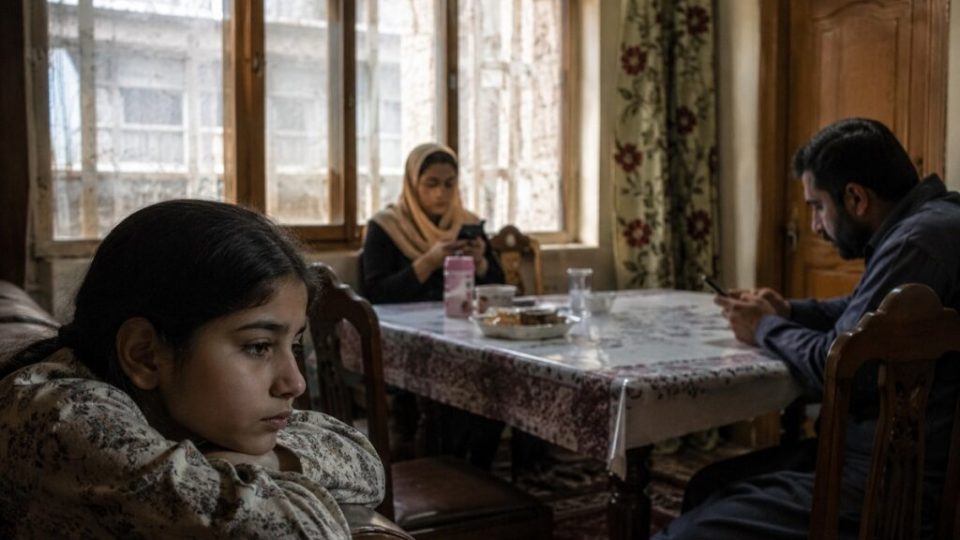


The numbers from Jammu and Kashmir’s provisional NEET-UG 2026 merit list tell a familiar story, but they should also force a larger conversation about what we are asking an entire generation of students to endure in pursuit of a medical seat.
As many as 1064 candidates scored more than 500 marks, with 1087 scoring at least 500 out of 720. The candidate ranked 1,064th scored 501 marks. The first 100 candidates had scores of at least 602, while the highest-ranked candidate from Jammu and Kashmir was a woman with an All India Rank of 99.
These are impressive achievements. They are also evidence of extraordinary competition.
Jammu and Kashmir has 1,675 approved MBBS seats for the 2026-27 academic session, including 1,525 government and 150 private seats. Even before counselling begins, it is clear that thousands of aspirations will collide with a limited number of places.
The eventual cut-offs will vary by category, college, seat type, and candidate preferences. But the broad message is clear: a high NEET score is no longer enough to guarantee the course or college a student wants.
This is where the conversation needs to move beyond marks.
For years, medicine has been presented as the ultimate measure of academic success. Parents often see an MBBS degree as a secure career and a form of social mobility. Students, meanwhile, can begin to measure their worth by a single number on a scorecard.
That is an unhealthy burden to place on young people.
NEET was intended to create a common entrance examination. But intense competition has also created an enormous coaching ecosystem in which students can spend years preparing for one test.
The danger is that education becomes reduced to examination strategy.
A student who scores 499 is not necessarily less capable of becoming an excellent doctor than one who scores 520. A student who misses an MBBS seat is not a failure. Yet the culture surrounding medical admissions can make both feel true.
Jammu and Kashmir needs to be particularly careful about this.
The region has produced generations of talented doctors who have served locally and beyond. Medical education has helped families improve their economic circumstances and strengthened healthcare.
But the demand for doctors is greater than the number of MBBS seats available.
That gap needs a policy response.
Increasing medical seats, where infrastructure, faculty and clinical capacity permit, should remain part of the long-term strategy. But expansion cannot become a numbers game. A medical college requires teachers, laboratories, hospitals, patients, equipment and rigorous clinical training.
The government should therefore pursue expansion alongside quality.
Students also need to be told that medicine is not synonymous with MBBS.
Dentistry, nursing, physiotherapy, pharmacy, veterinary science, AYUSH disciplines and allied health sciences are not consolation prizes. Modern healthcare depends on all of them.
Yet many remain socially undervalued.
A good nurse is not a failed doctor. A physiotherapist is not someone who “could not get MBBS.” A veterinary doctor is not pursuing a lesser profession. Healthcare is a team, and its strength depends on every profession within it.
Schools should provide meaningful career counselling before students spend years pursuing a single path. Parents should recognise aptitude rather than simply prestige. Students should receive credible information about career prospects, costs, and opportunities across health sciences.
The gender dimension also deserves attention. Only 28 women featured among the top 100 candidates, although the highest-ranked candidate from Jammu and Kashmir was a woman. Institutions must ensure talented young women can continue through medical education and professional life without structural barriers.
Most importantly, Jammu and Kashmir must resist turning NEET into a measure of human worth.
The merit list is provisional, and the final picture will emerge after verification, counselling and seat allotment. But one fact is already clear: competition is intense.
The answer should not be to make young people run faster on an increasingly crowded track.
It should be to widen the track, improve alternatives and ensure that a student’s future does not depend entirely on one examination.
NEET can determine who gets a seat. It should not determine who gets to dream.