
Kashmir Impulse Desk
New Delhi, Nov 09
Indian security agencies have arrested more than 300 people and secured the deportation of 73 fugitives from abroad over the past year as part of an intensified counterterrorism crackdown, officials said on Monday.
The nationwide security alert comes ahead of the first anniversary of the November 10 Red Fort blast, which investigators linked to a network of highly educated professionals described by officials as the ‘Doctor Module’.
Officials said the investigation into the blast was cracked within 24 hours, with a chargesheet subsequently filed against 13 accused, including paediatrician Dr Muzzafar Rather, who remains absconding and is believed to be in Afghanistan.
The investigation involved central agencies, the Jammu and Kashmir Police and the National Investigation Agency (NIA), which identified the alleged principal conspirator and other key members of the network.
The blast prompted intelligence agencies to strengthen the country’s counterterrorism framework. The Union government unveiled the PRAHAAR National Counter Terrorism Policy and Strategy on February 23 this year, setting out a coordinated approach for central and state agencies.
The framework was followed by a high-level conference of state police chiefs and central agency heads in September 2026.
Officials cited the nationwide crackdown on the Pakistan-based Shahzad Bhatti Network (SBN) as an example of the intensified operations.
The agencies registered more than 100 First Information Reports and arrested over 300 alleged operatives linked to the network. Security forces also recovered improvised explosive devices, hand grenades bearing Pakistan Ordnance Factory markings and illegal firearms.
The SBN was designated a terrorist organisation under the Unlawful Activities (Prevention) Act on September 26, officials said.
Simultaneous operations targeted alleged support networks of proscribed outfits, including Jaish-e-Mohammed and Lashkar-e-Taiba, while action against pro-Khalistan groups sought to disrupt cross-border arms smuggling and apprehend key operatives.
Security agencies also arrested 27 alleged radical operatives inspired by the ideology of Bangladesh-based Jamaat-ul-Mujahideen Bangladesh across Assam, West Bengal, Tripura, Tamil Nadu and Kerala.
On the international front, officials said cooperation with foreign governments had been strengthened to identify fugitives and secure their return to India.
A dedicated extradition portal launched in September was aimed at improving coordination among agencies. These efforts resulted in the deportation of 73 high-value fugitives over the past year, they said.
The investigation into the Red Fort blast network began after Jaish-e-Mohammed posters warning of attacks on police and security forces were found on the outskirts of Srinagar during the intervening night of October 18-19 last year.
Srinagar Police registered a case and examined CCTV footage, leading to the arrest of three local residents: Arif Nisar Dar alias Sahil, Yasir-ul-Ashraf and Maqsood Ahmad Dar alias Shahid.
Their interrogation led to the arrest of Maulvi Irfan Ahmad, a former paramedic turned imam from Shopian, who allegedly supplied the posters and used his access to radicalise doctors, according to the investigation.
Further investigation led police to Al Falah University in Faridabad, where doctors Dr Muzammil Ahmad Ganaie alias Musaib, a resident of Pulwama, and Dr Shaheen Sayeed of Lucknow were arrested.
Investigators also seized a large quantity of chemicals, including around 2900 kg of ammonium nitrate, along with potassium nitrate and sulphur, from locations linked to the network.
Another accused, Dr Umar-un-Nabi, a 28-year-old doctor from Pulwama, allegedly drove an explosive-laden vehicle and became a central figure in the network spanning Kashmir, Haryana and Uttar Pradesh, officials said.
Investigators believe Nabi had planned a vehicle-borne improvised explosive device attack around December 6, the anniversary of the Babri Masjid demolition. The intended target was reportedly a crowded location in the national capital or a religious site.
Officials said Nabi and Ganaie had allegedly accumulated chemicals from the open market following a 2021 visit to Turkiye, during which they reportedly came into contact with Jaish-e-Mohammed overground workers.
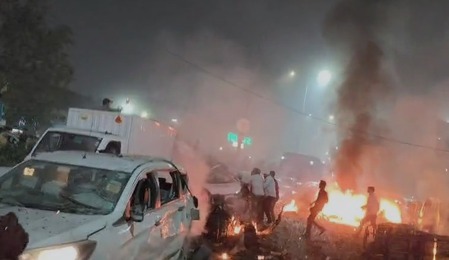
The investigation and subsequent arrests disrupted the alleged plan, officials said. The explosive-laden vehicle later detonated prematurely outside the Red Fort, killing more than a dozen people.
Security agencies have since directed field units to monitor suspected radicalisation and report significant behavioural changes that could indicate involvement in extremist networks.