
Kashmir Impulse Desk
Srinagar, July 10
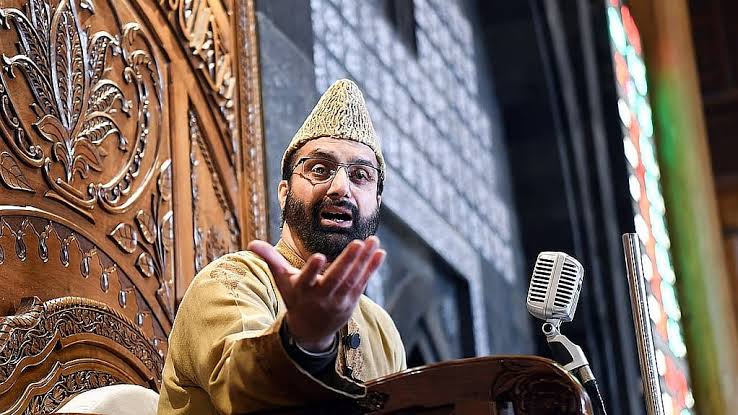
Kashmir’s chief cleric Mirwaiz Umar Farooq on Friday endorsed the National Conference’s proposed protest in New Delhi demanding the restoration of Jammu and Kashmir’s statehood, but said the campaign should broaden its focus to include the revival of the region’s former constitutional protections, the release of political detainees and renewed efforts towards a peaceful resolution of the Kashmir dispute.
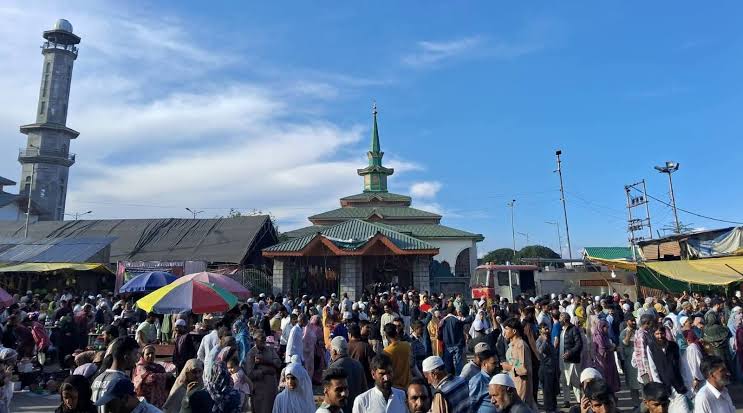
Addressing worshippers during Friday prayers at Srinagar’s historic Jamia Masjid, the Mirwaiz said he had received an invitation from National Conference president Farooq Abdullah to participate in the party’s planned demonstration at Jantar Mantar on July 20, which is intended to coincide with the opening day of Parliament’s Monsoon Session.
The protest has become the centrepiece of the ruling National Conference’s campaign to press Prime Minister Narendra Modi’s government to restore statehood to Jammu and Kashmir, which lost its status as a state in August 2019 when the federal government revoked the region’s special constitutional position and reorganised it into two Union Territories.
While expressing support for the initiative, the Mirwaiz said the political campaign should address a wider range of issues that, in his view, continue to shape public sentiment in the region.
“Any effort by any political alliance, organisation or individual working for the restoration of the usurped rights of the people of Jammu and Kashmir is the need of the hour,” he said.
The Mirwaiz argued that the constitutional changes introduced by New Delhi in 2019 went beyond the question of statehood, fundamentally altering the political and legal relationship between Jammu and Kashmir and the Union government.
He said the revocation of Articles 370 and 35-A had stripped the region of constitutional safeguards that many residents regarded as essential protections for their political identity, land rights and employment opportunities.
According to the Mirwaiz, restoring statehood alone would not fully address the concerns that have persisted since the constitutional changes.
He urged the National Conference to use its electoral mandate to pursue the restoration of Jammu and Kashmir’s pre-2019 constitutional position, including the return of Articles 370 and 35-A.
“The people voted with expectations,” he said, adding that the elected government carried a responsibility to work towards fulfilling the commitments it had made before the Assembly elections.
The Mirwaiz also called for the campaign to highlight the plight of political detainees and young people who, he said, continue to remain imprisoned for prolonged periods.
He referred to those who have been granted bail but remain incarcerated, saying their cases deserved urgent attention as part of any broader rights-based political movement.
Beyond constitutional and legal issues, he said the protest should also articulate the aspirations of ordinary Kashmiris for peace, dignity and a sustainable political settlement after decades of conflict.
The remarks represent one of the clearest expressions of support by the Valley’s chief cleric for the National Conference’s latest political initiative, even as he sought to expand its scope beyond the demand for restoring statehood.
The National Conference has consistently maintained that regaining statehood is its immediate constitutional objective and has described it as an essential step towards restoring democratic governance in Jammu and Kashmir.
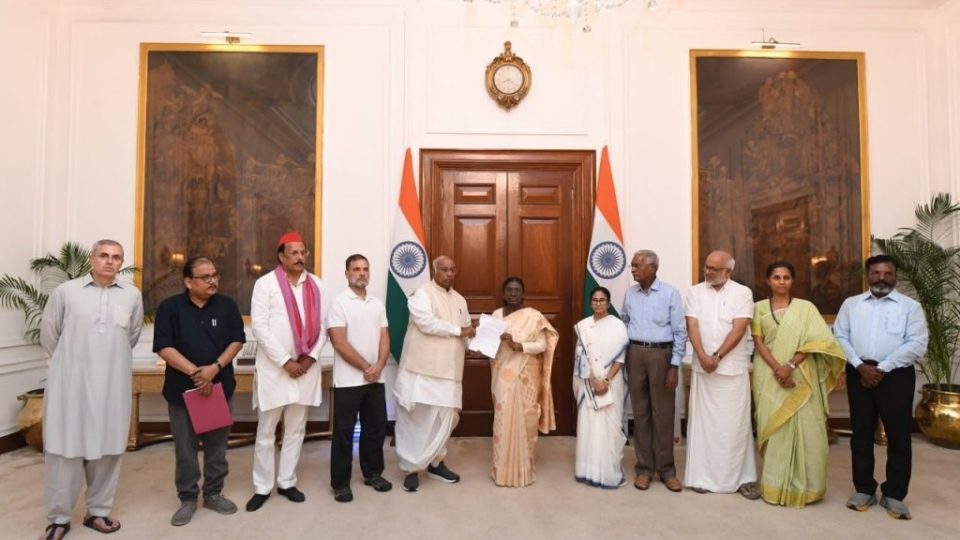
The party has invited more than 50 political, religious and civil society leaders from across India to join the July 20 demonstration in New Delhi, portraying the campaign as a non-partisan effort centred on democratic rights rather than electoral politics.
The outreach extends to both allies and political rivals, including opposition parties in Jammu and Kashmir that have often differed sharply with the National Conference on constitutional and political issues.
The Centre has repeatedly stated that statehood would be restored at an “appropriate time” following the completion of the democratic process, a commitment that it also placed on record before the Supreme Court during hearings challenging the abrogation of Article 370.
However, the absence of a clear timeline has remained a point of contention for regional political parties, many of which argue that democratic normalcy cannot be fully restored while Jammu and Kashmir continues to function as a Union Territory.
The Mirwaiz’s intervention adds another dimension to the evolving political debate by linking the demand for statehood with broader questions of constitutional rights, civil liberties and long-term political reconciliation.
Whether those wider demands become part of the National Conference’s official agenda at the July 20 protest remains uncertain, but the remarks underscore the continuing divergence within Kashmir’s political landscape over what constitutes a meaningful restoration of the region’s political rights.