
Kashmir Impulse Desk
Mashhad, July 10
Millions of mourners gathered in Iran’s northeastern city of Mashhad on Thursday for the funeral and burial of former Supreme Leader Ayatollah Ali Khamenei, bringing to a close six days of nationwide mourning more than four months after he was killed in a US-Israeli strike that transformed the political landscape of the Islamic Republic.
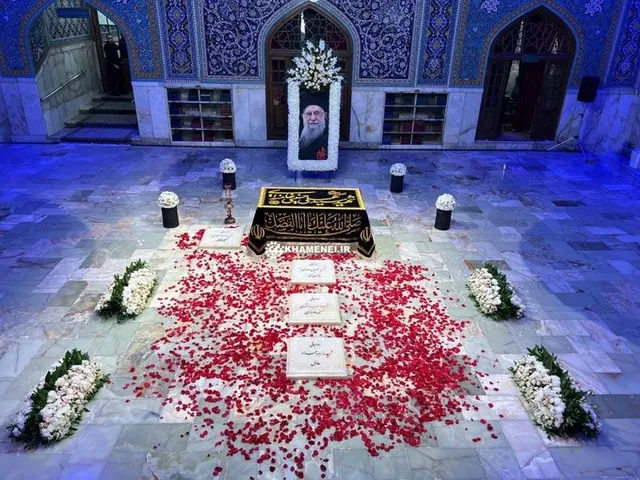
The funeral procession began along Imam Reza Street before winding its way to the Imam Reza Shrine, Iran’s holiest Shia site, where Khamenei was laid to rest following prayers led by his eldest son, Hojjatoleslam Seyyed Mostafa Hosseini Khamenei, Iranian state media reported.
The ceremony also commemorated members of Khamenei’s family who were killed alongside him in the February 28 attack.
Crowds packed the streets surrounding the shrine complex as the convoy carrying Khamenei’s coffin moved slowly through the city. Many mourners waved Iranian flags, held portraits of the late leader and carried red banners symbolising martyrdom and calls for retribution.
Chants condemning the United States and Israel echoed along the procession route, underscoring the enduring public anger among supporters of the Islamic Republic over the strike that killed Iran’s longest-serving supreme leader.
State television broadcast aerial images showing dense crowds stretching across central Mashhad and filling the vast courtyards surrounding the Imam Reza Shrine, one of the most revered pilgrimage sites in Shia Islam.
Authorities did not release an official attendance figure, though Iranian media described the turnout as one of the largest public gatherings in recent years.
Khamenei, who led Iran for nearly four decades after succeeding Ayatollah Ruhollah Khomeini in 1989, was killed on February 28 in a joint US-Israeli strike on his compound in Tehran, an attack that marked a dramatic escalation in regional tensions and triggered months of conflict between Iran, Israel and the United States.
His burial concludes a week-long series of funeral ceremonies held in Tehran, Qom, Karbala and Mashhad that blended religious observance with political messaging, as Iranian leaders vowed to preserve the late leader’s legacy while promising retaliation against those responsible for his death.
The funeral also highlighted the beginning of a new chapter in Iran’s leadership following the appointment of Khamenei’s successor, while the country’s political and military establishment continues to navigate the aftermath of the conflict and heightened tensions across the Middle East.