

For a litigant in Ladakh, justice has often begun with a journey.
Not merely a trip to a courthouse, but a long passage across some of the highest and most unforgiving terrain in the country – a journey measured in hundreds of kilometres, shaped by mountain roads, weather, altitude and the practical costs of leaving home for days at a time.
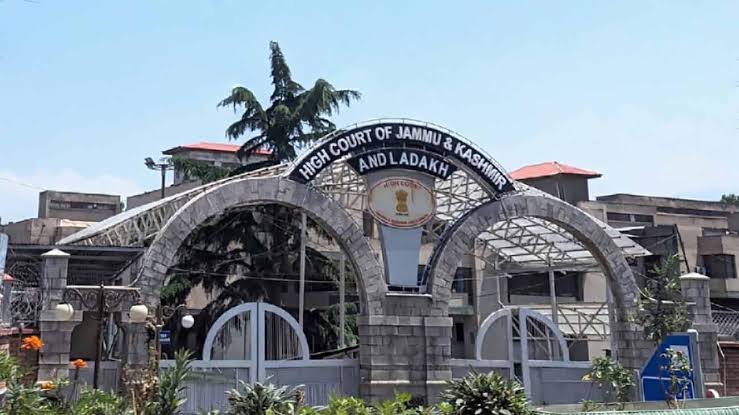
For years, residents of Leh and Kargil who needed to approach the High Court of Jammu and Kashmir and Ladakh have had to look beyond their Union Territory for hearings. Depending on the case and the court’s arrangements, that could mean travelling to Jammu or Srinagar, turning a legal proceeding into a logistical undertaking in itself.
The Union Cabinet’s approval of a High Court bench in Ladakh is intended to change that equation.
Announced by Union Home Minister Amit Shah, the decision establishes a branch of the High Court of Jammu and Kashmir and Ladakh within Ladakh, bringing higher judicial services physically closer to the people who need them.
It may sound like an institutional adjustment.
For an ordinary litigant, it could be the difference between being able to pursue a case and struggling to do so.
“Access to justice” is often discussed as a constitutional principle. In Ladakh, it has also been a question of distance.
The region is vast. Mountains separate its settlements and long stretches of difficult terrain. Winters can isolate communities, roads can become hazardous or impassable, and travel between different parts of Ladakh itself can require considerable planning.
The High Court, meanwhile, has traditionally been outside the region.
That creates a peculiar burden for people who are already dealing with the stress and expense of litigation.
A person involved in a legal dispute may have to arrange transport, accommodation and time away from work or family simply to appear for a hearing. A lawyer may have to make the same journey. If a matter is adjourned, the cost is not necessarily limited to the legal process; the journey may have to be repeated.
For a litigant from a remote village, the burden can be even greater.
The distance between a citizen and a court is not merely a geographical measurement. It can become a financial barrier, a professional burden and, in some cases, a deterrent to pursuing a legal remedy at all.
That is why the proposed Ladakh bench carries significance beyond the physical construction of court facilities.
It could alter the experience of justice.
The announcement comes against the backdrop of Ladakh’s transformation after the reorganisation of the erstwhile state of Jammu and Kashmir in 2019, when Ladakh became a separate Union Territory.
Since then, the region has been building and expanding its own administrative architecture.
The judicial system is an essential part of that process.
Governments can create offices, institutions, departments and administrative centres. But for citizens, the state is experienced just as much through the institutions to which they turn when something goes wrong — when property is disputed, a contract is contested, an administrative decision is challenged or a legal right needs protection.
A High Court bench brings one of the country’s most important judicial institutions closer to those citizens.
For Leh, the benefit could be substantial.
For Kargil, it could be even more consequential.
The two districts sit at considerable distances from each other, and both contain communities living far beyond their principal urban centres. Ladakh’s geography means that even reaching Leh or Kargil can be a significant undertaking for people from remote areas.
The challenge does not end once a litigant reaches a district headquarters.
A High Court case traditionally takes place at a higher level, involving lawyers, court filings, hearings and procedural requirements that can require repeated appearances. When the court is hundreds of kilometres away, every procedural step acquires a physical cost.
The proposed bench can reduce at least one of those costs: distance.
It could also change the economics of legal practice in the region.
Lawyers are not immune to geography. A legal practitioner representing a client before a High Court has to account for travel, accommodation, and time spent away from the local practice. If hearings are held closer to home, more lawyers may be able to participate without the same logistical burden.
That could strengthen Ladakh’s legal ecosystem.
A functioning bench would require more than a courtroom. It would bring with it registry operations, court staff, infrastructure for filing and records, technological facilities, and other associated services.
Over time, those institutions could create a more substantial legal environment within Ladakh.
Young lawyers could gain greater exposure to higher judicial proceedings without having to build their practices around frequent travel outside the region. Clients could meet their lawyers locally. Court-related services could develop around the institution.
The effect would therefore extend beyond those who currently have cases before the High Court.
It could help create a stronger culture of legal accessibility.
There is also a human dimension to the announcement that statistics cannot easily capture.
Consider a litigant from Kargil who has to travel for a hearing. The trip is not simply a line on a map. It can involve arranging leave from work, finding someone to care for children or elderly family members, paying for transportation and accommodation, and preparing for the possibility that the hearing may not conclude as expected.
For someone whose livelihood depends on daily work, time away from home has a direct economic cost.
For an elderly litigant, the journey can be physically exhausting.
For a woman travelling alone or with children, logistics can be particularly complicated.
For a resident of a remote settlement, the first journey to a district headquarters may itself be difficult.
A court closer to home cannot eliminate every hardship associated with litigation. But it can remove one of the largest: the need to cross a mountain range or travel hundreds of kilometres merely to stand before a High Court.
The significance becomes even clearer when viewed against Ladakh’s weather.
The region’s winter conditions are not an incidental inconvenience. They are a defining feature of life.
Snow, freezing temperatures, and difficult road conditions can disrupt movement and complicate travel plans. A hearing scheduled during a period of severe weather can therefore carry consequences far beyond the courtroom.
Closer judicial access provides another measure of resilience.
Technology has already changed the way courts function. Video hearings and digital filings can reduce the need for physical travel in some matters. But physical access to a court remains important, particularly for cases in which lawyers, litigants or the court require in-person proceedings.
A local bench would complement digital access rather than replace it.
The government has described the move in terms of reducing the time and travel burden faced by residents seeking legal remedies. Shah said the decision was taken by the Union Cabinet under Prime Minister Narendra Modi and framed it as part of the government’s broader commitment to Ladakh’s development and constitutional safeguards.
The political context is significant, but the practical meaning of the decision is perhaps more straightforward.
A court should be reachable.
That principle is especially important in a territory where geography can make ordinary distances extraordinary.
The precise location, jurisdiction, operational structure and timeline for the bench were not immediately available following the Cabinet decision. Those details will determine how quickly residents feel the benefit and how extensive that benefit ultimately becomes.
The word “bench” itself is important.
The announcement does not necessarily mean that every proceeding connected to every part of Ladakh will instantly move closer to every litigant. The jurisdiction and functioning of the institution will matter. So will its infrastructure, staffing, scheduling and ability to handle cases efficiently.
The success of the decision will ultimately be measured not by the announcement but by whether a resident of Ladakh can actually use the institution without confronting a new set of barriers.
If the bench is adequately staffed, properly equipped and supported by modern filing and hearing systems, its impact could be significant.
It could also encourage a wider decentralisation of public institutions in a region where centralisation has historically been constrained by geography.
For Leh and Kargil, the message is particularly important.
Since 2019, Ladakh has had to build institutional capacity as a Union Territory. Administrative offices are important, but courts occupy a different place in the relationship between citizen and government. They are where official decisions can be questioned, rights defended and disputes resolved.
A High Court bench therefore represents more than another government building.
It represents proximity to a constitutional institution.
For people who have previously had to travel to Srinagar or Jammu for High Court proceedings, the change could be profound. What once required a journey of hundreds of kilometres could eventually become a much shorter trip within Ladakh.
That is the kind of infrastructure whose value is difficult to capture in a budget figure.
A road shortens a journey. A bridge connects two places. A railway changes the economics of distance.
A court closer to home changes the geography of rights.
For Ladakh’s residents, that may be the most important promise of the new bench.
Justice will still require lawyers, documents, hearings and patience. Cases will still take time. Disputes will still be difficult.
But one obstacle – the mountain between the litigant and the court – could become smaller.
In a place where geography has long dictated the terms of everyday life, bringing the High Court to Ladakh would make a simple proposition more tangible:
The right to seek justice should not depend on how far a person can travel to find it.
About the Author
Tabish Khan is a multimedia journalist and postgraduate in Convergent Journalism, working across text, video, social media, and digital storytelling.