
Kashmir Impulse Desk
Srinagar, Oct 29
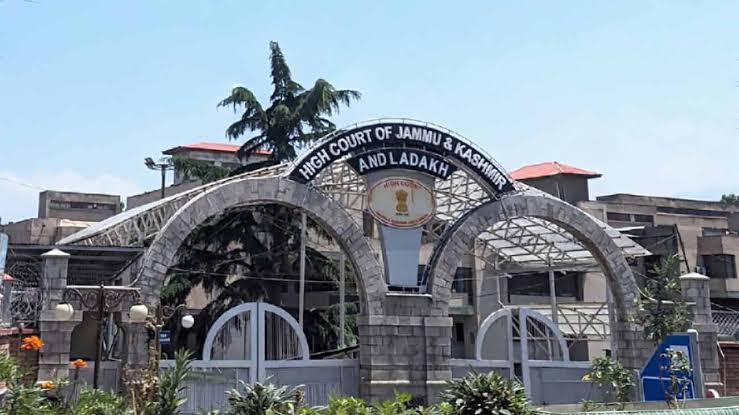
The High Court of Jammu and Kashmir and Ladakh on Thursday struck down provisions of the Jammu and Kashmir Water Resources (Regulation and Management) Act, 2010, insofar as they authorised the government to levy water usage charges on hydropower projects.
A division bench of Justices Sanjay Dhar and Rajnesh Oswal allowed petitions filed by independent power producers (IPPs), declaring the relevant provisions of the legislation unconstitutional to the extent that they imposed the charges on the companies.
The court held that the levy, despite being described as water usage charges, effectively amounted to a tax on electricity generation, a subject on which the erstwhile Jammu and Kashmir legislature lacked the constitutional authority to impose a tax.
It also restrained the government from imposing any tax on electricity generation under the guise of water usage charges or any other levy.
Eleven independent power producers had approached the court through advocate Shariq J Reyaz, while two others had filed petitions through senior advocate Pranav Kohli.
The companies challenged the legality of the charges, arguing that water use by hydropower projects was non-consumptive and that the levy was, in substance, a tax on electricity generation rather than a fee for water usage.
They had also challenged demand notices issued by the authorities under the 2010 legislation.
The Jammu and Kashmir government defended the levy, arguing that water resources fell within the legislative domain of the erstwhile state and that the charges were regulatory in nature.
The Union government, however, maintained that the state legislature could tax the consumption or sale of electricity but did not have the authority to impose a tax on its generation.
The High Court agreed with the Union government’s position, saying the nature of a levy had to be determined by its substance and actual operation rather than the terminology used to describe it.
The bench observed that the charges were calculated on the basis of the head height from which water was used to operate turbines, rather than the quantity of water drawn or consumed.
This, it said, showed that the levy was linked to the electricity-generating potential of water.
The court also noted that the revenue collected from hydropower projects was intended to finance the establishment of hydel and multipurpose hydroelectric projects, purchase existing projects, invest in transmission and distribution networks and facilitate electricity procurement by the government or its entities.
Since the charges were not linked to any specific service provided to the hydropower companies, they had the character of a tax rather than a regulatory fee, the bench said.
The court further held that the state legislature lacked a specific taxing entry under the State List of the Constitution to impose a tax on water.
It noted that water was separately categorised under Entry 17 of List II, while land and minerals fell under distinct constitutional entries with separate taxing provisions.
The bench also rejected the government’s argument that the subsequent adoption of the 2010 Act under the Jammu and Kashmir Reorganisation Act, 2019, could validate a provision that was unconstitutional when originally enacted.
The reorganisation legislation provided for the continuation, repeal and adoption of certain existing state laws, but that did not transform the adopted legislation into an Act of Parliament, the court said.
Accepting the government’s argument, it added, would create constitutional complications by transferring legislative authority over subjects reserved for the Union Territory to the Union government.
The bench concluded that the relevant provisions of the 2010 Act were ultra vires the Constitution and struck them down insofar as they imposed water usage charges on the petitioners’ hydropower projects.