Kashmir Impulse Desk
Srinagar, June 9
An Iranian engineer overseeing key aspects of the strategically important Zojila Tunnel project in Kashmir said he considers India his second home after spending five years working in the country, as construction on the all-weather road link between Kashmir and Ladakh advances toward completion.
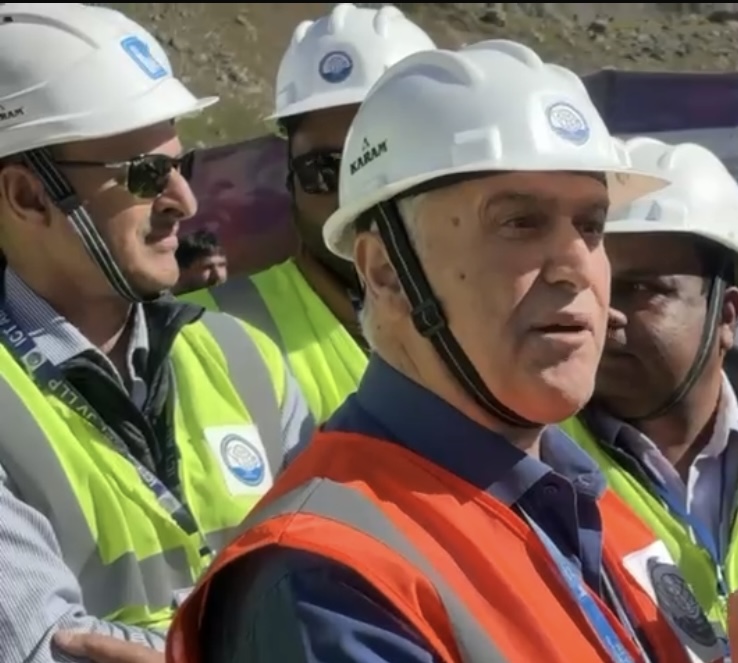
Yusuf Eshaghpour, a tunnel and geotechnical specialist from Iran, serves as the Authority Engineer for the 13.15-km Zojila Tunnel project, supervising design and construction works under consultant Intercontinental Consultants and Technocrats (ICT).
Speaking after a major breakthrough in the project, Eshaghpour said he had been associated with the tunnel since 2022 and had developed strong personal ties with India.
“I am from Iran and married in India. I have been working here for the last five years, so I call India my second home,” he said.
The tunnel, being constructed beneath the Zojila Pass at an altitude of about 11,500 feet, is expected to provide year-round road connectivity between the Kashmir Valley and the Ladakh region, which is frequently cut off during winter due to heavy snowfall.
Eshaghpour described the project as one of the most challenging assignments of his career because of the difficult terrain and harsh climatic conditions.
“Our job is to supervise, check and design the tunnel work. I have worked on various tunnel projects, but this one is particularly challenging because of its geographical and climatic conditions,” he said.
Eshaghpour said extensive precautions had been taken during construction and that the tunnel would significantly reduce travel time across the mountain pass once operational.
“Zojila Tunnel is an iconic project and a matter of national pride. It will provide all-weather connectivity between Srinagar and Ladakh,” he said.
Eshaghpour played a key role in the design of three vertical shafts, each about 500 metres deep, which are intended to support ventilation and emergency evacuation systems inside the tunnel.
According to him, the project will improve transport links and ensure uninterrupted movement of people and goods throughout the year, benefiting communities on both sides of the pass.
Eshaghpour said around 75 percent of the construction work had been completed and estimated that the remaining works would take another two to two-and-a-half years before the tunnel becomes fully operational.
The recent breakthrough marked a major engineering milestone and reflected the combined efforts of agencies involved in executing the project under some of the most demanding geographical and weather conditions in the Himalayas, he said.
Iranian engineer helping build Zojila Tunnel calls India his second home
Yusuf Eshaghpour serves as Authority Engineer for 13.15-km tunnel project