
Kashmir’s economic future depends on attracting investment without sacrificing the natural resources, agricultural land and planned urban spaces that sustain its people. The Jammu and Kashmir Ease of Doing Business Act, 2026, offers an opportunity to reduce bureaucratic delays and improve the investment climate. Its success, however, will depend on whether faster approvals can coexist with effective environmental protection and orderly development.
The Kashmir Chamber of Commerce and Industry’s decision to establish a joint committee of business representatives, civil society groups, environmentalists and experts is a welcome step. Rather than framing the legislation as a contest between industry and conservation, the chamber has acknowledged that economic growth and environmental safeguards must advance together.
That balance is particularly important in Kashmir, where land is limited, ecosystems are vulnerable and unplanned construction can impose lasting costs on communities.
For years, businesses in Jammu and Kashmir have complained about overlapping departmental requirements, prolonged clearances and procedural uncertainty. Delays increase project costs, discourage entrepreneurs and can leave investments financially vulnerable before commercial operations begin.
The new law introduces measures including time-bound approvals, removal of redundant no-objection certificates, self-certification and deemed approvals, subject to applicable statutory conditions. If implemented transparently, these provisions could reduce administrative burdens, encourage enterprise and support employment.
Small and medium-sized businesses stand to benefit significantly. Unlike larger companies, smaller enterprises often lack the financial capacity to absorb prolonged uncertainty. Even routine changes in business arrangements can become cumbersome when multiple departmental permissions are required.
Yet simplifying procedures must not mean weakening substantive legal obligations. The government needs to distinguish between unnecessary administrative hurdles and regulations that protect public safety, environmental resources and planned urban development.
The objective should be to eliminate avoidable delays without turning regulatory efficiency into an exemption from accountability.
The most consequential concerns surrounding the legislation relate to its interaction with existing building regulations, master plans and development controls.
Former chief town planner Iftikhar Hakim has questioned Section 22, arguing that its implementation could permit departures from established planning parameters, including floor area ratio, building heights and ground coverage. He has also called for clarity on how Section 30(2) interacts with Section 22 and the law’s potential overriding effect.
These questions require careful legal and technical examination. The relationship between the new legislation and existing planning laws must be clearly established to prevent uncertainty for investors, residents and public authorities.
Concerns have also been raised over a Schedule III provision relating to residential buildings up to 24 metres in height that may be constructed without prior permission. Its practical implications will depend on the precise scope of the exemption, the conditions attached to it and the safeguards that remain applicable.
Building regulations are not simply bureaucratic formalities. They influence fire safety, ventilation, access, infrastructure capacity and neighbourhood liveability. Ambiguous exemptions and inconsistent enforcement can create problems that are difficult and expensive to reverse.
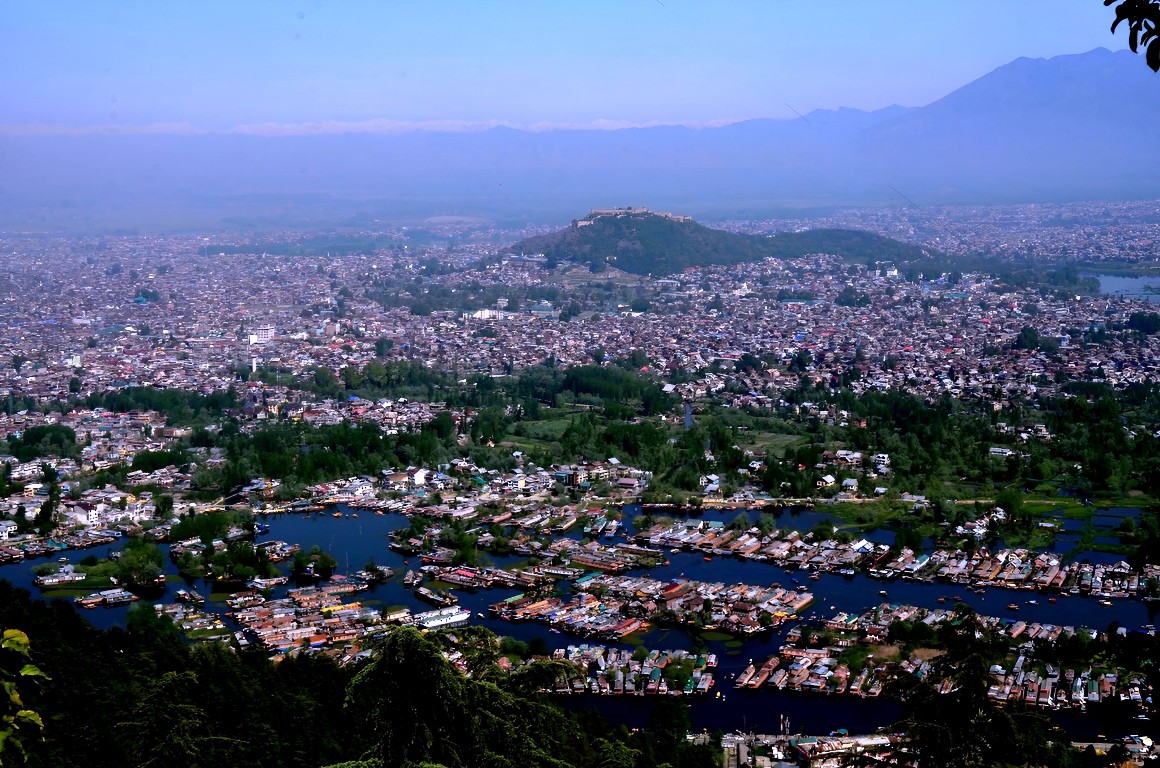
Kashmir’s urban centres already face pressure from congestion, infrastructure deficits and unplanned construction. Reforms must not inadvertently aggravate these challenges.
Environmental protection is equally central to the debate. Kashmir’s agricultural land, wetlands, waterways and other sensitive ecosystems are valuable assets that cannot be readily replaced once damaged.
KCCI Secretary General Faiz Ahmad Bakshi’s warning that the region cannot afford to lose agricultural land highlights a fundamental concern. Converting productive land into built-up areas may generate immediate commercial returns while imposing longer-term costs on rural livelihoods, food security and environmental resilience.
Development in ecologically sensitive areas also demands careful scrutiny. Such decisions should be guided by scientific assessment, applicable laws and the capacity of local infrastructure, rather than the assumption that faster approvals automatically represent better governance.
The law’s Section 30(4), which protects specified environmental laws, is an important element of the debate. However, its relationship with master plans, building regulations and other development controls needs to be explained clearly.
Environmental Policy Group representative Aijaz Rasool and members of the Group of Concerned Citizens have urged caution against weakening oversight. Their concerns deserve examination on the basis of specific provisions and credible evidence, just as industry’s demands for simpler procedures deserve serious consideration.
The purpose of consultation should be to identify genuine legal ambiguities, not to presume that the legislation is either inherently harmful or an unconditional solution to Kashmir’s investment challenges.
Environmental safeguards and business confidence are often portrayed as competing priorities. In reality, unclear regulations can undermine both.
Investors need predictable timelines, transparent requirements and clarity about which permissions apply to their projects. They also need confidence that approvals will withstand legal scrutiny and will not be challenged later because of unresolved conflicts between regulations.
Predictability, therefore, matters more than the appearance of unrestricted freedom. Where proposals meet applicable requirements, authorities should not delay decisions unnecessarily. Where projects conflict with binding environmental or planning rules, administrative simplification should not become a route to automatic approval.
The proposed KCCI committee can help establish this distinction. Its work should include a provision-by-provision review of the Act, the Unified Building By-laws, 2021, and relevant land-use and development regulations.
The government should engage with its findings and explain how the legislation will operate alongside existing laws. The rules and operational guidelines will be particularly important in determining whether the promised efficiencies translate into practical improvements without weakening safeguards.
A credible implementation framework should clearly define approval timelines, departmental responsibilities, disclosure requirements and appeal mechanisms. Self-certification and deemed approvals, wherever legally applicable, should operate within safeguards that preserve accountability and provide remedies when requirements are breached.
Consultation should also extend beyond business associations and environmental groups to include urban planners, technical experts, local communities and residents affected by development decisions.
The process must avoid a false choice between conservation and prosperity. Kashmir needs investment, industrial expansion and jobs, but it also needs development that respects the limits of its land, infrastructure and ecosystems.
The Ease of Doing Business Act should ultimately be judged by measurable outcomes: whether legitimate projects receive timely approvals, whether unnecessary procedural burdens decline, whether employment opportunities expand and whether environmental and planning obligations remain enforceable.
The KCCI’s proposed committee offers an opportunity to replace polarised arguments with practical scrutiny. Its purpose should neither be to dilute the law nor to obstruct investment, but to identify where clarity, safeguards or administrative changes are needed.
Kashmir cannot afford a business environment paralysed by needless paperwork. Nor can it afford growth that erodes the natural and agricultural assets on which future prosperity depends.
The real test of reform is whether Kashmir can make doing business easier without making responsible development harder.