
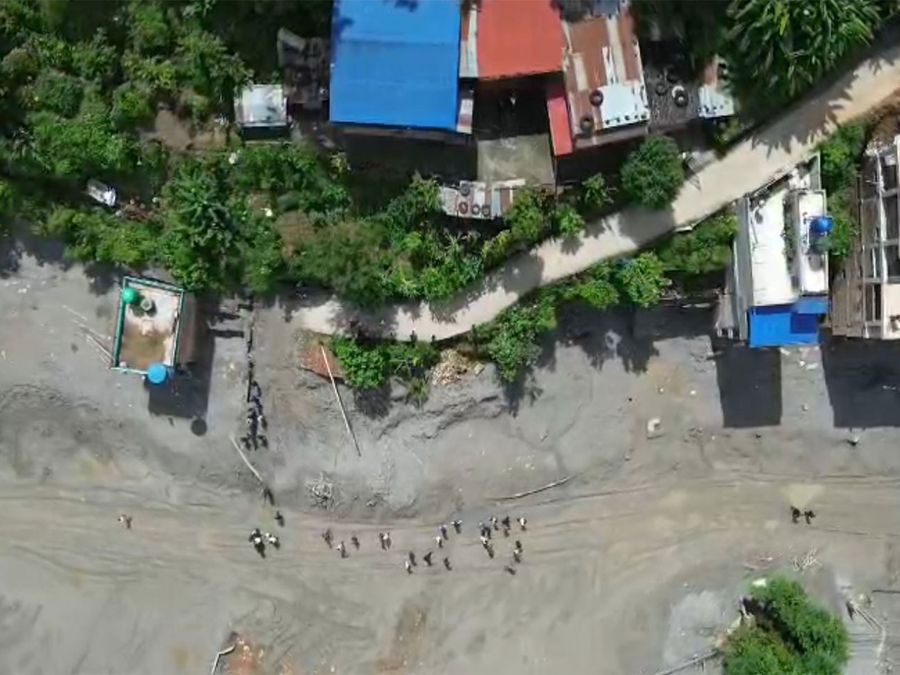
On August 26, a sudden glacier-related collapse unleashed a torrent of water, rock, ice, and debris through mountain valleys in Nepal and Tibet, killing hundreds and leaving many more missing. The scale of the destruction is still being counted. Rescue teams have had to contend with the possibility of further flooding from newly formed, debris-blocked lakes.
For Kashmir, the lesson is not that a similar disaster will happen tomorrow. It is that the conditions that make such disasters possible are already part of the Himalayan landscape.
Kashmir is not an innocent bystander to this changing geography. The Union Territory has identified 14 high-risk glacial lakes and has begun monitoring them. But a recent scientific study of 155 glacial lakes in the Kashmir Himalaya found five with “very high” susceptibility to glacial lake outburst floods. Potential outbursts from these lakes could threaten thousands of buildings as well as bridges, roads and a hydroelectric project.
That should change the nature of the conversation.
The question is no longer whether Kashmir has a disaster-management plan. The question is whether that plan can save a village when a wall of water, mud and rock comes down a mountain valley with little warning.
The government has already taken some important steps. A dedicated GLOF monitoring committee has been constituted, high-risk lakes have been identified, and field expeditions have been conducted. Plans for early-warning systems have also been discussed.
But preparation must now move from paperwork to the ground.
Every high-risk lake needs continuous scientific surveillance, combining satellite imagery with sensors, water-level monitoring, weather data and, where feasible, cameras and ground-based instruments. The information must feed into a single warning mechanism capable of reaching communities downstream quickly.
And those communities must know what to do with the warning.
Every vulnerable river valley should have clearly marked evacuation routes, safe zones and shelters. Sirens, mobile alerts, radio communication and local volunteers should provide overlapping layers of warning. Schools, hospitals, police stations, disaster-response teams and hydropower operators should regularly rehearse evacuations. A warning system that has never been tested in real life is not yet a dependable warning system.
The government must also be willing to confront a more politically difficult question: where construction should not take place.
For decades, development in the mountains has often followed the river because the river valley offers the easiest route for roads, settlements, tourism and infrastructure. But the same geography that makes a valley attractive can make it deadly. New projects should be assessed not only against historical floods but against worst-case scenarios involving GLOFs, landslides, debris flows and cascading failures.
Existing infrastructure needs the same scrutiny. Bridges, roads, power projects, schools and hospitals in vulnerable corridors should be mapped and assigned clear emergency plans. Critical equipment and rescue resources should be pre-positioned rather than brought in after roads and bridges have already disappeared.
Kashmir also needs something less tangible but equally important: a culture of preparedness.
The instinct after every disaster is to ask who failed. The wiser question is what could have been done before the disaster arrived.
Climate change is making that question harder to postpone. The Kashmir study found that ice-contact proglacial lakes expanded substantially over the past three decades and warned of possible process chains in which one outburst could trigger another downstream.
No government can prevent every glacier collapse. It cannot stop every landslide, cloudburst or flash flood.
But it can decide how many people receive a warning. It can decide whether they know where to run. It can decide whether a bridge is built in a safe location, whether a hospital has an evacuation plan, and whether a village has a siren that works at midnight.
Nepal has provided Kashmir with a warning written in ice, water and debris.
The responsible response is not fear. It is preparation.
The Himalayas will continue to change. Kashmir must change the way it prepares for them.