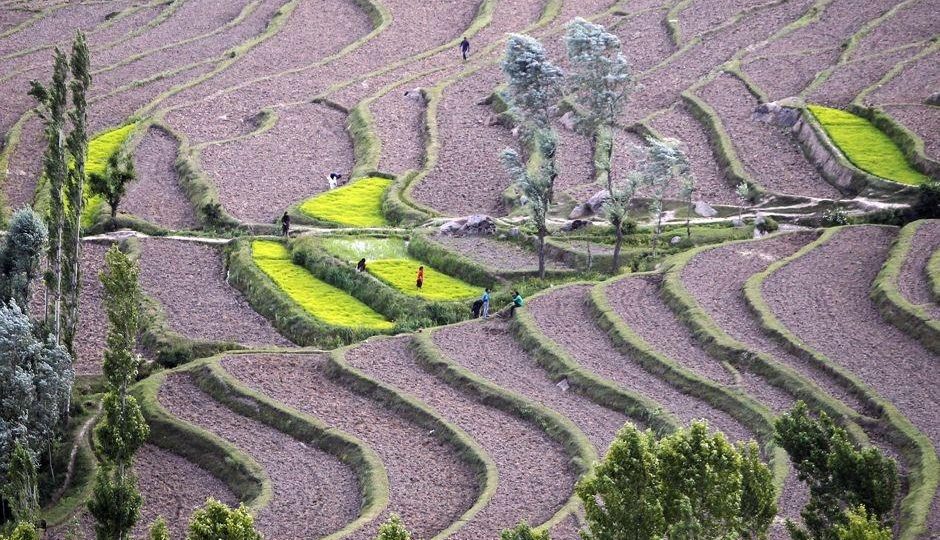

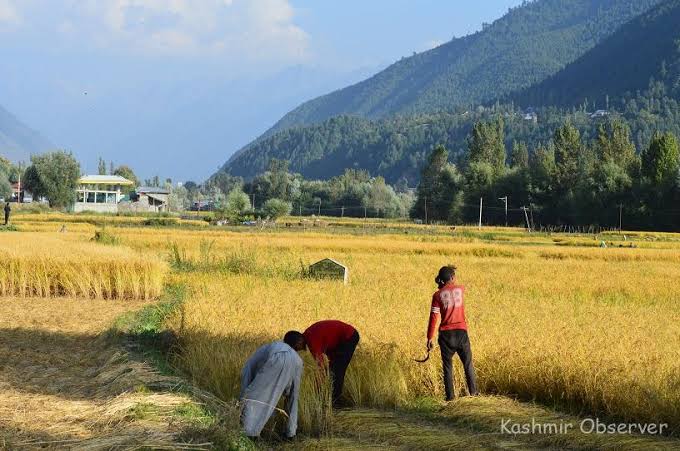
For farmers in Kashmir, the idea of earning money by changing how they cultivate their land offers an intriguing possibility: practices that protect the soil, conserve resources or reduce greenhouse gas emissions could eventually generate an additional source of income.
But turning that promise into money in a farmer’s pocket is a more complicated proposition.
Sher-e-Kashmir University of Agricultural Sciences and Technology of Kashmir (SKUAST-K), working with international partners, is developing safeguards intended to ensure that agricultural carbon-credit projects protect the environment and the interests of participating farmers. The initiative comes as India expands efforts to use carbon markets to encourage more climate-friendly farming.
The framework could help farmers navigate a market that can be difficult to understand, with its technical requirements, verification procedures and questions about who ultimately receives the revenue. Yet the potential gains for Jammu and Kashmir remain uncertain. There are no verified figures establishing how many farmers in the Union Territory have enrolled in agricultural carbon-credit projects, how many credits have been generated locally or whether participating farmers have received income from them.
The gap between the promise of carbon markets and the evidence of local benefits is central to the emerging debate.
At the 13th Sustainable Mountain Development Summit 2026, SKUAST-K, the International Institute for Environment and Development (IIED) and the Voluntary Carbon Markets Integrity Initiative (VCMI) unveiled new guidelines as part of a broader package that includes an Environmental and Social Management Framework, a farmer’s guidebook and a toolkit on international carbon-market cooperation.
The stated objective is to help ensure that carbon projects deliver credible environmental benefits without shifting risks or costs onto the people expected to participate in them.
For Kashmir’s farmers, the question is whether those safeguards will translate into practical opportunities – and whether the eventual financial returns will justify the effort involved.
Agricultural carbon markets are built around a relatively simple proposition: farming practices that reduce greenhouse gas emissions or increase the amount of carbon stored in soil and vegetation may generate credits that can be sold to buyers seeking to compensate for emissions.
The process is more demanding than the proposition suggests.
A project must use an accepted methodology to establish the environmental benefit it claims to deliver. The reductions in emissions or removals of carbon must be measurable and verifiable, and the project must meet the relevant requirements before credits can be issued.
Depending on the project, eligible activities may include practices that increase soil carbon, protect vegetation or reduce emissions associated with agricultural production. The precise activities that qualify, and the amount of credit they generate, depend on the approved methodology and the conditions on the ground.
Farmers may therefore need to change how they manage their land, document their practices or participate in monitoring and verification. Those requirements can create costs and administrative burdens, particularly for smallholders who have limited time and resources.
The revenue is not automatic, either. A project must generate credits that meet the applicable standards and find buyers willing to purchase them. The amount that eventually reaches farmers may depend on the project’s costs, the arrangements with intermediaries and the terms governing the distribution of proceeds.
These complexities make safeguards important. Without clear information and fair agreements, farmers may be asked to change established practices without a reliable understanding of the costs, risks or potential returns.
The new guidelines are intended to help address those concerns by bringing environmental and social safeguards into the design and management of agricultural carbon projects.
India has been developing a policy framework to encourage carbon markets as a means of supporting climate action.
The Carbon Credit Trading Scheme (CCTS) was notified by the Union Ministry of Power on June 28, 2023. It was established under the Energy Conservation (Amendment) Act, 2022.
The Union Ministry of Agriculture and Farmers’ Welfare subsequently introduced a framework on January 29, 2024, to promote voluntary carbon markets in agriculture.
The effort reflects an interest in encouraging farming practices that can contribute to climate objectives while creating opportunities for additional income. But the presence of a national framework does not, by itself, establish that a particular farming community will benefit financially.
According to the initiative described by the institutions involved, the Agriculture Ministry will adopt the Environmental and Social Management Framework to screen, assess and manage environmental and social risks associated with agricultural carbon projects under the CCTS.
The framework is intended to help identify potential harms before projects proceed and to establish measures for managing risks linked to changes in farming practices, land management and the use of natural resources.
Its importance lies partly in recognising that a project can claim an environmental benefit while creating other consequences that require attention. A change in land management, for example, must be assessed not only for its carbon impact but also for its implications for participating communities and the environment.
The accompanying farmer’s guidebook is intended to make the market easier to navigate. The international cooperation toolkit is designed to support collaboration across carbon-market initiatives.
For farmers, the value of these instruments will depend on how accessible they are, whether their requirements are clearly explained and whether the safeguards can be enforced when problems arise.
In J&K, the immediate uncertainty is whether agricultural carbon projects will be taken up at a meaningful scale.
No verified figures have been established for the number of farmers in the Union Territory enrolled in such projects. There is also no clear accounting of locally generated agricultural carbon credits or income received by participating farmers.
That lack of data makes it difficult to assess the opportunity in concrete terms.
It is not enough to know that a farming practice can potentially generate carbon credits. Farmers need to know whether their particular crops, soils and land-management practices qualify, how much additional work participation would involve and what costs they might face.
They also need to understand who would organise the project, who would pay for technical assessments and verification, and how any proceeds would be divided.
These questions matter because carbon markets typically require more than an individual farmer’s decision to adopt a climate-friendly practice. Projects need credible measurement, documentation and verification, along with arrangements for aggregating participation and managing transactions.
For farmers working small plots, the administrative and technical requirements may be difficult to meet independently. Collective projects or institutional support could potentially help spread those costs, but the benefits would depend on the arrangements and the actual performance of the project.
The new safeguards may provide guidance for future participation in J&K, but they do not establish that a local market is already delivering income to farmers.
Nor do they guarantee that every project will be commercially viable.
The distribution of revenue is one of the central questions facing agricultural carbon markets.
The price paid for a carbon credit is not the same as the amount a farmer receives. A project may incur expenses for design, measurement, verification, monitoring and administration. Depending on how it is organised, it may also involve intermediaries responsible for aggregating farmers, managing documentation or selling credits.
The share reaching individual participants will depend on the project’s contractual arrangements and costs.
For farmers, transparency about those arrangements is essential. They need to understand what they are agreeing to, how long the commitment lasts, what happens if the project fails to generate credits and whether changes in farming practices could affect their existing sources of income.
They also need clarity on the environmental claims attached to the credits. If the same climate benefit is counted more than once, or if claimed reductions cannot be demonstrated, the credibility of the project may be undermined.
The safeguards being developed by SKUAST-K and its partners are intended to address environmental and social risks, helping to establish conditions under which projects can proceed responsibly.
But the effectiveness of such protections will depend on their practical application. Written guidance must be accompanied by accessible information, monitoring and mechanisms through which farmers can raise concerns or seek redress.
A farmer’s guidebook can explain how a market works. It cannot, on its own, guarantee a fair contract or a profitable outcome.
Agricultural carbon projects also raise questions about how environmental benefits are measured against the realities of farming.
Practices that increase carbon stored in soil or vegetation, or reduce greenhouse gas emissions, may offer climate benefits. But those benefits must be established under the relevant methodology rather than assumed simply because a practice is described as sustainable.
The same principle applies to social and environmental safeguards. Projects involving changes in land management or natural-resource use must account for their effects on participating communities and the surrounding environment.
For farmers, the practical considerations may include the cost of adopting a new practice, the availability of equipment or technical advice, and the time required to maintain records or participate in monitoring.
An approach that works in one agricultural setting may not be suitable for another. Soil conditions, crops, farm sizes and local practices can influence whether a proposed intervention is feasible and whether it generates a measurable benefit.
That makes local assessment important before farmers are encouraged to commit to a project on the expectation of future carbon revenue.
It also underscores the distinction between an environmental programme and a dependable income source. A practice may be worthwhile for soil health or other reasons even when carbon-credit revenue is uncertain. Conversely, the prospect of payment should not obscure the need to establish that a project produces the environmental benefits it claims.
For J&K, determining which models are appropriate will require evidence from local conditions rather than assumptions drawn from carbon projects elsewhere.
The new framework represents an effort to establish stronger protections as India explores agricultural carbon markets. By incorporating environmental and social risk management, the initiative seeks to ensure that projects do not pursue carbon benefits at the expense of farmers or the communities in which they operate.
SKUAST-K’s involvement, alongside IIED and VCMI, could help bring agricultural knowledge and international carbon-market experience into the process. The guidebook and cooperation toolkit are intended to make participation easier to understand and to support better-designed projects.
But the test will come when the framework is applied.
Farmers will need clear eligibility criteria, accessible technical assistance and transparent information about costs and revenue-sharing arrangements. Projects will need credible measurement and verification, while safeguards must be capable of identifying and addressing harm.
The government and research institutions will also need to establish a clearer picture of local participation and outcomes: how many farmers are involved, which practices qualify, how many credits are generated and what income reaches participants.
Without such information, the potential gains for J&K will remain difficult to measure.
Carbon markets offer one possible way to connect climate-friendly farming with financial incentives. They do not guarantee that every farmer will benefit, or that credits will provide a stable source of income.
For Kashmir’s farmers, the promise is therefore still conditional. The new safeguards may help make future projects more transparent and accountable. Whether they lead to meaningful local earnings will depend on the quality of implementation, the economics of individual projects and the share of revenue that reaches the people doing the work.
The ambition is to make climate-conscious farming pay. The unresolved question is how much of that promise will ultimately be realised in Kashmir’s fields.