
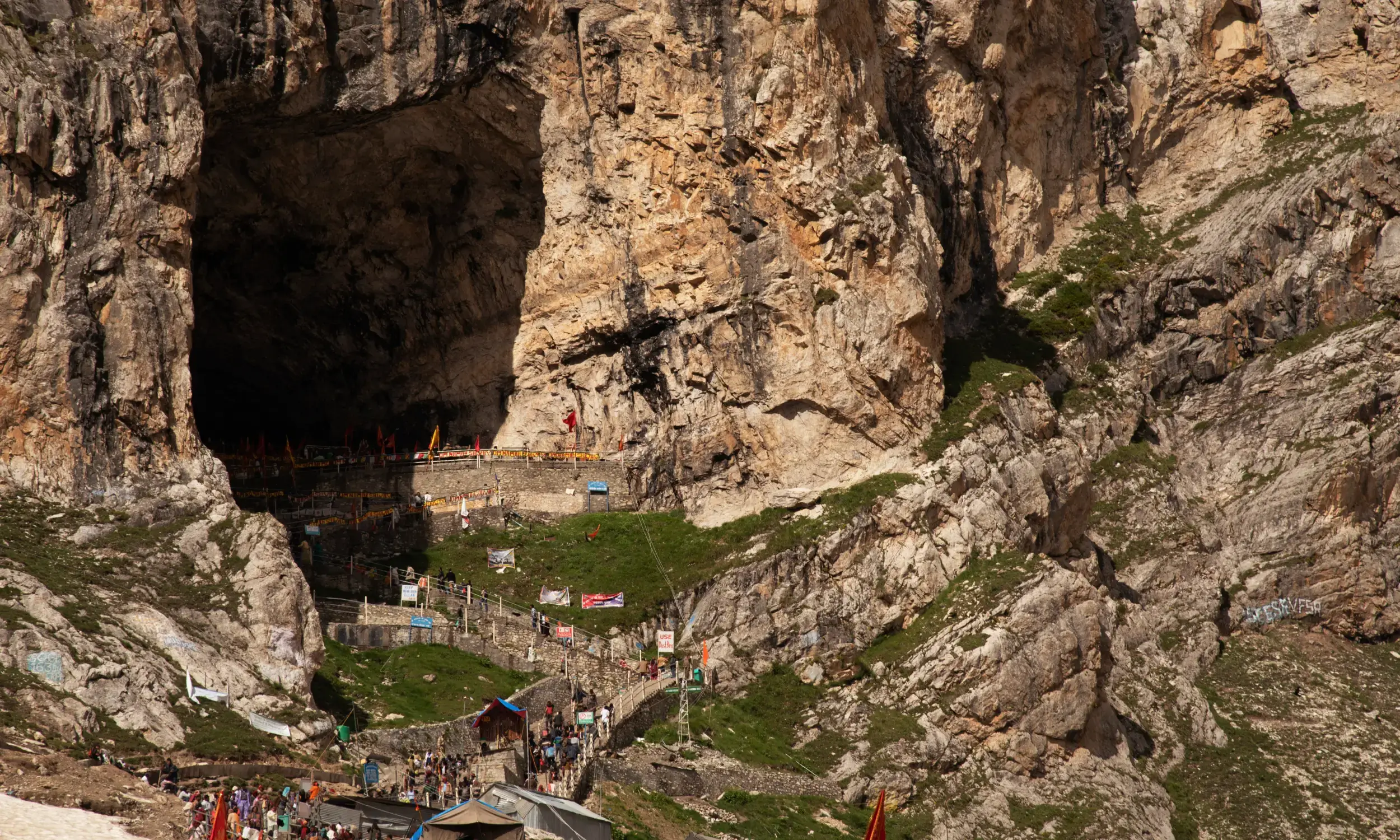
The annual Amarnath Yatra has always been much more than a religious journey. Every year, lakhs of pilgrims travel from different corners of India to the Himalayan cave shrine, traversing difficult terrain in pursuit of faith. Yet beyond its spiritual significance, the yatra has also evolved into one of the most important points of contact between Kashmir and the rest of the country.
In that context, People’s Democratic Party President Mehbooba Mufti’s appeal to Kashmiris to welcome pilgrims and use the Yatra as a bridge-building exercise deserves serious consideration.
At a time when political dialogue remains limited and mistrust continues to shape public discourse, people-to-people engagement acquires greater importance. The former chief minister Mufti’s observation that “even if the Government of India doesn’t talk to us, we need to talk to the people of our country” reflects a simple but important reality: societies cannot afford to allow political differences to completely disrupt human connections.
For decades, the Amarnath Yatra has demonstrated the Valley’s tradition of hospitality. From pony-wallahs and porters to shopkeepers, hoteliers and local residents, thousands of Kashmiris contribute to making the pilgrimage possible. Their role is not merely economic. It is also cultural. Every interaction between a pilgrim and a local resident becomes an opportunity to challenge stereotypes and create understanding.
This is particularly important in an era increasingly marked by polarisation. Social media, political rhetoric and television debates often present simplified and distorted images of communities. Many Indians know Kashmir only through headlines about conflict, security or political controversy. Similarly, many Kashmiris view the rest of the country through the prism of contentious national debates. Such perceptions, when left unchallenged, deepen mistrust.
The Amarnath Yatra offers a rare opportunity to humanise these relationships.
A pilgrim who experiences the warmth of Kashmiri hospitality carries home a story that differs from the narratives of fear and suspicion often dominating public conversations. Likewise, local residents who interact with visitors from different states gain a better understanding of the diversity and complexity of India beyond political slogans and media portrayals.
These interactions may appear small, but their cumulative impact can be significant. Relationships between societies are not built solely through official meetings, parliamentary debates or diplomatic initiatives. They are often shaped by everyday encounters—shared meals, acts of kindness, conversations and gestures of respect.
At the same time, welcoming pilgrims should not be viewed merely through the lens of symbolism. The Yatra remains a major economic lifeline for many communities along its routes. Thousands of families depend directly or indirectly on pilgrimage-related activity. Hotels, transport operators, traders, artisans and service providers all benefit from the annual influx of visitors. Ensuring a successful and peaceful Yatra therefore contributes not only to social harmony but also to local livelihoods.
However, the responsibility does not rest solely with residents. Authorities must ensure that the pilgrimage is conducted in a manner that respects both the faith of pilgrims and the sensitivities of local communities. Adequate infrastructure, efficient management, environmental safeguards and robust security arrangements are essential. Equally important is preserving the fragile ecology of the Himalayas, which faces increasing pressure from tourism and pilgrimage-related activity. Hospitality and sustainability must go hand in hand.
There is also a broader lesson embedded in Mufti’s remarks. While political disputes may persist, avenues for human engagement should never be closed. Dialogue is not only a function of governments. Communities too have a role in shaping perceptions and building trust. In societies marked by diversity, coexistence depends on maintaining these channels of interaction even during periods of disagreement.
Kashmir has historically prided itself on a culture that welcomes guests regardless of religion, region or background. The Amarnath Yatra provides an opportunity to reaffirm that tradition. Every pilgrim who returns with memories of kindness becomes an informal ambassador for the Valley. Every positive interaction helps narrow distances that politics often widens.
As preparations for this year’s Yatra gather pace, the focus will naturally remain on logistics, security and administration. Yet the pilgrimage also carries a quieter significance. It brings together people who may otherwise never meet. It creates encounters across geography, language and belief. In doing so, it reminds us that the strongest bridges are often built not by governments but by ordinary citizens.
The Amarnath Yatra should therefore be seen not only as a religious event but also as an opportunity for connection. In a time of division and mistrust, that may be one of its most valuable contributions.