
Kashmir Impulse Desk
Srinagar, July 10
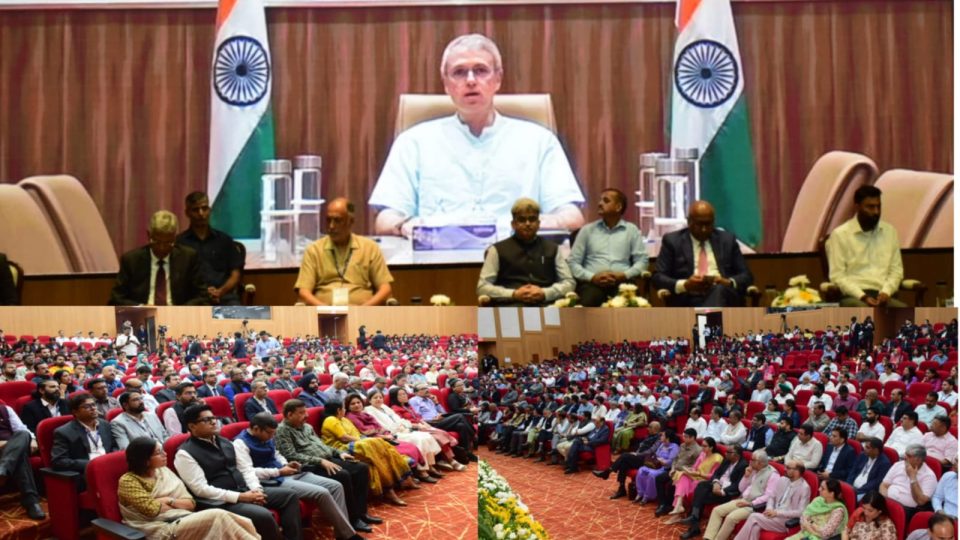
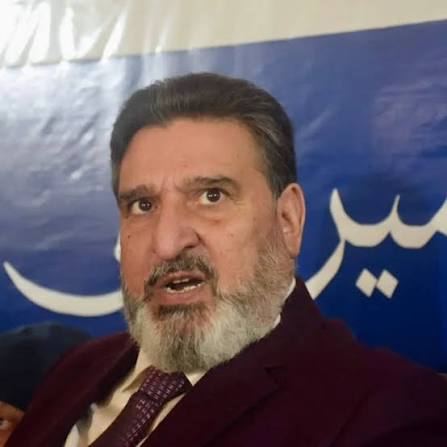
Apni Party President Altaf Bukhari on Friday accused Chief Minister Omar Abdullah’s government of using its campaign for the restoration of statehood to divert attention from what he described as a deepening slowdown in development, alleging that infrastructure projects across the region had stalled despite the availability of public funds.
Addressing a news conference in Srinagar, Bukhari called on the government to publish a white paper detailing the utilisation of development funds since it assumed office, claiming that nearly Rs 7000 crore allocated for public works had lapsed last year because projects were not executed on time.
His criticism adds to growing political pressure on the National Conference-led administration, which has made the restoration of Jammu and Kashmir’s statehood its principal political demand while facing increasing scrutiny from opposition parties over governance and public service delivery.
“Statehood has become the government’s answer to every question,” Bukhari said. “People are asking about roads, hospitals, contractors and development, but the government continues to shift the discussion towards constitutional issues.”
The National Conference has argued that functioning as a Union Territory has constrained the elected government’s administrative authority, limiting its ability to implement policy and development initiatives. Bukhari rejected that explanation, saying the powers currently available to the government were sufficient to ensure effective governance.
“You are the Chief Minister,” he said. “Whatever powers are available must be utilised. Development cannot remain suspended while waiting for statehood.”
Bukhari said Kashmir’s six-month construction season was already more than halfway through but little visible progress had been made on public infrastructure projects.
“In Kashmir, the effective working season lasts only from April to September,” he said. “More than half of that period has already passed, yet roads remain damaged, projects are stalled and contractors continue to protest because their issues remain unresolved.”
He alleged that the administration had failed to engage with contractors despite mounting financial difficulties within the construction sector, creating uncertainty over the execution of public works.
A significant part of Bukhari’s criticism centred on what he described as discriminatory treatment of local contractors in the allocation of construction resources.
He alleged that extraction rights for essential raw materials such as sand, crushed stone and boulders had increasingly been awarded to outside firms, forcing local contractors to purchase supplies at substantially higher prices.
According to Bukhari, contractors working on centrally funded projects enjoyed easier access to extraction sites and lower royalty charges, while local contractors were subject to tighter restrictions and higher transportation costs.
“The playing field is no longer equal,” he said. “Local contractors face multiple barriers while outside companies are given greater operational flexibility.”
He also questioned new administrative requirements linking the clearance of contractors’ bills to the submission of royalty receipts, arguing that local contractors were being asked to produce documents for materials they were unable to procure legally because of restrictions imposed by the government itself.
The Apni Party leader further pointed to a sharp rise in bitumen prices following tensions in West Asia earlier this year, saying the increase had significantly raised road construction costs and made many projects financially unviable.
Combined with delayed payments for completed work, he said, the higher costs had discouraged contractors from participating in fresh tenders.
“Many contractors have not been paid for work completed over several years,” Bukhari said. “Without clearing old liabilities, the government cannot expect companies to invest in new projects.”
He also criticised changes in eligibility criteria for road construction contracts, alleging that the removal of requirements mandating ownership of construction plants and machinery had compromised quality standards.
Quality infrastructure, he argued, depended on contractors possessing adequate technical capacity rather than merely securing contracts through administrative discretion.
Beyond the construction sector, Bukhari said visible signs of deteriorating infrastructure could be seen across Srinagar and several districts, including Baramulla, Sopore, Anantnag and Shopian.
He argued that improvements in roads, healthcare and civic services were equally important as promoting tourism, which the government has identified as one of its economic priorities.
“Tourism is important, but tourism alone cannot sustain livelihoods,” he said. “People also need functioning hospitals, better roads and reliable public infrastructure.”
Calling for greater financial transparency, Bukhari demanded a detailed account of central assistance received by the Union Territory, expenditure incurred and funds that had remained unspent.
He said repeated announcements thanking the federal government for financial packages should be accompanied by a comprehensive disclosure of how the money had been utilised.
The National Conference government has consistently maintained that it remains committed to accelerating development while simultaneously pursuing the restoration of statehood, which it says is essential for restoring full democratic governance in Jammu and Kashmir.
The administration has also argued that many policy decisions continue to require approvals under the Union Territory framework, limiting the pace of implementation.
Bukhari rejected that argument, saying constitutional issues should not become a substitute for day-to-day governance.
“Statehood is an important political objective,” he said. “But governance cannot be put on hold until that objective is achieved. The public expects roads to be built, projects to move forward and public money to be utilised efficiently.”
The exchange highlights the widening political divide over whether Jammu and Kashmir’s immediate priority should be the restoration of statehood or improving governance under the existing constitutional framework, a debate that is likely to intensify as regional parties sharpen their campaigns ahead of future political contests.