
As rainfall patterns shift and heat intensifies, Kashmir’s fragile ecology is already hearing what the climate is trying to say. Wajahat Iqbal Kashtwari writes.
When the India Meteorological Department warned that India is likely to receive below-normal monsoon rainfall this year, the forecast landed like another statistic in an already crowded climate conversation. But it is more than a weather bulletin. It is a warning. One that reaches far beyond rainfall percentages and temperature maps. It speaks directly to farms, forests, rivers, homes and futures.
For Kashmir, this warning deserves close attention.
At first glance, a weaker southwest monsoon may seem like a problem for India’s plains more than the Valley. Kashmir has never been monsoon-dependent in the same way as central or peninsular India. Our climate follows its own rhythm – shaped by western disturbances, snowfall, glacial melt and spring precipitation. Yet climate no longer respects these neat boundaries. What happens to the monsoon in the Indian Ocean eventually finds its way to the Himalayas.
And increasingly, we are seeing that connection unfold in troubling ways.
Across the Valley, people have already begun noticing shifts that older generations describe as unfamiliar. Winters feel shorter and less predictable. Snowfall arrives late, or not enough. Springs bring erratic rainfall. Summers are hotter than remembered. Streams that once ran strongly through villages shrink earlier in the year. Wetlands recede. Orchards bloom before time, only to be damaged by sudden cold snaps or hail.
These are not isolated anomalies anymore. They are part of a pattern.
A below-normal monsoon over India means lower groundwater recharge, rising heat stress, pressure on agriculture and increasing vulnerability in ecosystems already stretched thin. But in Kashmir, the consequences may appear in more subtle and interconnected ways — reduced recharge of springs, pressure on mountain water sources, shifting crop cycles, increased forest fire risk, declining river flow in late summer, and stress on biodiversity.
We should resist the temptation to think that because Kashmir is green, it is secure.
Our green cover often hides how ecologically fragile the Valley really is.
Kashmir’s water security, for example, is deeply dependent on seasonal balance. Snow accumulated in winter melts gradually into rivers and streams. Springs recharge groundwater. Wetlands regulate moisture and flood cycles. Rainfall supports forests and agriculture. But once this cycle becomes unstable, the impacts multiply.
Take our springs.
Across rural Kashmir, thousands of households depend on natural springs for drinking water and daily use. Yet many have weakened or dried over the last decade, especially during prolonged dry spells. Local communities from south Kashmir to Kupwara have repeatedly reported falling discharge levels. Climate variability, land-use change, deforestation and unchecked construction all contribute. Lower rainfall at the national level may not directly cause a spring to dry in Kashmir — but combined with warming temperatures and poor watershed management, it becomes another pressure point.
Then there is agriculture.
Kashmir’s economy still rests heavily on land. Apple orchards, paddy cultivation, saffron fields and vegetable farming depend on weather behaving within certain seasonal limits. But those limits are shifting. Farmers increasingly speak of uncertainty – too little snowfall in winter, sudden rain during harvest, warmer nights affecting fruit quality, pests appearing earlier or spreading wider.
A weaker monsoon elsewhere in India can also ripple economically into Kashmir through food supply chains, grain prices and agricultural markets. If large parts of India face crop stress and water shortages, food inflation rises. Pressure on farmers rises. Migration pressures rise. Environmental instability rarely stays local.
And then comes the heat.
The IMD’s warning of above-normal heatwave days across much of India should concern Kashmir even if the Valley is not listed among the worst-hit regions. Because the heat is climbing here too.
Recent summers in Kashmir have repeatedly crossed thresholds once considered unusual. Srinagar has seen prolonged warm spells, elevated night temperatures and record-breaking heat episodes in recent years. Urban heat is intensifying due to shrinking tree cover, concrete expansion and wetland loss. Traditional cooling landscapes – lakes, marshes, orchards and open fields – are under pressure from encroachment and unplanned development.
Heat in Kashmir may not yet resemble Rajasthan or central India. But the direction is unmistakable.
And heat in mountain ecosystems can be devastating in ways we underestimate.
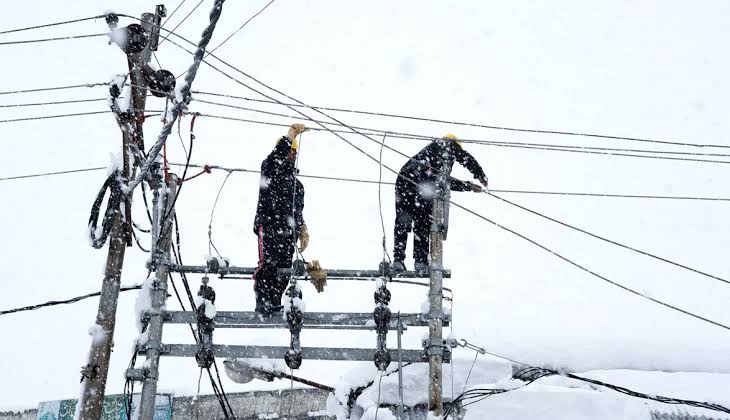
It accelerates glacier melt while reducing long-term snow reserves. It dries forest floors, increasing fire risk. It changes vegetation zones. It alters insect and bird behaviour. It stresses livestock. It affects workers, especially those in orchards, construction and tourism. It raises energy demand in places where infrastructure is already strained.
Perhaps the deepest lesson from this forecast is that climate change is no longer about distant futures. It is reorganising the present.
The challenge for Kashmir is not simply to observe these changes. It is to prepare for them.
That preparation cannot begin only after a flood, a drought, or a failed harvest. It must become part of governance.
This means strengthening local climate monitoring. Reviving springsheds. Protecting wetlands as ecological infrastructure rather than treating them as vacant land. Preserving forest corridors. Investing in rainwater harvesting. Improving irrigation efficiency. Expanding heat-health planning in urban centres. Supporting farmers with climate-resilient crop advisories. Integrating climate science into district planning rather than leaving it to disaster response departments alone.
Kashmir especially needs to rethink how it values wetlands.
Places like Hokersar Wetland, Wular Lake and Dal Lake are not just scenic landscapes or tourism symbols. They are climate regulators. They store water, recharge groundwater, moderate floods, support biodiversity and influence local temperature systems. Their degradation weakens Kashmir’s resilience.
Likewise, forests cannot be discussed only in terms of timber or tourism. They are water infrastructure. Soil infrastructure. Climate infrastructure.
The same is true of glaciers, alpine meadows and mountain streams.
Environmental policy in Kashmir has often been reactive — restoring after damage, compensating after disaster, rebuilding after loss. But the climate era demands something different: anticipation.
Preparedness.
The Gulmarg gondola malfunction recently reminded Kashmir how vulnerable tourism infrastructure can become when systems fail under pressure. Climate change presents a larger and more persistent systems test – one that touches every sector at once.
Water. Agriculture. Health. Tourism. Energy. Livelihoods. Biodiversity.
None can be planned in isolation anymore.
There is also a moral dimension to this conversation. Kashmir contributes very little to global emissions compared with industrial economies, yet remains highly vulnerable to ecological disruption. Mountain communities often bear disproportionate consequences of warming they did not create. That injustice should inform climate policy and climate financing. Adaptation support for Himalayan regions cannot remain marginal.
But even as broader policy responsibility lies with national and global institutions, local action matters deeply.
Communities in Kashmir have long traditions of ecological knowledge — understanding seasonal water, reading mountain weather, preserving common lands, adapting agriculture to altitude and terrain. That wisdom should not be sidelined in favour of purely technocratic climate planning. Scientific forecasting and local knowledge must work together.
Because the climate story here is deeply lived.
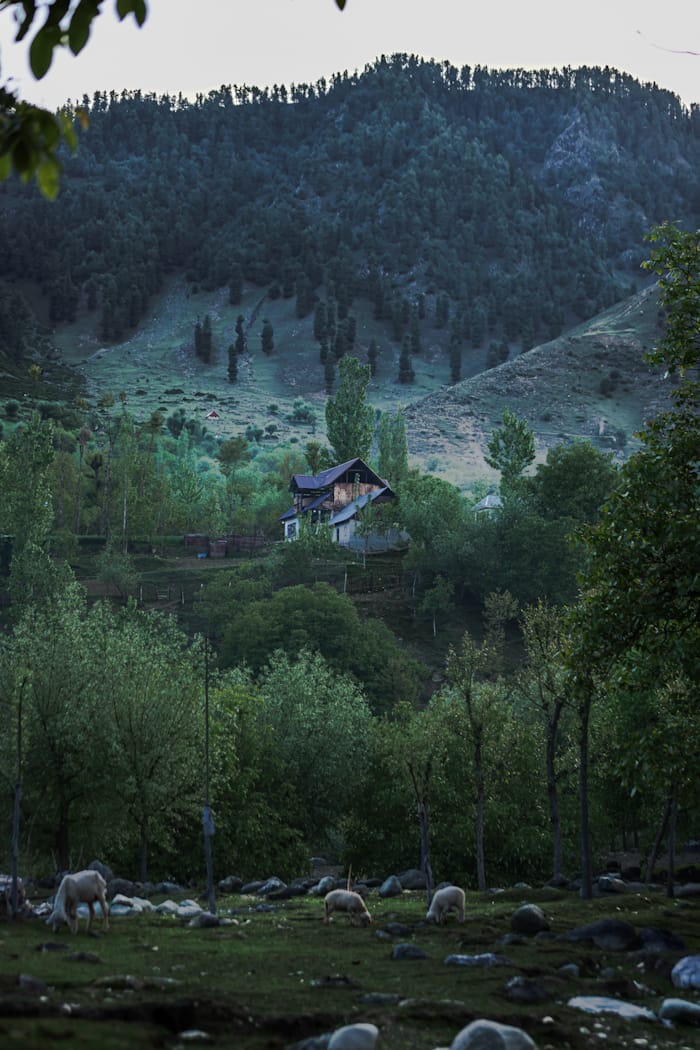
It is in a shepherd noticing that pasture greens later than before.
In an orchard grower watching fruit quality shift.
In a fisherman reading water levels.
In a woman walking farther to collect spring water.
In a child experiencing summers warmer than those remembered by grandparents.
These are not abstractions.
They are climate records written into everyday life.
The IMD says the forecast for July rainfall will be released later this month. More updates will come. More percentages will be announced. But beyond forecasts lies a larger question: are we ready for the climate that is arriving?
For Kashmir, that question is urgent.
A below-normal monsoon over India is not just a national weather update. It is another reminder from a warming subcontinent that ecological instability is becoming the baseline.
The Valley must listen carefully.
Because in the Himalayas, change often arrives quietly before it becomes impossible to ignore.
About the Author
Wajahat Iqbal Kashtwari is a filmmaker and heads a multi-media production company. He navigates diverse formats from visual narratives to digital content. With an interest in environment, ecology, and climate change, Kashtwari follows environmental developments and interprets it in ways that resonate beyond geography.