
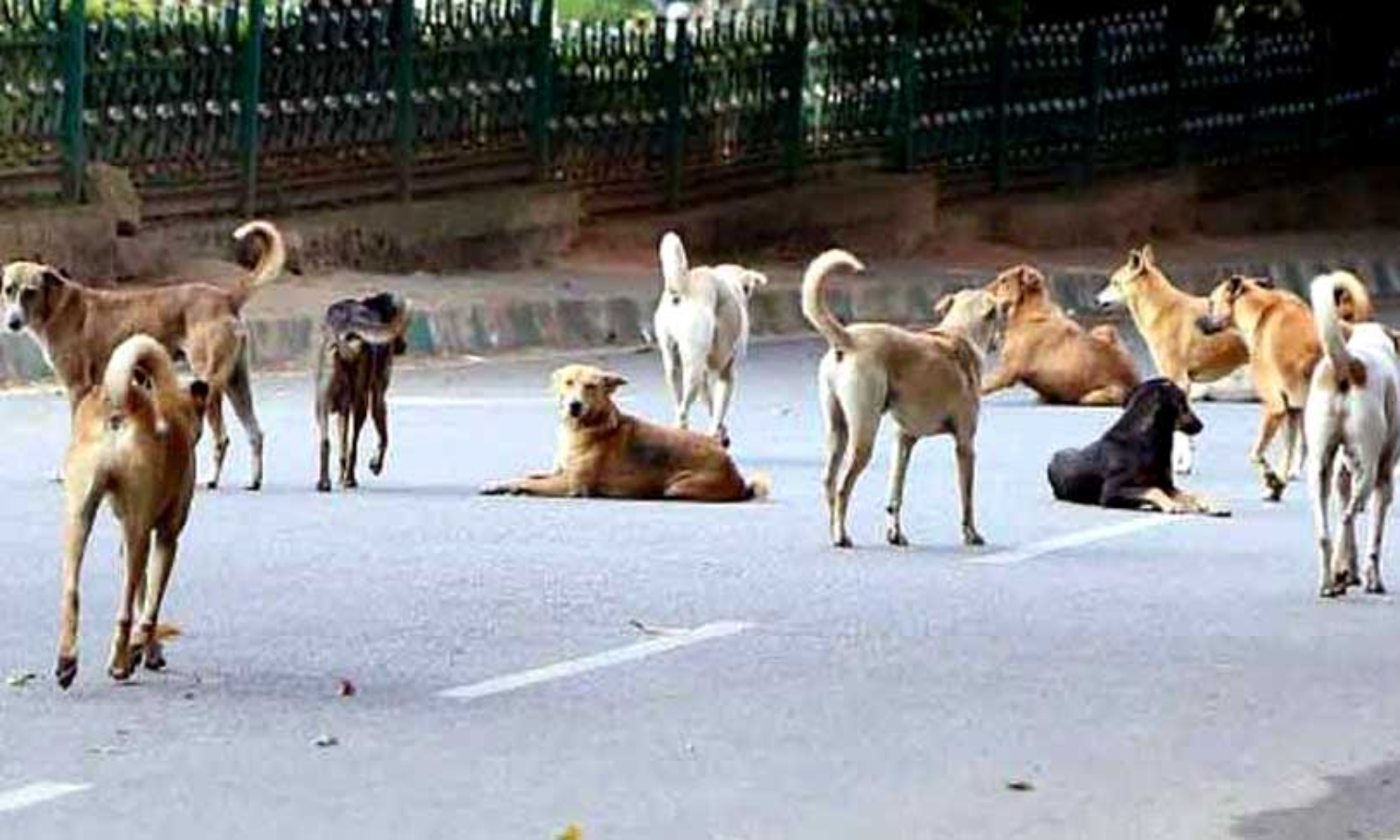
For residents of Jammu and Kashmir, the presence of stray dogs has become an increasingly visible public-safety concern, reflected in a stark official tally: more than 200,000 dog-bite cases were recorded across the Union Territory in 2024 and 2025.
Now, the government is moving to strengthen its response, setting up a high-level committee to recruit veterinary surgeons, para-veterinarians and dog handlers for specialist teams tasked with implementing the Animal Birth Control (ABC) programme across urban areas.
An order issued on Wednesday by the Housing and Urban Development Department establishes a Screening-cum-Selection Committee to oversee the recruitment of personnel under the Expert ABC verticals of Jammu Smart City Limited and Srinagar Smart City Limited. The teams are intended to serve Urban Local Bodies across Jammu and Kashmir, rather than remain confined to the two cities.
The recruitment marks a step toward building a dedicated workforce to manage the stray-dog population through a programme that depends on veterinary expertise, field operations and sustained implementation.
But the scale of the challenge is considerable. Figures presented in the Legislative Assembly show that Jammu and Kashmir recorded 206,460 dog-bite cases over the two years. In Srinagar alone, a scientific survey conducted in 2023 estimated the stray-dog population within the limits of the Srinagar Municipal Corporation at 64,416.
The figures point to a problem that extends beyond occasional encounters on neighbourhood streets. They raise questions about the capacity of civic authorities to manage animal populations, protect residents and maintain consistent services across a geographically diverse region.
The government’s latest order focuses on one part of that task: ensuring that the personnel responsible for carrying out the programme are qualified, practically competent and selected through a documented process.
The Screening-cum-Selection Committee will be chaired by the commissioner-secretary of the Housing and Urban Development Department. The chief executive officer of Jammu Smart City Limited will serve as its member secretary.
Other members include the chief executive officer of Srinagar Smart City Limited, the directors of Animal Husbandry in Jammu and Srinagar, and the nodal officer of the Animal Birth Control programme.
The committee has been instructed to conduct recruitment in a “transparent, objective, uniform and merit-based manner,” with particular emphasis on demonstrable clinical, practical and field competence.
That emphasis is reflected in the approved selection system, which allocates 100 marks to candidates, including 50 marks for clinical or practical assessment in each category.
The arrangement gives practical performance half the total weight in the selection process. Candidates will therefore have to demonstrate relevant skills rather than rely solely on educational qualifications, professional credentials or experience listed in their applications.
The committee has also been directed to verify the qualifications, professional registrations and experience claimed by applicants, including their work in animal birth control and any recognised training they have completed.
Where necessary, it may bring in suitably qualified veterinary or technical experts to conduct practical assessments.
Those assessments must be carried out uniformly and objectively, with individual assessment sheets recorded and preserved. The order also prohibits discretionary marks beyond the approved criteria and requires the entire process to be documented.
The provisions suggest an effort to establish a consistent standard for recruitment in a programme whose effectiveness will depend heavily on the ability of personnel to work safely and competently in the field.
For veterinary surgeons, the committee may also prescribe a minimum qualifying threshold for practical assessments. Candidates who fail to meet that standard could be disqualified regardless of their overall marks.
After considering any representations from candidates, the committee will finalise the merit list, waiting list and selection list before recommending them to the competent authority for approval.
The department has asked the committee to complete the exercise expeditiously while maintaining transparency and proper documentation at every stage.
The recruitment process follows an earlier government decision, issued on Sept. 19, to establish specialist teams under the two Smart City companies.
Under that plan, 110 personnel are to be engaged, divided equally between Jammu Smart City Limited and Srinagar Smart City Limited.
Each company will have a 55-member team comprising five veterinary surgeons, 20 para-veterinarians or medical nurses, and 30 dog catchers or handlers.
The proposed structure combines clinical staff with personnel responsible for the practical work of handling dogs and supporting field operations. Veterinary surgeons and para-veterinarians will provide the professional expertise required for the programme, while handlers will form a substantial part of the workforce operating on the ground.
The personnel will be pooled and deployed on a need-based, rotational basis across Urban Local Bodies in Jammu and Kashmir. This arrangement is intended to allow the teams to respond to requirements beyond the municipal boundaries of Jammu and Srinagar.
A monthly manpower expenditure of 25 lakh rupees has been sanctioned for the initiative.
Before deployment, the personnel will undergo at least 15 days of training, according to the government’s earlier decision.
The training requirement is significant because animal birth control operations involve more than catching stray dogs. They require coordinated handling, veterinary procedures and the ability to carry out fieldwork in accordance with established protocols.
The proposed staffing model provides a framework for organising those functions, although the eventual reach and effectiveness of the programme will depend on recruitment, deployment and the continuity of operations.
The latest order does not specify a completion date for recruitment or provide a separate timeline for the full deployment of all 110 personnel.
The official tally of 206,460 dog-bite cases over 2024 and 2025 provides the clearest measure in the available figures of the public-safety challenge facing the Union Territory.
The number does not, by itself, establish how many individual people were affected, since the figures provided do not clarify whether repeat incidents involving the same person were counted separately. Nor does the total explain how cases were distributed between rural and urban areas, or how many incidents involved stray dogs rather than owned animals.
Still, the scale of reported cases places pressure on authorities to demonstrate that existing arrangements can respond to the problem.
In Srinagar, the 2023 scientific survey estimated 64,416 stray dogs within the municipal corporation limits. The figure offers a baseline for understanding the size of the population that civic authorities may have to manage in the city, though it should not be treated as a current count.
Population estimates and bite statistics measure different aspects of the problem. The former indicates the number of animals within a defined area at a particular time; the latter records reported incidents over a period. Neither, on its own, reveals whether the government’s interventions are reducing risks to residents.
To assess the effect of the new programme, authorities would need to track outcomes over time, including the number of dogs treated under the programme, the geographical coverage of operations and changes in reported bite cases.
The government’s recruitment order does not provide such targets or an evaluation framework. Its immediate concern is the selection of personnel who will carry out the work.
The decision to establish specialist teams recognises that the management of stray dogs requires a dedicated operational structure rather than a series of isolated responses.
The proposed workforce is intended to serve multiple urban local bodies, making coordination and deployment central to the programme. A rotational model could allow personnel to be assigned according to local needs, although the order does not spell out how those needs will be assessed or how frequently teams will move between areas.
The distribution of staff also reflects the different functions involved. Veterinary surgeons and para-veterinarians provide the clinical capacity, while dog handlers supply the workforce needed for field operations. The balance between those roles will matter as the teams begin work.
Recruitment standards will be one early test. By assigning half the available marks to practical assessment, requiring verification of professional credentials and allowing a minimum competence threshold for veterinary surgeons, the department has set out safeguards intended to ensure that candidates can perform their assigned duties.
The requirement to preserve assessment records and restrict marks to the approved criteria also creates a formal record against which the selection process can be examined.
Yet staffing is only the beginning of a sustained animal-control effort. The 15-day minimum training period, the availability of veterinary services, the regularity of field operations and the ability to maintain coverage across urban local bodies will all shape what the teams can accomplish.
The programme’s broader purpose is to establish a more organised response to a problem that has become a matter of public concern. Its results will ultimately be measured not by the number of positions filled, but by whether operations are sustained and whether residents experience a reduction in the risks associated with stray dogs.
For now, the government has moved from creating the specialist teams to selecting the people who will staff them. The next stage will be to turn the proposed structure into an operational service capable of working across Jammu and Kashmir.
With more than two lakh dog-bite cases recorded in two years, the pressure for an effective response is clear. Whether the new teams can make a measurable difference will depend on how quickly they are recruited, how well they are trained and how consistently the programme is carried out.
About the Author
Amir Yaseen is a Srinagar-based journalist interested in Kashmir, policy, progress, and the human stories shaping everyday life.