
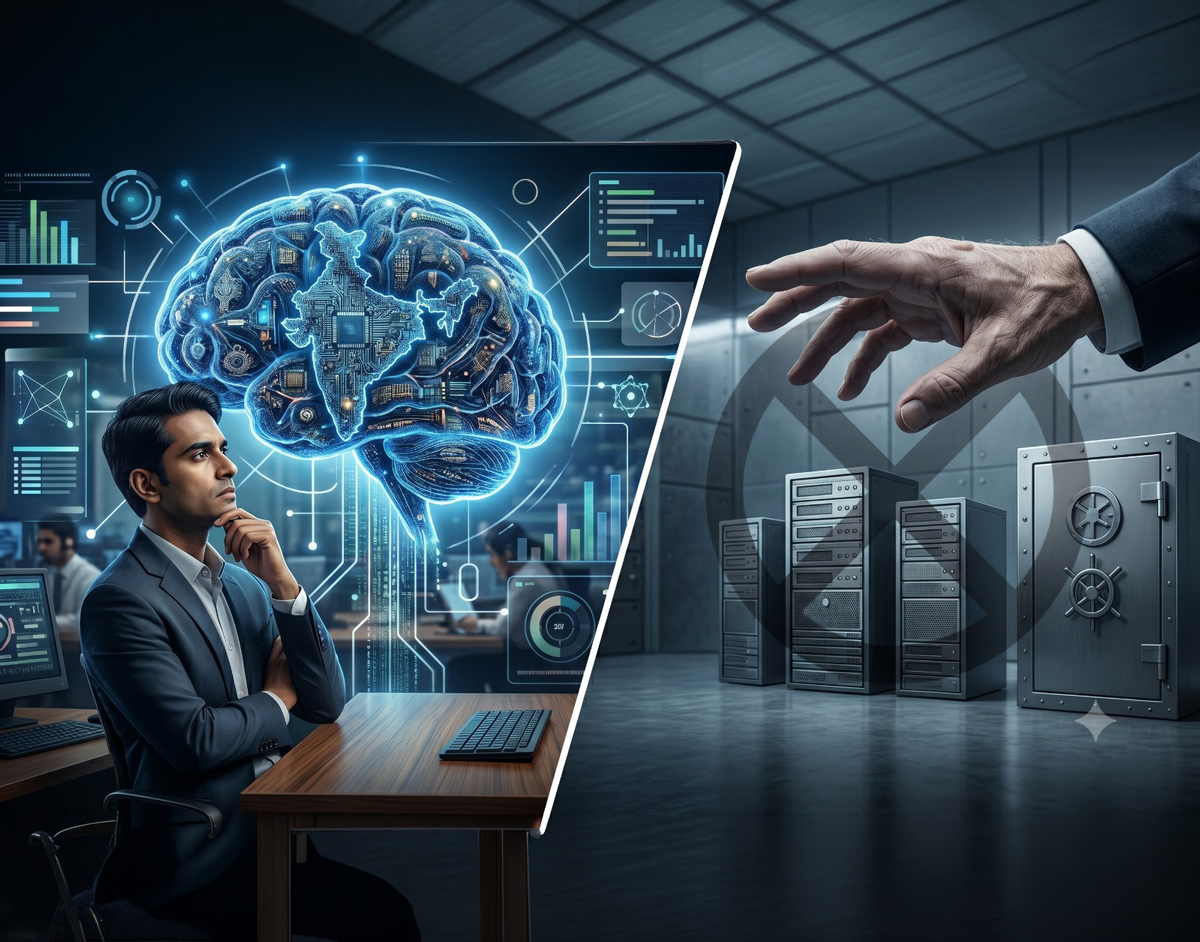
As AI becomes critical infrastructure, India faces a defining choice between remaining one of the world’s largest AI markets and becoming one of its builders. Moien Darial reports.
For years, technology restrictions imposed by major powers were viewed in India as developments affecting other nations. Whether it was limitations on advanced semiconductor exports, defense technologies, or strategic digital infrastructure, such measures largely remained external geopolitical events. Recent developments involving access to advanced artificial intelligence platforms, however, have brought the issue much closer to India’s own technology ecosystem.
The episode involving Anthropic has sparked an important conversation about India’s dependence on foreign-owned AI systems. Although the restrictions were not directed specifically at India, they highlighted a reality that many businesses and policymakers have long acknowledged but rarely confronted: critical digital capabilities can become unavailable with little warning, regardless of market demand or commercial partnerships.
What makes the situation particularly striking is its timing. Anthropic had recently strengthened its engagement with Indian enterprises through partnerships aimed at accelerating AI adoption across industries. Yet the subsequent concerns surrounding accessibility served as a reminder that participation in the global AI economy does not necessarily guarantee uninterrupted access to the technologies that power it.
The incident has exposed a broader challenge facing emerging digital economies. As artificial intelligence becomes a foundational layer for business operations, public services, research, and innovation, reliance on externally controlled platforms creates strategic vulnerabilities. Decisions taken in foreign boardrooms or influenced by geopolitical considerations can have immediate consequences for organizations thousands of miles away.
Rather than viewing this development as an isolated setback, many industry observers see it as a timely warning. India has established itself as a global technology powerhouse, producing world-class talent and building large-scale digital public infrastructure. However, leadership in the AI era will require more than adoption and implementation. It will demand ownership of core technologies, stronger research capabilities, and sustained investment in advanced computing resources.
The need for indigenous AI development has therefore become increasingly evident. Universities, research institutions, startups, and technology firms are already working toward building foundational models tailored to Indian languages and use cases. Expanding these efforts will be critical if the country aims to reduce dependence on a small group of international providers.
The growing importance of open-source AI also deserves attention. Open ecosystems can provide greater flexibility, transparency, and resilience while encouraging broader participation in innovation. By supporting open-source initiatives and domestic research, India can strengthen its ability to adapt to future technological shifts without being constrained by external decisions.
Beyond technology development, the episode has renewed discussions around AI sovereignty. Countries across the world are recognizing that artificial intelligence is no longer merely a commercial tool; it is an asset with significant economic, strategic, and national implications. Ensuring access to computing infrastructure, advanced models, and skilled talent is becoming as important as securing physical resources in the digital age.
India’s aspirations to become a global leader in artificial intelligence will ultimately depend on its ability to move beyond being one of the world’s largest AI markets. The next phase of growth will be defined by the capacity to build, innovate, and shape the technologies that drive future industries.
The Anthropic episode may prove to be a defining moment in that journey. More than a question of access, it has highlighted the importance of technological self-reliance in an increasingly interconnected world. The lesson is straightforward: nations that wish to shape the future of AI must invest in creating it, not merely consuming it.
For India, the challenge is clear – and so is the opportunity.
About the Author
Moien Darial writes with the precision of a market analyst sensitivity of a storyteller. With a keen eye on global economic shifts and emerging technologies, he navigates complex transformations with clarity and restraint.