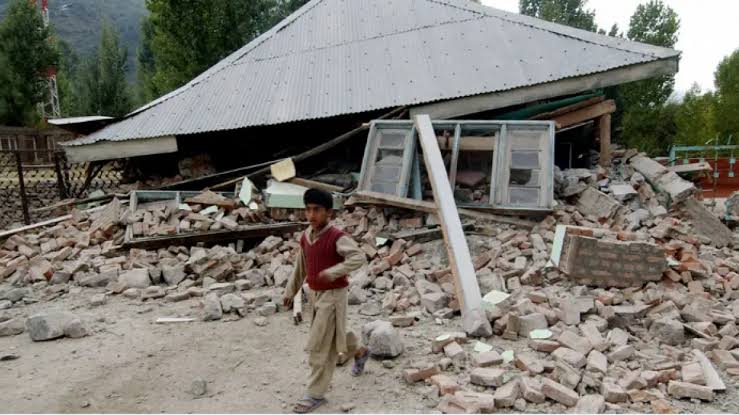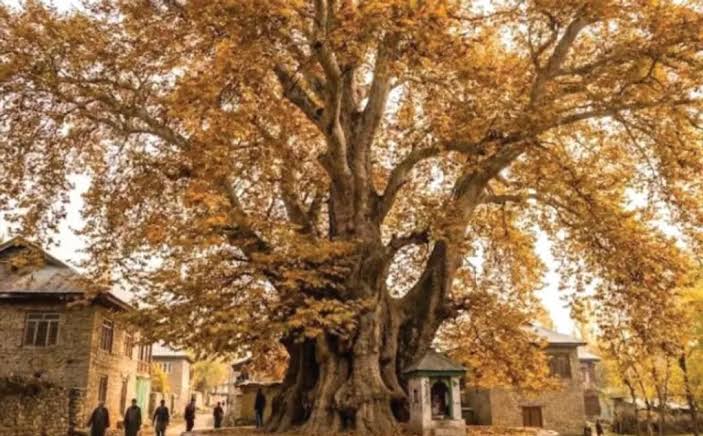


As Kashmir’s fertility rate plunges below replacement level, Mir Suneem explores how delayed marriages, economic anxiety, and changing social realities are quietly reshaping the idea of family in the Valley.
In Kashmir, conversations about the future once revolved around roads, elections, snowfall, conflict, and survival. Now, increasingly, they circle around something quieter and more intimate: the absence of children.
It is not immediately visible. The Valley’s markets still pulse with movement. School buses still clog Srinagar’s roads every morning. Wedding halls continue to glitter beneath chandeliers and embroidered canopies. But behind the spectacle of Kashmiri social life, families are becoming smaller, marriages later, nurseries emptier. A demographic shift is underway in Jammu and Kashmir – one so swift that demographers and doctors have begun describing it in the language of alarm.
The numbers tell the story with brutal simplicity. Jammu and Kashmir’s Total Fertility Rate – the average number of children a woman is expected to have in her lifetime – has fallen to 1.4, according to National Family Health Survey-5 data cited in Parliament. The replacement level required to maintain a stable population is 2.1. In urban Kashmir, fertility has dipped even lower, hovering near 1.2.
For decades, Kashmir was imagined through the vocabulary of abundance: large households, multigenerational living, crowded kitchens fragrant with noon chai and mutton stock, children packed into pherans during winter. Today, in many upper-middle-class neighborhoods of Srinagar, couples stop at one child. Some delay parenthood until their mid-thirties. Others quietly abandon the idea altogether.
At a recent panel discussion in Sopore organized by Haneefa Nursing College and Hakim Sonuallah Specialist Hospital, doctors and public-health experts tried to map the reasons for this collapse in fertility. The discussion drifted quickly beyond medicine into sociology, economics, and fear. Dr. Farhat Jabeen, the former Head of Gynecology and Obstetrics at Government Medical College Srinagar, spoke about delayed marriages and shrinking reproductive windows. Dr. Kaiser Ahmed, former principal of GMC Srinagar, warned about the long-term implications of an aging population and a declining workforce.
But statistics alone cannot explain what has happened to Kashmir’s idea of family.
The transformation is also emotional.
Across the Valley, marriage itself has become delayed by aspiration. Young women are staying in universities longer, entering professional courses, preparing for competitive examinations, seeking financial independence in a place where economic instability has become inherited wisdom. Young men, meanwhile, drift through years of unemployment, temporary contracts, and uncertain careers, unable—or unwilling—to shoulder the expectations traditionally attached to marriage.
The average age of marriage for Kashmiri women has climbed steadily into the mid-to-late twenties, with many marrying in their thirties. Doctors say this shift has profound biological consequences. Female fertility declines sharply after the late twenties, and the chances of conception diminish further with each passing year after thirty.
Yet biology is only one layer of the story.
In Kashmir, marriage is not simply a private union; it is an economic performance. Weddings have swollen into extravagant spectacles involving designer trousseaus, elaborate banquets, curated photography, gold jewelry, and social comparison sharpened by Instagram culture and community scrutiny. Families frequently spend beyond their means. Loans are taken. Savings disappear. The burden delays marriage for years.
“We have turned marriage into a financial project,” a fertility specialist in Srinagar said recently in an interview with local media. “People wait until everything is perfect. By then, fertility has already started declining.”
In downtown Srinagar, thirty-two-year-old software engineer Saba Bhat says she and her husband postponed having a second child because they could barely manage the first. “Schooling is expensive. Healthcare is expensive. Housing is expensive. Everything feels uncertain,” she said. “Our parents raised four or five children because they had support systems. We don’t.”
That support system – the sprawling Kashmiri joint family – is slowly eroding.
Urbanisation and migration have rearranged domestic life. Couples increasingly live in nuclear households, often separated from parents and extended kin who traditionally helped raise children. Women now juggle employment and childcare without the invisible labor once supplied by grandmothers, aunts, and neighbors. Parenthood has become logistically exhausting.
The decline in fertility is therefore not simply about reproductive health. It reflects a deeper shift in the architecture of Kashmiri society: from collective living toward individualized survival.
There are other shadows too.
Kashmir’s fertility debate unfolds against the backdrop of a region shaped by decades of conflict, political uncertainty, and psychological stress. Doctors and researchers in the Valley have long spoken about rising infertility, polycystic ovarian syndrome, stress-related hormonal disorders, and reproductive-health complications among women. Some specialists argue that prolonged exposure to anxiety and instability may have had cumulative effects on reproductive wellbeing.
At infertility clinics in Srinagar, waiting rooms are crowded with couples who married late and now struggle to conceive. Many arrive after years spent pursuing education, securing jobs, or navigating family expectations. The emotional toll can be devastating in a society where motherhood still carries enormous cultural weight.
A thirty-eight-year-old woman from South Kashmir, quoted in earlier reporting on infertility in the region, described feeling trapped between social judgment and biological reality after marrying late due to financial difficulties. Her story echoed a broader anxiety spreading quietly through Kashmiri society: the fear that time itself has become unaffordable.
What makes Kashmir’s fertility decline particularly striking is its speed.
Researchers note that Jammu and Kashmir’s TFR fell from around 2.4 in 2005 to 1.4 in 2021 – a sharper drop than most Indian regions experienced over the same period. The Valley has effectively leapt within a generation from relatively high fertility to below-replacement fertility, resembling demographic transitions more commonly associated with East Asian or European societies.
And like those societies, Kashmir may soon confront the economic consequences of growing old before growing prosperous.
An aging population alters everything: labor markets, healthcare systems, pensions, caregiving structures, and economic productivity. Fewer young people mean fewer workers supporting larger elderly populations. Schools may eventually empty even as geriatric wards expand. Already, doctors and policy experts warn that Jammu and Kashmir lacks adequate infrastructure for elder care and geriatric medicine.
The irony is that some of the forces driving fertility decline are also markers of social progress. Women’s education has improved dramatically. Maternal healthcare access has expanded. More women now exercise choice over when and whether to have children. Smaller families often correlate with better health outcomes and greater financial stability.
But when fertility falls too quickly and too far, optimism gives way to uncertainty.
Across the world – from Japan to South Korea to parts of Europe – governments are struggling to reverse demographic decline through cash incentives, parental leave, and childcare reforms. India itself, long associated with fears of overpopulation, is beginning to confront new anxieties about shrinking fertility in several states. Reuters recently reported that political leaders in parts of India are already discussing pro-natalist policies as fertility rates fall nationwide.
Kashmir, however, faces a uniquely layered reality. Its economy remains fragile. Youth unemployment is persistently high. Migration continues to drain educated young people from the Valley. In such conditions, asking families to have more children without addressing structural insecurity can sound detached from lived experience.
For many young Kashmiris, the decision to stop at one child – or none at all – is less ideological than practical.
It is the arithmetic of rent, tuition fees, unstable employment, shrinking apartments, emotional exhaustion, and deferred certainty.
On winter evenings in Srinagar, elderly men still gather in bakeries discussing how different the Valley once felt: louder homes, larger families, children everywhere. Younger Kashmiris hear those stories almost as folklore.
The demographic future of Kashmir may not arrive dramatically. It may arrive quietly – in empty classrooms, aging neighbourhoods, fewer wedding processions, and the gradual realisation that an entire society has begun reproducing caution faster than it reproduces itself.
About the Author
Mir Suneem is a filmmaker and a postgraduate in filmmaking from Jamia Millia Islamia. With a strong grounding in film editing and narrative craft, she is drawn to stories the frame extends beyond the visible into the lived.